Expo Osaka 1970 | online

CuratorOndřej Hojda
from 9/2/2021
to 12/31/2021
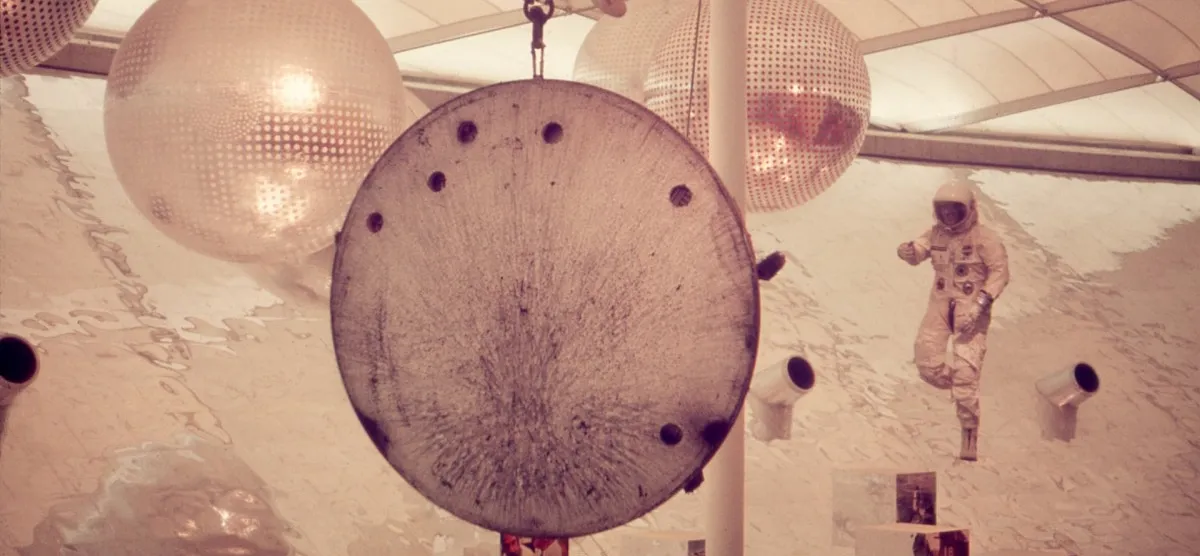
American Pavilion – Lunar Module, Olomouc Museum of Art
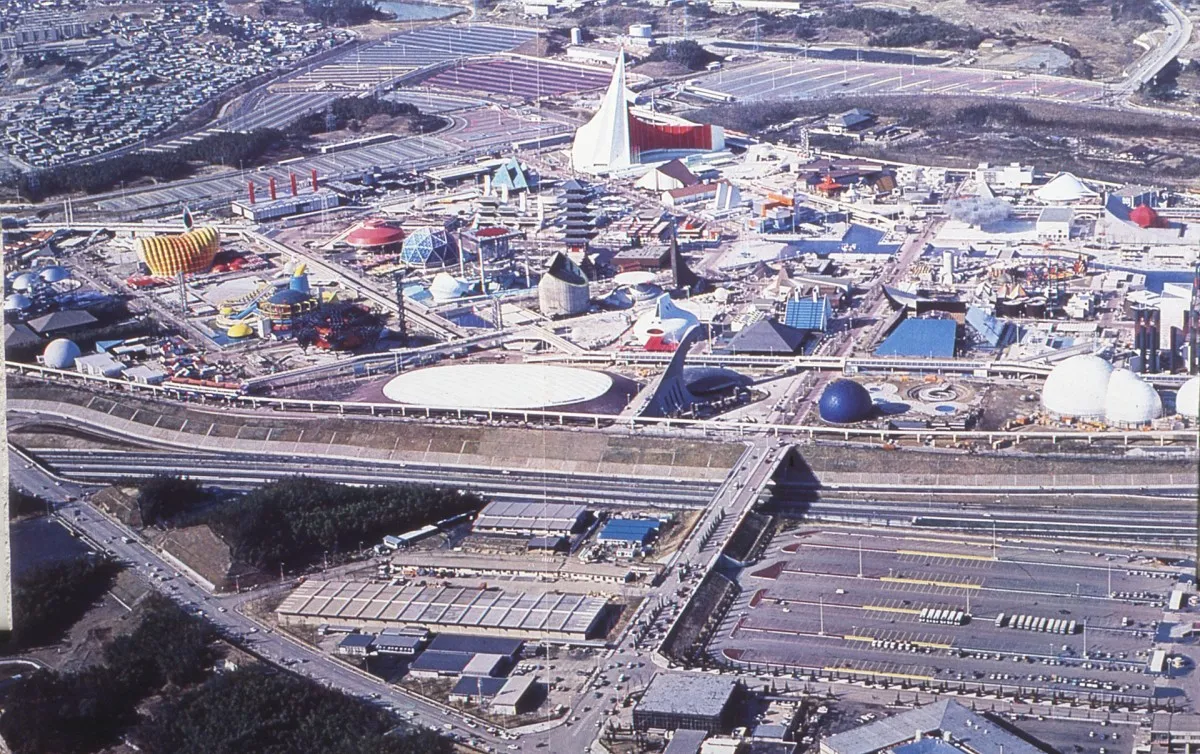
Expo, General View, Olomouc Museum of Art

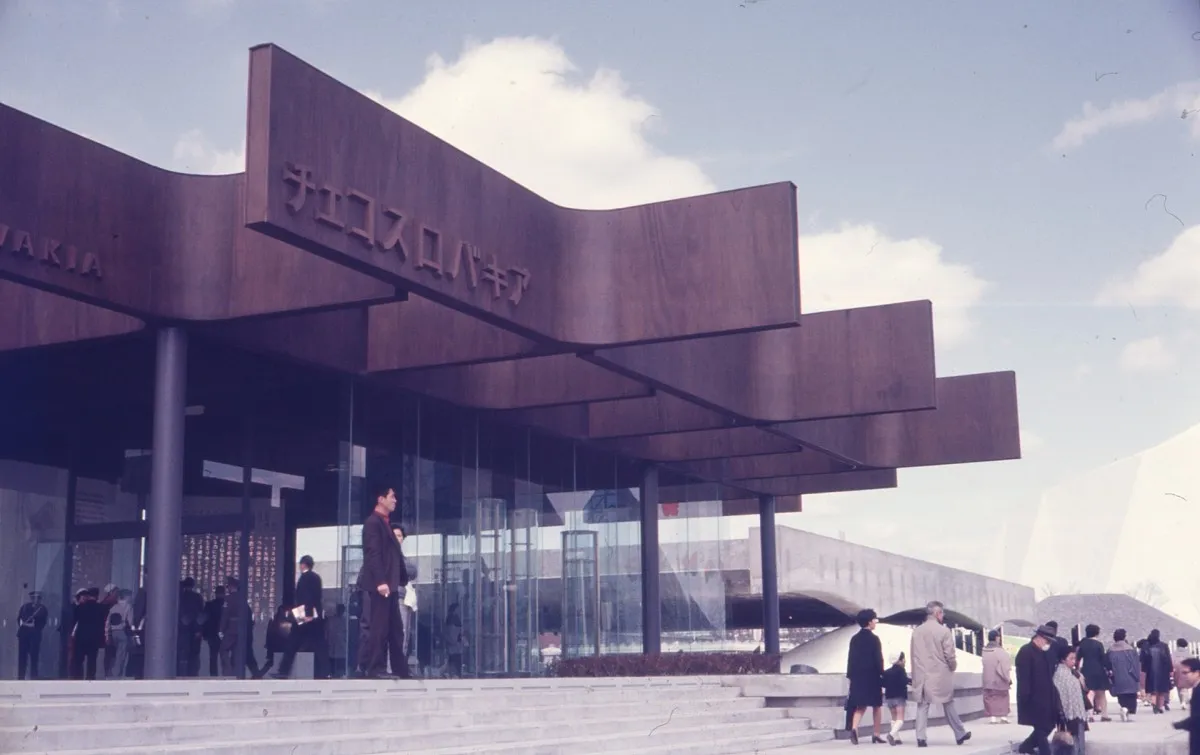
In 1970, the World Expo was held in Osaka, Japan – an event that today appears to be a significant crossroads in many respects. Czechoslovakia presented a pavilion designed by three Brno architects, Rudiš-Palla-Jenček, conceived during the Prague Spring in 1968. The high-quality architecture was complemented by an equally remarkable visual program. Artists such as Karel Malich, Stanislav Kolíbal, and Stanislav Libenský with Jaroslava Brychtová were involved in the preparations for the exhibition, but they could not attend the opening in the spring of 1970. The beginning of normalization hindered their professional careers, and the Osaka pavilion did not receive as much attention in Czechoslovakia as previous successful presentations in Brussels (1958) and Montreal (1967).

The Czechoslovak Pavilion in Japan was, of course, not just an important artifact. The exhibition focuses on the unique moment of confrontation between the Czech, Japanese, and global situations. In 1970, Expo was held outside Europe and North America for the first time in the long history of world exhibitions. The host country, Japan, showcased the results of its "economic miracle." Commercial pavilions overshadowed national ones, and the entire environment evoked a science-fiction film in which visitors became part. Japanese architects such as Kenzō Tange and the so-called Metabolists contributed to this atmosphere with their architecture, as they were given a unique opportunity to conduct their experiments on the edge of utopia and fantasy within the temporary setting of the exhibition. They were complemented by numerous technical innovations and audiovisual installations inside the individual pavilions. Contemporary critics, influenced by the Osaka exhibition, raised questions that gained importance in the following years: Will architecture be replaced by mobile structures, individual cells, or even some form of virtual reality? In an over-technologized future, will there be room for human freedom and life itself?

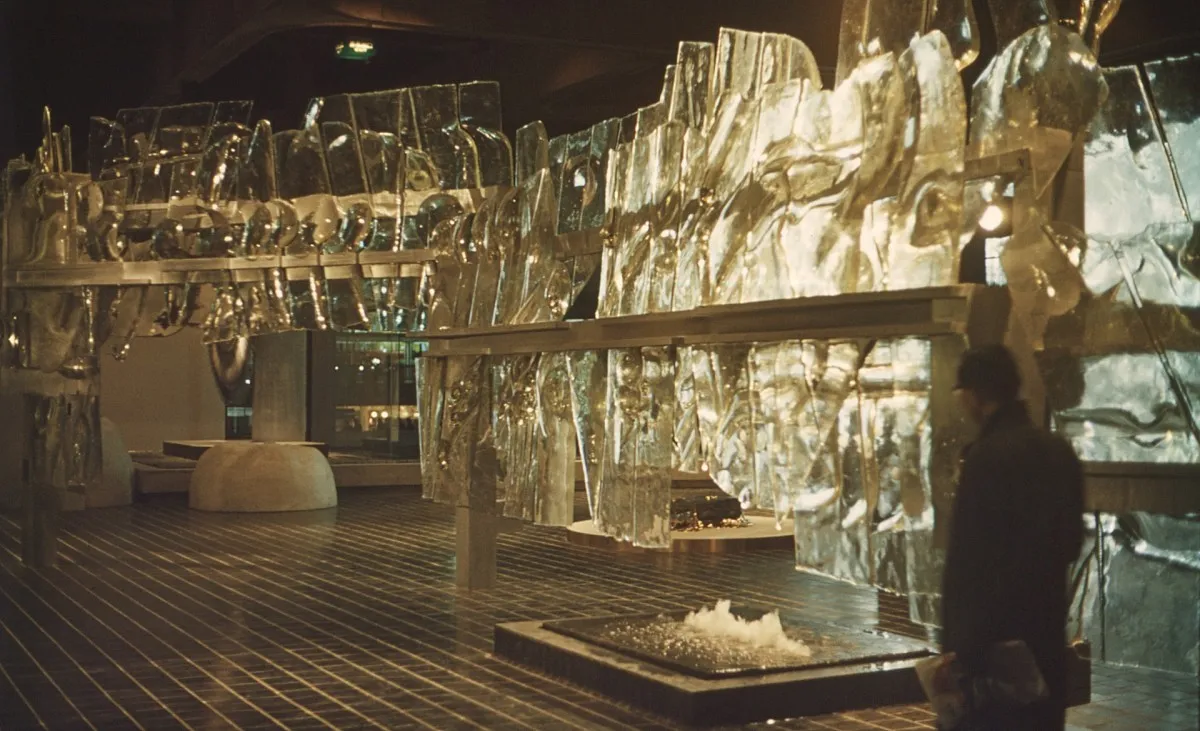
Czechoslovak Pavilion, Stanislav Libenský and Jaroslava Brychtová, Glass River, Olomouc Museum of Art
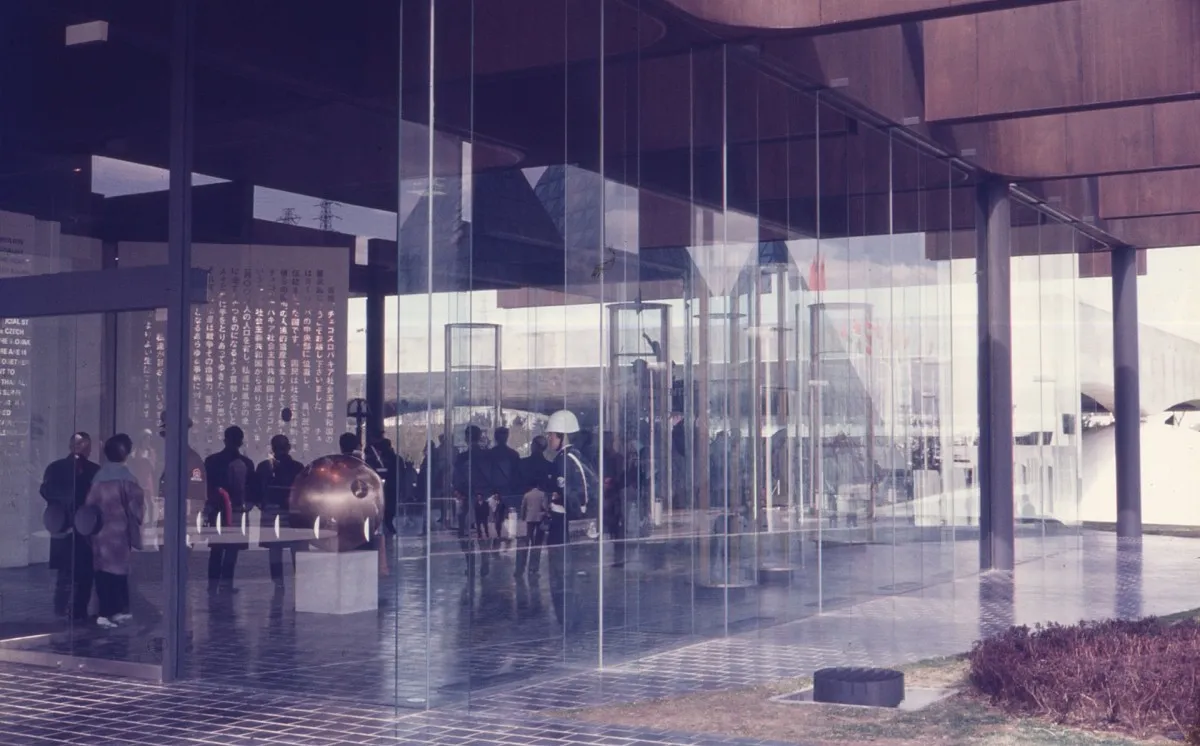
Czechoslovak Pavilion, Entrance Section, Olomouc Museum of Art

European and American modern architects had, however, already been fascinated by Japanese architectural traditions for some time before, which seemingly radiated opposite principles: calm, simple, clean lines and materials, lightness and openness, closeness to nature. The image of Japan thus mixed different interpretations. As we know from contemporary media, for foreign participants and visitors, the encounter and journey to the exhibition often represented a shocking confrontation with the reality of rapidly developing Japan, which appeared full of paradoxes. On one side, there were projects for a hypothetical future, on the other, the ever-present strong cultural tradition. Fascination and optimism alternated with sensory overload and sometimes even skepticism. The Osaka Expo was, therefore, also a certain full stop after the optimism of the 1960s, a figurative convex mirror in which the problems of a globalizing world culture became apparent.

The historian and architecture theorist Ondřej Hojda examines the Osaka Expo as part of his project at the Institute of Art History of the Czech Academy of Sciences. In this "exhibition about the exhibition" in Liberec, fifty years later, he will recall the visual and, indirectly, the spatial world of the Osaka Expo.

Czechoslovak Pavilion from the Outside, Olomouc Museum of Art

Visit also

Women’s World

Women’s World

4/23/2027 – 10/10/2027

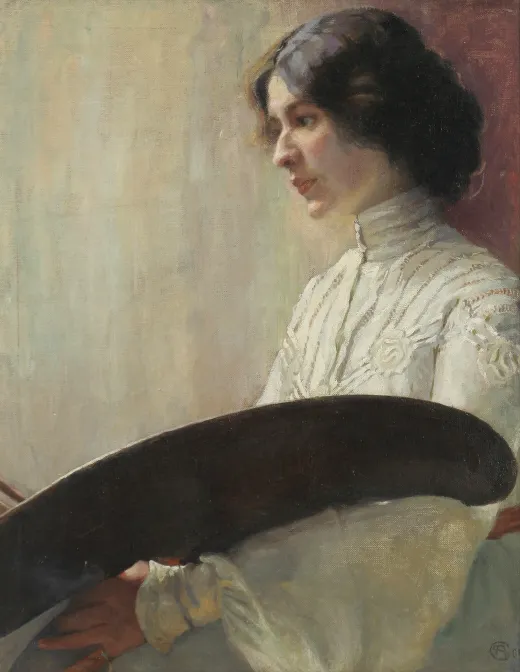
The exhibition Women’s World explores the changing status and perception of women artists from the early 19th century to 1911. Rather than attempting to provide a comprehensive overview of art created by women, it focuses on how women’s work was interpreted by contemporary critics and the wider public, and how their opportunities were shaped by prevailing social ideas about women’s roles. Through selected artists and their works, the exhibition traces the journey from viewing artistic practice as a pastime and a cultivated way of spending leisure time to the gradual recognition of women as professional artists. Particular attention is paid to the contemporary press, which not only reflected these attitudes but also helped shape them. The exhibition captures the tension between persistent stereotypes and attempts to transcend them, showing how women’s place in the art world evolved over time.

Single annual entry fee
Stay in the loop all year long!

Get an annual pass and never miss an exhibition again.

Visit us

Masarykova 723/14
Liberec 460 01
CZ

Opening hours

monday
tuesday
wednesday
thursday
friday
saturday
sunday
closed
10.00–18.00
10.00–18.00
10.00–19.00
10.00–19.00
10.00–18.00
10.00–18.00

Entrance fees

Standard admission
180 Kč
Reduced admission
100 Kč

Exhibition galleries are closed. The Design Shop and café remain open during regular opening hours.