
Past and Present of the Museum of Fine Arts
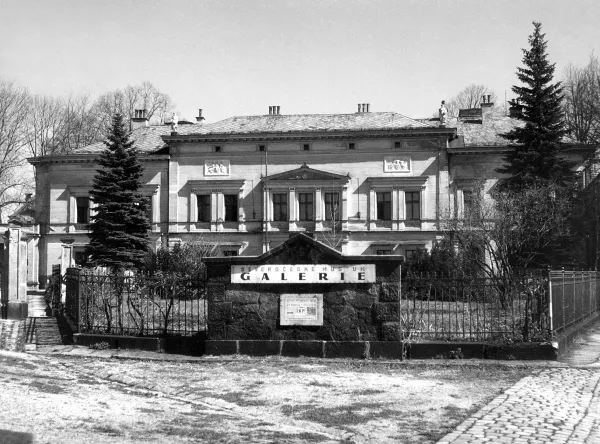
The origins of the Museum of Fine Arts Liberec as a legally independent institution can be traced back to the period after World War II. The Museum Curatorship in Liberec, which was tasked with determining the future of the North Bohemian Museum’s art collections, was established on September 19, 1945. It decided that the gallery would remain an organizational part of the Liberec museum but that the fine art collections would be relocated to a separate building.Liberec-based graphic artist and patriot Jaro Beran immediately took an interest in the fate of the artworks that had been hidden during the war. Therefore, he was entrusted by the curatorship with tasks related to securing their future and finding suitable spaces for their preservation and display.A year later, at the beginning of 1946, the gallery was assigned the building of the former Liebieg Palace, located right next to Liberec Castle. The gallery remained there until the end of February 2014.
History of the Institution
Since 1949, the North Bohemian Museum, which housed the collections of today's Museum of Fine Arts Liberec, had been a regional institution. Its legal independence was established in 1953 as part of the state-created network of national galleries, and its first director was the graphic artist and Liberec native Jaro Beran. During his tenure, the museum politically aligned itself with the prevailing ideals of the time. However, even then, there was a clear intention to create a high-quality collection of 20th-century Czech art.

In 1958, art historian PhDr. Hana Seifertová succeeded Jaro Beran as the head of the Museum of Fine Arts Liberec. She contributed not only to extensive renovations of the building and the creation of a valuable collection of 16th–18th century Dutch painting, but above all, to the museum’s highly positive reputation among experts and the general public.Thanks to a rich exhibition program, which included significant sculpture presentations (such as the legendary Sculpture 64 and Sculpture and the City 1969) and exhibitions of young artists who were politically rejected by Prague’s galleries, the Museum of Fine Arts Liberec became a respected institution.In 1970, Seifertová’s forced departure from her leadership position marked the end of a period of artistic expansion with international reach.
In the 1970s, Vladimír Volšička served as director. However, the museum’s activities, like those of other cultural institutions, were subject to close political scrutiny. As a result, its exhibitions did not deviate from the mainstream production of the period and had to be “politically acceptable”. In contrast to the preceding period, these years went down in the history of the Regional Museum of Fine Arts Liberec as an era of cultural stagnation.
In 1979, Věra Pavlišová took over the leadership of the Museum of Fine Arts Liberec, holding the position of director until 1990. During this time, there was a slight relaxation of ideological rigidity.The museum’s program was curated by Mgr. Naďa Řeháková, who had the full trust of director Pavlišová and played a key role in the creation of significant exhibitions that far exceeded the regional scope (e.g., Man and His World, Contemporary Landscape).
Significant changes took place after 1989. In 1990, PhDr. Věra Laštovková became the director, and in the post-revolution years, she had the opportunity to create a new image for the Museum of Fine Arts Liberec. Together with curator Mgr. Eva Výtisková, they ensured the high standard of care for the entrusted collections and a high-quality exhibition program.
In 1991, the Regional Museum of Fine Arts Liberec, together with more than twenty other collecting institutions in Bohemia and Moravia, became a state-funded organisation under the Ministry of Culture of the Czech Republic. A year later, a professional association called the Council of Galleries of the Czech Republic was established to foster closer professional cooperation, with the Liberec museum becoming one of its members. In the 1990s, the Liberec collections were entered into the Central Registry of Museum Collections (CES) maintained by the Ministry of Culture of the Czech Republic. This publicly accessible database provides a record of a substantial part of the Czech Republic’s movable cultural heritage.

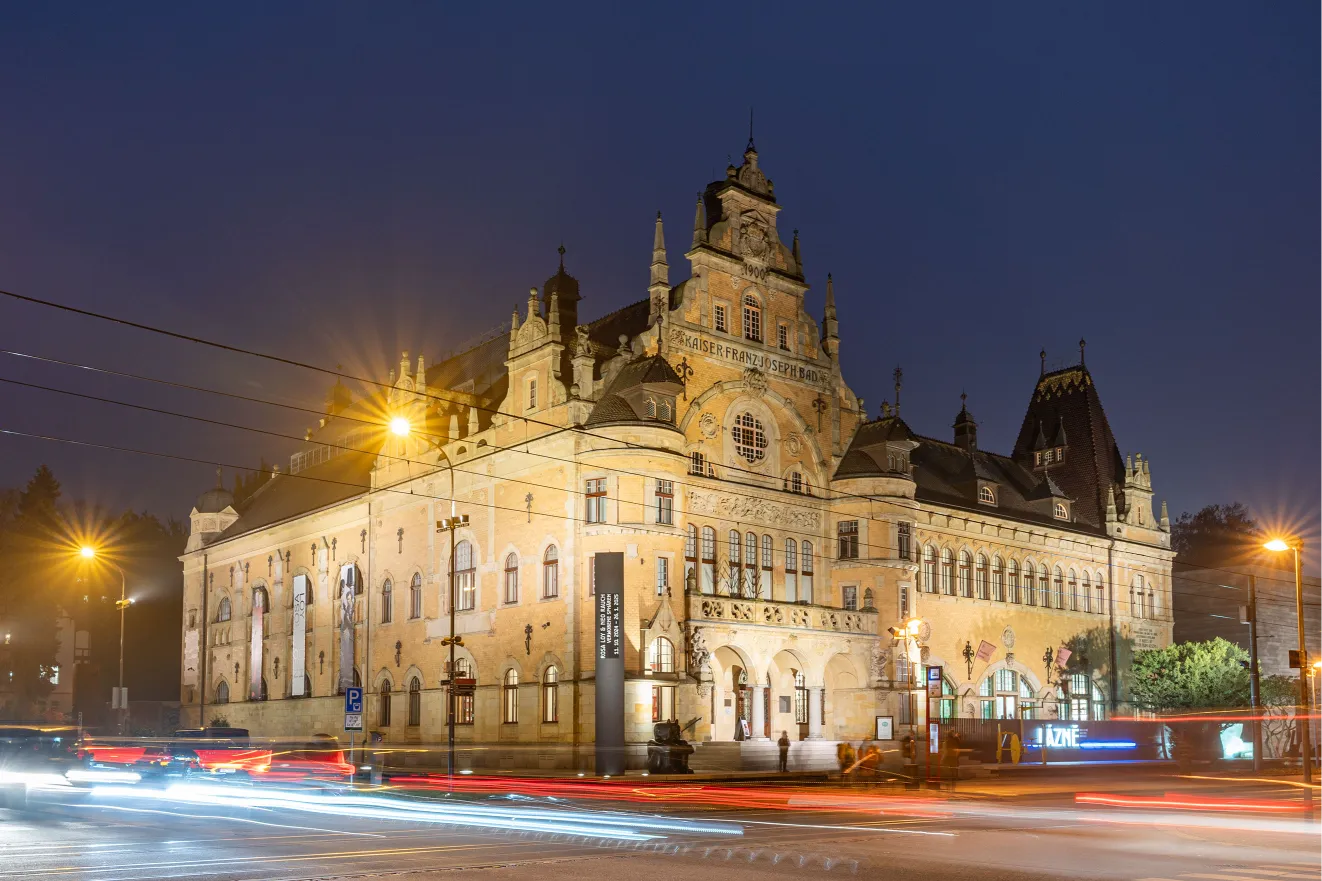
In 2001, another significant legislative change took place, when most cultural institutions were transferred from the Ministry of Culture of the Czech Republic to the newly established regional authorities. As of 1 October 2001, the Regional Museum of Fine Arts Liberec became the only collecting institution specialising in fine arts in the Liberec Region.
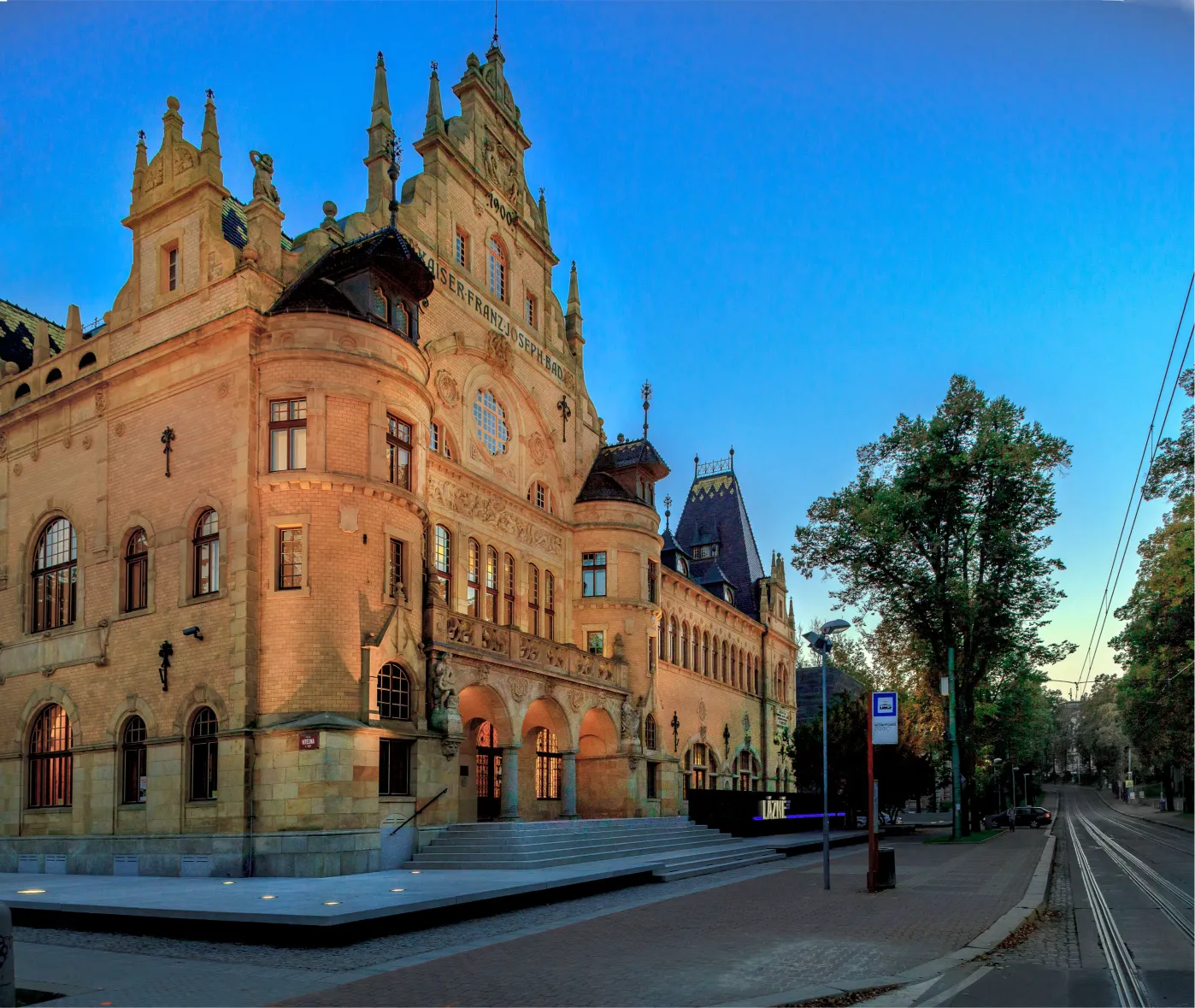
At the turn of 2013 and 2014, the museum moved to new premises in the former municipal baths on Masarykova Street in Liberec. The new museum opened to the public on 28 February 2014, marking its definitive departure from the Liebieg Palace. From 1 January 2014, its official name was Regional Museum of Fine Arts Liberec, contributory organisation. At the beginning of 2025, however, following the introduction of a new visual identity, the name Museum of Fine Arts Liberec, contributory organisation came into use.
Franz Joseph I's City Spa
The spa was established for the citizens by the Liberec Savings Bank (Reichenberger Sparkasse), whose management had been discussing the plan since 1896. The final decision to build the city spa was made in 1898, during the 50th anniversary of Emperor Franz Joseph's reign, and this fact is still commemorated by a plaque on the building's façade.
The construction itself, designed by Vienna-based architect Peter Paul Brang, was carried out later, between 1899 and 1902. Peter Paul Brang (1852–1925), a graduate of the Vienna Academy of Fine Arts, designed not only the Liberec spa but also the spa in Ústí nad Labem, the colonnade in Janské Lázně, and several administrative buildings throughout Austria-Hungary.


The spa in Liberec primarily served a hygienic function, as at the time of its construction, it was not common for households to be equipped with bathrooms. Therefore, part of the spa included bathtub baths of classes I–III, as well as Roman-Irish steam baths, shower washrooms, carbonic baths, rest areas, and the necessary facilities. A 20 x 10 meter swimming pool was located in the wing along Vítězná Street.
P.P. Brang designed the building in a historicizing style. The exterior is decorated with two sculptures of Poseidon and Amphitrite and a relief called Water Play, created by Emanuel Gerhart, a professor at the Liberec Industrial School, who chose Hořice sandstone for their production. On the gable, there is a proud inscription in bronze letters: KAISER FRANZ JOSEPH BAD. Emperor Franz Joseph I. visited the spa in 1906 during his visit to the German-Czech Exhibition in Liberec.
The interiors of the spa were adorned with wall paintings featuring plant motifs or themes related to bathing at the time of their creation, with tiles and ceramics supplied by the renowned company Villeroy & Boch. The first-class bathtub baths and their waiting room overflowed with luxury.
Until the opening of the new swimming pool on Tržní Square in 1984, the municipal baths housed the only indoor swimming pool in Liberec. This was reflected in the number of visitors: in the first 25 years of operation alone, an impressive 2,578,619 people visited the baths. From 1984 onwards, however, the building gradually fell into disrepair, and in 1990 it was returned through restitution to Česká spořitelna, the successor to the Reichnebreger Sparkasse; at that time, the baths were still open to the public. The following year, the bank included the baths in the small-scale privatisation programme, and over the course of just two years the property was successively owned by three companies. The City of Liberec became the owner of the baths in 2005, purchasing them from a bankruptcy estate for CZK 9 million and subsequently beginning emergency conservation work. In 2009, an agreement was concluded between the city, the Liberec Region and the Regional Museum of Fine Arts Liberec on the future use of the baths as an art museum.
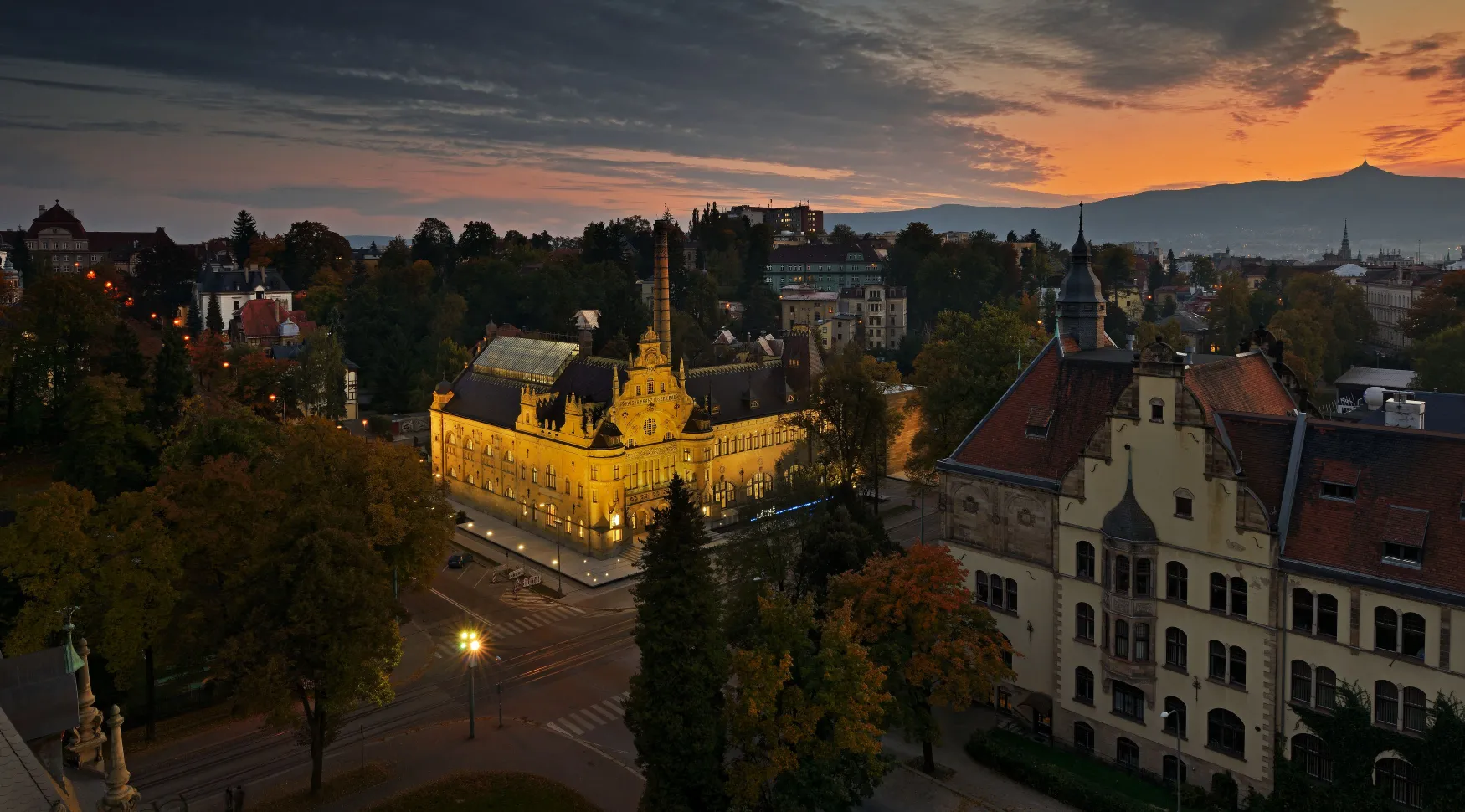

The project to revitalise the municipal baths was designed in 2009–2010 by the Liberec-based Sial architectural studio, led by chief architect Jiří Buček and chief engineer Karel Novotný. Construction work began in September 2011 and was completed in June 2013. The Regional Museum of Fine Arts Liberec took over the baths under a lease agreement on 1 September 2013 and, after relocating its collections and installing the new exhibitions, opened the building to the public on 28 February 2014. The project to revitalise the municipal baths for use as an art museum was funded by the European Union (85%) and the Liberec Region (15%) and received the Grand Prix of the Society of Czech Architects for 2013. The newly constructed collection storage facility received the main award of the Club for Old Prague as the most successful new building completed in a historic setting in the Czech Republic in 2013.
(Adapted from the text by Marek Řeháček for the publication Lázně, The Transformation of the Liberec Baths into a Cultural and Social Center. Liberec 2014.)
Villa of Johann Liebieg Junior
The Museum of Fine Arts Lázně Liberec was located in the former family residence of Johann Liebieg Junior (1836–1917), the son of the founder of the renowned dynasty of Liberec textile industrialists, from its establishment until the end of February 2014. The so-called Liebieg Palace, situated in close proximity to Liberec Castle, was created in 1871–1872 by rebuilding an older house of Ferdinand Römheld according to a design by Gustav Sachers, a graduate of the Bavarian Academy of Fine Arts and the owner of one of the largest construction companies in Liberec. Gustav Sachers (1831–1874) made a significant mark on the history of Liberec and its surroundings as the architect and builder of predominantly historicist buildings.


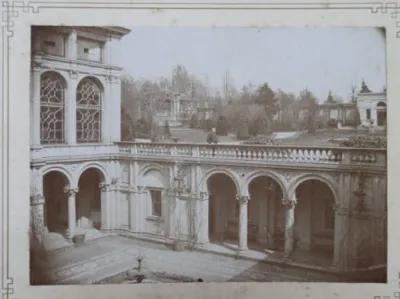
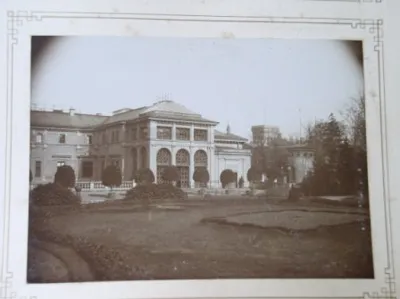
The magnificent Neo-Renaissance palace of Johann Liebieg Jr. is a four-winged building with a central courtyard and a sala terrena, providing direct access to the adjoining garden. The garden features a small pavilion as well as some of its original planting, which has survived to this day. The grounds also included several other buildings – a gardener’s house, a coach house and a greenhouse.
After the death of Johann Liebieg Jr., the villa was inherited by his descendants, who rented it out. From 1946 until the end of February 2014, the building served as an exhibition venue and was home to the Museum of Fine Arts Liberec.
(Adapted from Petra Šternová's text for the publication Slavné vily Libereckého kraje. Foibos, 2008.)