Graphic Delights | Selection from the Miloslav Navrátil Collection

CuratorMarkéta Kroupová
Standard admission
180 Kč
Reduced admission
100 Kč
from 1/20/2011
to 4/10/2011
Expressionist Art – Expressionism

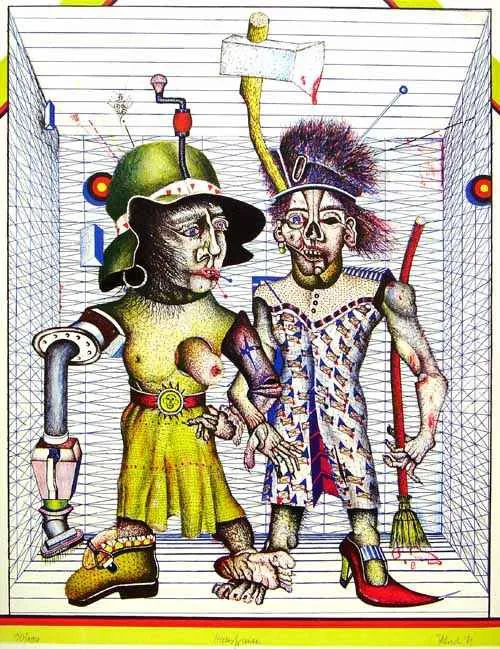
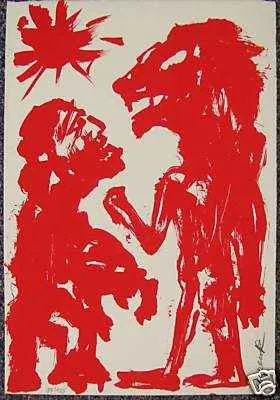
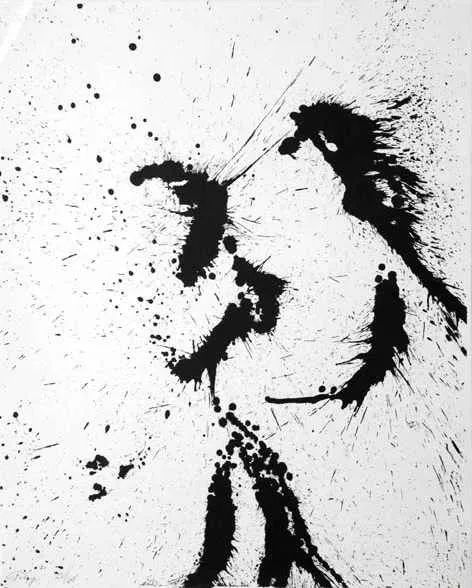
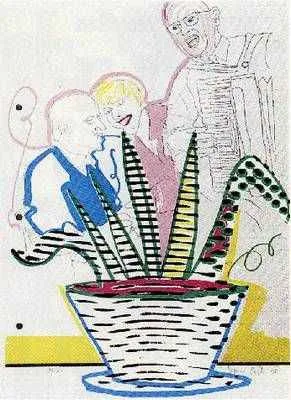
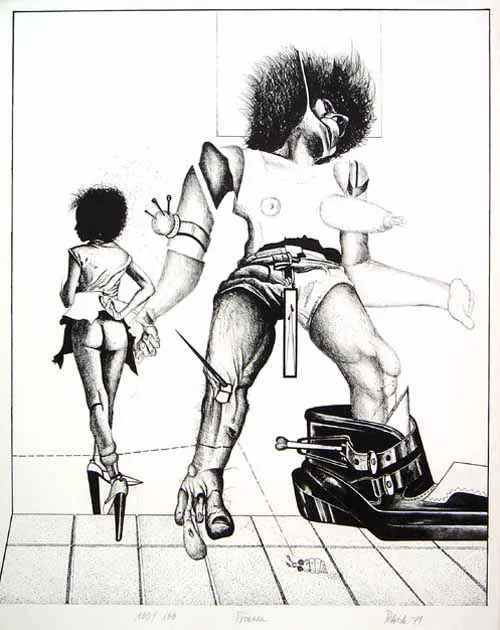
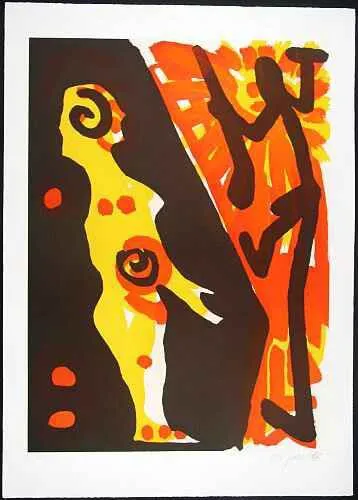
The exhibition will present works by Joseph Beuys, Adolf Frohner, A. R. Penck, Wolfgang Petrick, Sigmar Polke, Dieter Roth, Hermann Nitsch, Antoni Tàpies, and Mark Tobey. Thanks to the collaboration between the Regional Gallery in Liberec and the Litera Gallery in Prague, visitors have a unique opportunity to view graphic works by these internationally acclaimed artists. A frequent theme in the works of these artists was the absurdity of war conflicts, and the resulting feelings of existential anxiety and crisis experienced by people living in an ever-changing and fragile world. For them, artistic activity became a key to revealing inner emotions as well as a mirror held up to society's face.

These artists responded to events with abstract and expressionist paintings that came from the artists' inner selves. Or they ironically depicted the situation through critical realism. The graphic cabinet will be dominated by the work of the German neo-expressionist A. R. Penck. Expressionist art – expressionism was, with a few exceptions, primarily a German phenomenon. The movement emerged at the beginning of the 20th century. After the end of World War II, it developed into abstract expressionism, and in the 1980s it reappeared as neo-expressionism. It does not derive from depicting reality, but from the subjective feelings of the artists.

EXHIBITING ARTISTS

Joseph Beuys (1921–1986) was the most important member of the international art group Fluxus (1960s and 1970s). He aimed to abolish the boundaries between art and life. Through his projects, objects, and installations, he challenged social reality. He responded to political and social events, for example, by founding his own political party. Beuys was also regarded as a philosopher and visionary.

Expressive Art – Expressionism
Abstract Expressionism

Adolf Frohner (1934–2007) Adolf Frohner was an Austrian painter, graphic artist, and sculptor. In the 1960s, he traveled to Paris on a scholarship, where he became familiar with the work of the Nouveau Réalistes. He was active in Viennese Actionism, a movement that attacked societal taboos. Violence became a constant motif in Frohner's work, often represented through bound female bodies.

Hermann Nitsch (1938) Austrian artist Hermann Nitsch is associated with Viennese Actionism. The excessive form of action art in the 1960s aimed to break social, sexual, and religious taboos. Nitsch's Theatre of Orgies and Mysteries stood at the forefront of this movement, highlighting the repression of human instincts and the mutilation of the individual. His performances allow instincts and desires to run free.

A. R. Penck (1939) A. R. Penck, born Ralf Winkler, was born in Dresden. A formative experience of his childhood was surviving the bombing of his hometown, which deeply affected him. Themes of war later became reflected in his art. Painting became his dominant medium, but he also worked in sculpture and took an interest in music, film, and the natural sciences. His work is strongly influenced by Neo-Expressionism.

Wolfgang Petrick (1939) German artist Wolfgang Petrick was a member of the Berlin-based gallery Grossgörschen 35 in the 1960s. The artistic program of this group focused mainly on criticism of ongoing wars and violence. He devoted his work to socially critical themes. Petrick often expressed his views through the use of caricature.

Revealing inner emotions
A sense of existential anxiety and crisis experienced by people living in a constantly changing and fragile world.

Sigmar Polke was born in the Polish town of Oleśnica. Due to the communist regime, he emigrated to West Germany in 1953. In the 1960s, he became one of the co-founders of the artistic group Capitalist Realism. This group critically opposed so-called Socialist Realism and responded to the consumerist lifestyle of the capitalist West. Polke’s work was ironic and provocative. Dieter Roth, a Swiss-German artist, became famous for his artist's books, sculptural objects, and paintings made from decaying materials. Through his obsessive work, he offered radical criticism of his time. He expressed a sense of despair through drawings and prints full of raw, wild energy.

Spanish painter and printmaker Antonio Tàpies is one of the most important living artists in the world. A self-taught artist and a leading representative of Art Informel, he began in the 1950s to experiment with a variety of materials, which he incorporated into his paintings. His work is associated with Tachisme and Abstract Expressionism. American painter Mark Tobey was one of the main representatives of lyrical expressionism and action painting. His technique was based on spiritual experiences drawn from Zen Buddhism and Chinese calligraphy. He understood the painting process as a form of meditation.

Unveiling inner emotions

Visit also

Women’s World

Women’s World

4/23/2027 – 10/10/2027

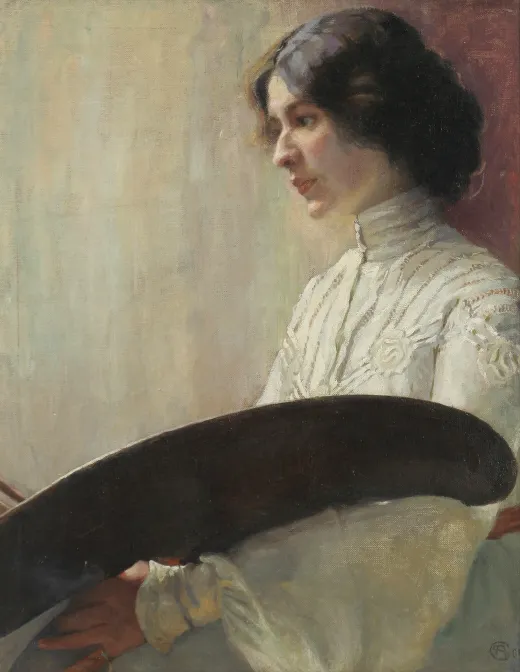
The exhibition Women’s World explores the changing status and perception of women artists from the early 19th century to 1911. Rather than attempting to provide a comprehensive overview of art created by women, it focuses on how women’s work was interpreted by contemporary critics and the wider public, and how their opportunities were shaped by prevailing social ideas about women’s roles. Through selected artists and their works, the exhibition traces the journey from viewing artistic practice as a pastime and a cultivated way of spending leisure time to the gradual recognition of women as professional artists. Particular attention is paid to the contemporary press, which not only reflected these attitudes but also helped shape them. The exhibition captures the tension between persistent stereotypes and attempts to transcend them, showing how women’s place in the art world evolved over time.

Double annual entry fee
The best way to enjoy art? In pairs. Only 1000 CZK per year!

Discounted admission for everyone who loves art and wants to share the experience with a loved one.

Visit us

Masarykova 723/14
Liberec 460 01
CZ

Opening hours

monday
tuesday
wednesday
thursday
friday
saturday
sunday
closed
10.00–18.00
10.00–18.00
10.00–19.00
10.00–19.00
10.00–18.00
10.00–18.00

Entrance fees

Standard admission
180 Kč
Reduced admission
100 Kč

Exhibition galleries are closed. The Design Shop and café remain open during regular opening hours.