Jakub Schikaneder | New Discoveries of Works by the Painter of Mysterious Moods

CuratorTomáš Vlček, Zuzana Štěpenovičová
Standard admission
180 Kč
Reduced admission
100 Kč
from 2/15/2007
to 3/25/2007
New Discoveries of Works by the Painter of Mysterious Moods

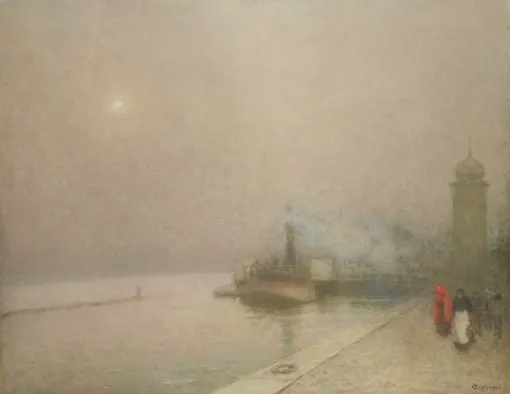
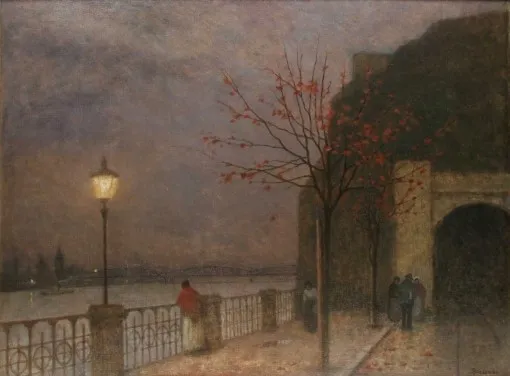
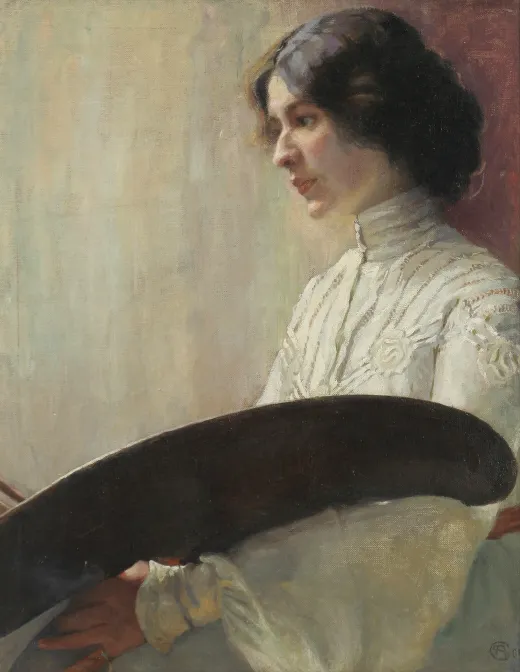
The Regional Gallery in Liberec offers its visitors an attractive exhibition of Jakub Schikaneder’s oil paintings – New Discoveries of Works by the Painter of Mysterious Moods, prepared by the East Bohemian Gallery in Pardubice in cooperation with the National Gallery in Prague. Jakub Schikaneder (1855–1924) belongs to the few painters of the turn of the century who are warmly welcomed by today’s cultural public. His melancholic genre scenes, the poetry of Prague’s corners, and the magic of light in fleeting moments of the day speak to contemporary viewers perhaps even more than to his contemporaries at the time of their creation. A catalog was published for the exhibition. The vernissage will take place on February 15, 2007, at 4:30 p.m.

The Regional Gallery in Liberec is presenting the work of Jakub Schikaneder (1855–1924) for the first time in its history. Schikaneder is considered one of the leading Czech painters at the turn of the 19th and 20th centuries. The exhibition is titled New Discoveries of the Painter of Mysterious Moods because, in addition to well-known paintings, it also features works discovered after the major retrospective of J. Schikaneder held at the Wallenstein Riding School in Prague in 1998.

Jakub Schikaneder began his studies at the Academy of Fine Arts in Prague, attending the studios of Josef Matyáš Trenkwald, Antonín Lhota, and Jan Sweerts. After completing his studies in Prague, he continued at the Munich Academy under the sentimentally psychological painter Gabriel Max, who had a profound and long-lasting influence on his artistic development.

Attractive oil paintings

In 1880, together with Emanuel Liška, he participated in a competition for the decoration of the National Theatre. However, their work was replaced by Václav Brožík’s after the National Theatre building fire. For many years, he was devoted to teaching; from 1885 he was an assistant, and from 1890 to 1922 a professor at the newly founded Prague School of Applied Arts.

Jakub Schikaneder’s early paintings show his strong social awareness, depicting poor people and their tragic fates in countless variations. Formally, these are genre paintings with a social subtext, which in the 1890s gradually developed into pronounced realism. During this period, views of old Prague began to appear on his canvases, sometimes familiar (Memory of Twilight on the Charles Bridge, c. 1905–15), sometimes less known and abandoned places on the outskirts, seen in the muted colors of dusk, autumn, or winter moods.

Paintings illuminated by the flickering light of street gas lamps, to which he often gave musical titles (Prague Nocturne, 1905), and nostalgic interiors with lamps or views into gardens became typical of this painter. The atmosphere of the paintings is emphasized by human figures. Even when small, they are omnipresent, reminding us of pleasant encounters with both known and unknown people. The figures also determine the scale of the painting and testify to the artist’s engagement and effort to empathize with their fates.

Towards the end of his life, Schikaneder was influenced by 19th-century English landscapists, neo-impressionism, and luminism. The clearly defined shapes of urban landscapes gave way to themes of the sea and seashores, or riverbanks. The light of northern coastal countries filled canvases such as Coast (1918–20) or Helgoland (c. 1923). He often worked with the so-called dry painting technique, where only traces of pigment remain on the canvas after wiping off the paint. Figurative themes sometimes transition into abstract lyrical compositions, anticipating the development of art in the second half of the 20th century.

Jakub Schikaneder was for a long time received by the professional public with some reservations because he did not respond to contemporary modernist painting developments with grand gestures. Nevertheless, distant echoes of dialogue with symbolism (Dalibor, 1892–96), fauvism, and expressionism can be found in his work. However, in the second half of his life, it seems that the most important thing for him was to depict intimately known places and objects with a poetic mood that allows one to dream and, with the help of harmonious colors and muted Central European light, step out of the flow of time into a harmony of timelessness.

Visit also

Women’s World

Women’s World

4/23/2027 – 10/10/2027

The exhibition Women’s World explores the changing status and perception of women artists from the early 19th century to 1911. Rather than attempting to provide a comprehensive overview of art created by women, it focuses on how women’s work was interpreted by contemporary critics and the wider public, and how their opportunities were shaped by prevailing social ideas about women’s roles. Through selected artists and their works, the exhibition traces the journey from viewing artistic practice as a pastime and a cultivated way of spending leisure time to the gradual recognition of women as professional artists. Particular attention is paid to the contemporary press, which not only reflected these attitudes but also helped shape them. The exhibition captures the tension between persistent stereotypes and attempts to transcend them, showing how women’s place in the art world evolved over time.

Single annual entry fee
Stay in the loop all year long!

Get an annual pass and never miss an exhibition again.

Visit us

Masarykova 723/14
Liberec 460 01
CZ

Opening hours

monday
tuesday
wednesday
thursday
friday
saturday
sunday
closed
10.00–18.00
10.00–18.00
10.00–19.00
10.00–19.00
10.00–18.00
10.00–18.00

Entrance fees

Standard admission
180 Kč
Reduced admission
100 Kč

Exhibition galleries are closed. The Design Shop and café remain open during regular opening hours.