Jaroslav Valečka | Dream of the North

CuratorZuzana Štěpanovičová
Standard admission
180 Kč
Reduced admission
100 Kč
from 12/15/2016
to 2/26/2017
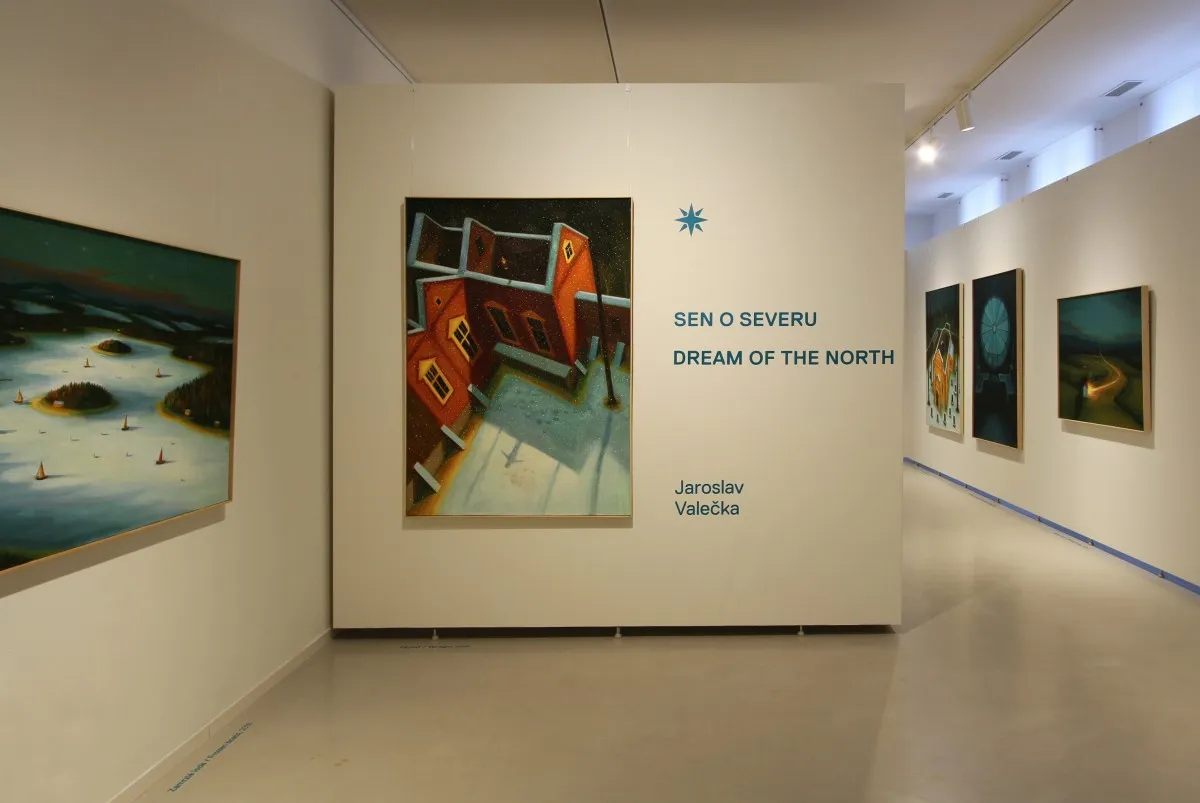
Exhibition Dream of the North

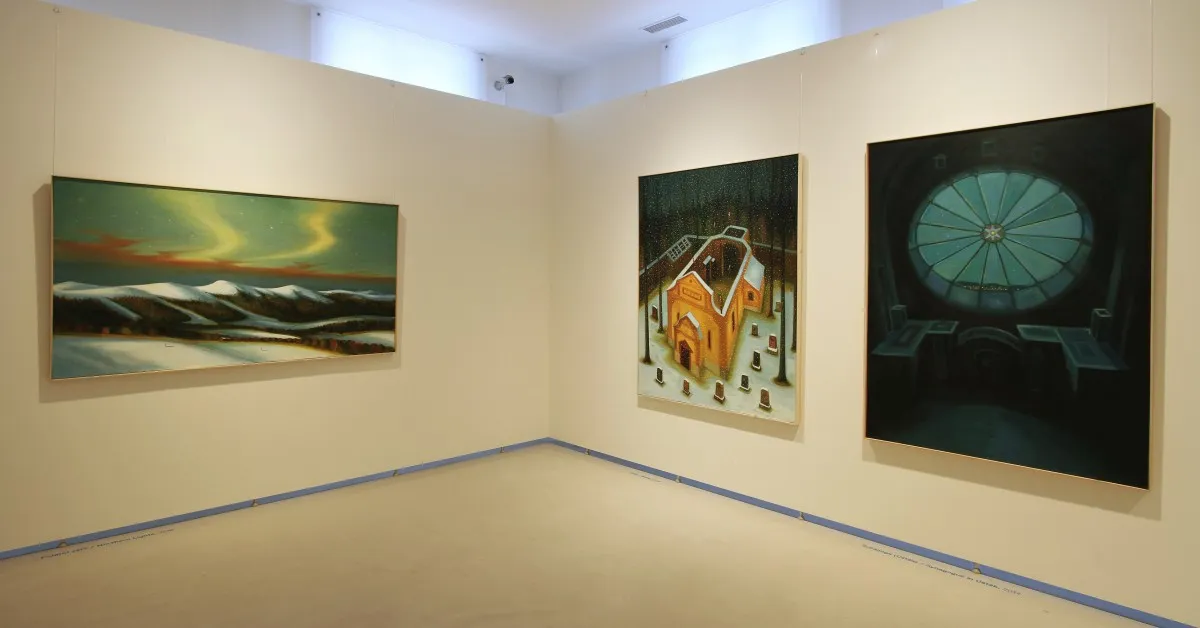
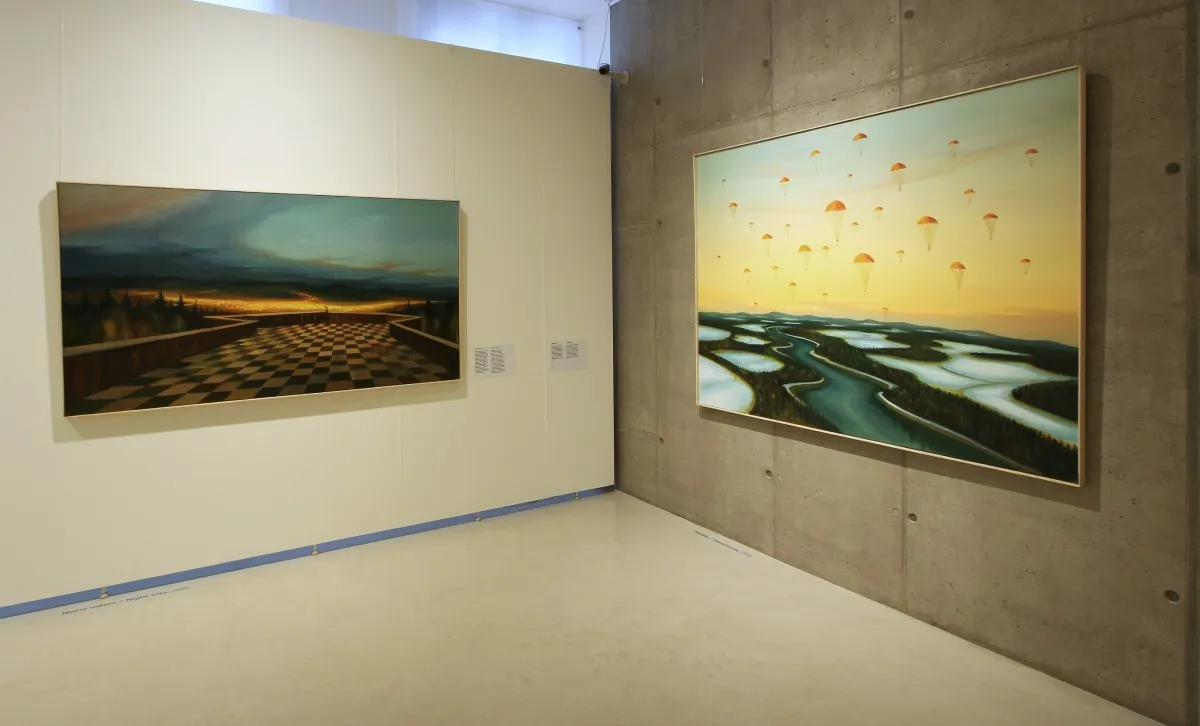
The work of Jaroslav Valečka is rooted in inspiration from the north of Bohemia, most often the mountainous landscapes of the Lusatian and Jizera Mountains, and stories connected with the original inhabitants of the Sudetenland. The evocative paintings of Jaroslav Valečka reflect a wide range of dreamlike imagery, from poetic and balladic to mysterious and emotionally intense.

The artist studied painting under Jiří Sopko and sculpture under Professor Jan Hendrych, and completed internships at academies in Germany, Norway, and the Netherlands. He entered the art scene at a time that emphasized conceptual tendencies and new media. For this reason, he gravitated toward the ideas of the Stuckist movement (from the English word “stuck” – as in stuck or halted in development), which promoted painting as a fundamental means of artistic expression. The Stuckists valued especially the French, German, and Nordic Expressionism of the late 19th and early 20th centuries, including such values as expression, immediacy, and emotion. Jaroslav Valečka is one of the leading representatives of Czech Stuckists; his work is also recognized and appreciated by English art critics.

Work inspired by the north of Bohemia
Evocative images reflecting a wide range of dreamlike scenes

The most characteristic expression of Jaroslav Valečka’s work is the landscape, often idyllically depicted at three times of day – at dawn, dusk, and night. All these times offer a refuge of calm that translates into a feeling of time standing still. The artist completes specific geographical places of northern Bohemia with his imagination and sometimes, following the example of Romantic painters, combines two distant places – for example, in the painting Night City, the view of nighttime Liberec merges with the Saxon fortress Königstein.

The charming mountain landscape, however, sharply contrasts with a shadowed history marked by the postwar population exchange. Abandoned and decaying private and public buildings, burned churches, and destroyed cemeteries formed the backdrop for the lives of people who often involuntarily moved to these places. This contrast for a long time foreshadows the character of the artist’s painting, which was among the first to artistically reflect the Sudeten regions.

The word “north,” however, is not bound only to geographical realities; it can also be understood in connection with Nordic poetics and Nordic artists. Among those who symbolically stood at the cradle of Jaroslav Valečka’s artistic vision are painters Caspar David Friedrich and Edvard Munch, as well as the filmmaker Ingmar Bergman.

In his depiction of human stories, one can trace the Bergmanian principle of returning to the past of the narrative, emphasizing the psychological complexity of the characters and the desire to delve into the dark secrets of the human psyche. The themes of his paintings periodically repeat; the paintings resemble film scenes loosely connected by a single story. New motifs also appear in his work, such as aerial views of architecture, carnival masks, and more. This is an atypical approach to creation but reflects his artistic method—systematically embodying his dreams (and sometimes nightmares) step by step.

A 72-page catalog was published for the exhibition in cooperation with Kant Publishing.

Visit also

Women’s World

Women’s World

4/23/2027 – 10/10/2027

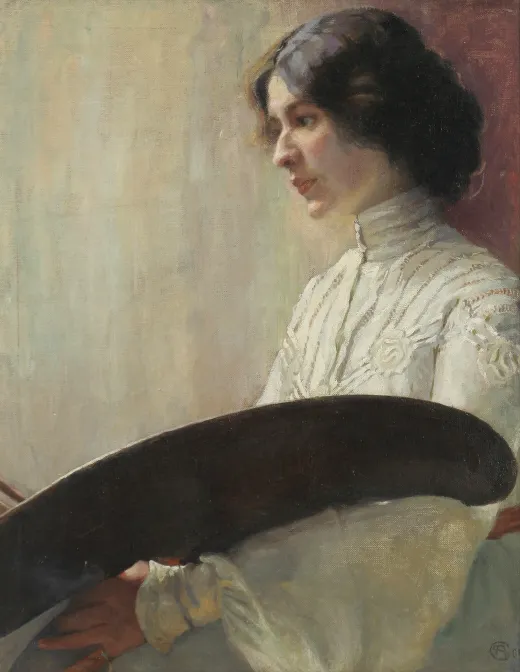
The exhibition Women’s World explores the changing status and perception of women artists from the early 19th century to 1911. Rather than attempting to provide a comprehensive overview of art created by women, it focuses on how women’s work was interpreted by contemporary critics and the wider public, and how their opportunities were shaped by prevailing social ideas about women’s roles. Through selected artists and their works, the exhibition traces the journey from viewing artistic practice as a pastime and a cultivated way of spending leisure time to the gradual recognition of women as professional artists. Particular attention is paid to the contemporary press, which not only reflected these attitudes but also helped shape them. The exhibition captures the tension between persistent stereotypes and attempts to transcend them, showing how women’s place in the art world evolved over time.

Admission for educational programs
Knowledge Through Art

The mission of the education department's programs is to introduce students to the gallery environment, helping them overcome any hesitation about creating art and any initial apprehension about engaging with an unfamiliar space.

Program for Schools (60 / 90 min)

Show your pupils and students the true essence of art!

Art Workshop
Art Workshop

Become an artist for a moment with your children.

Visit us

Masarykova 723/14
Liberec 460 01
CZ

Opening hours

monday
tuesday
wednesday
thursday
friday
saturday
sunday
closed
10.00–18.00
10.00–18.00
10.00–19.00
10.00–19.00
10.00–18.00
10.00–18.00

Entrance fees

Standard admission
180 Kč
Reduced admission
100 Kč

Exhibition galleries are closed. The Design Shop and café remain open during regular opening hours.