Jiří Straka | In the Shadow of the Fire, in the Bluish Silences

CuratorMartin Dostál
from 9/13/2024
to 1/12/2025
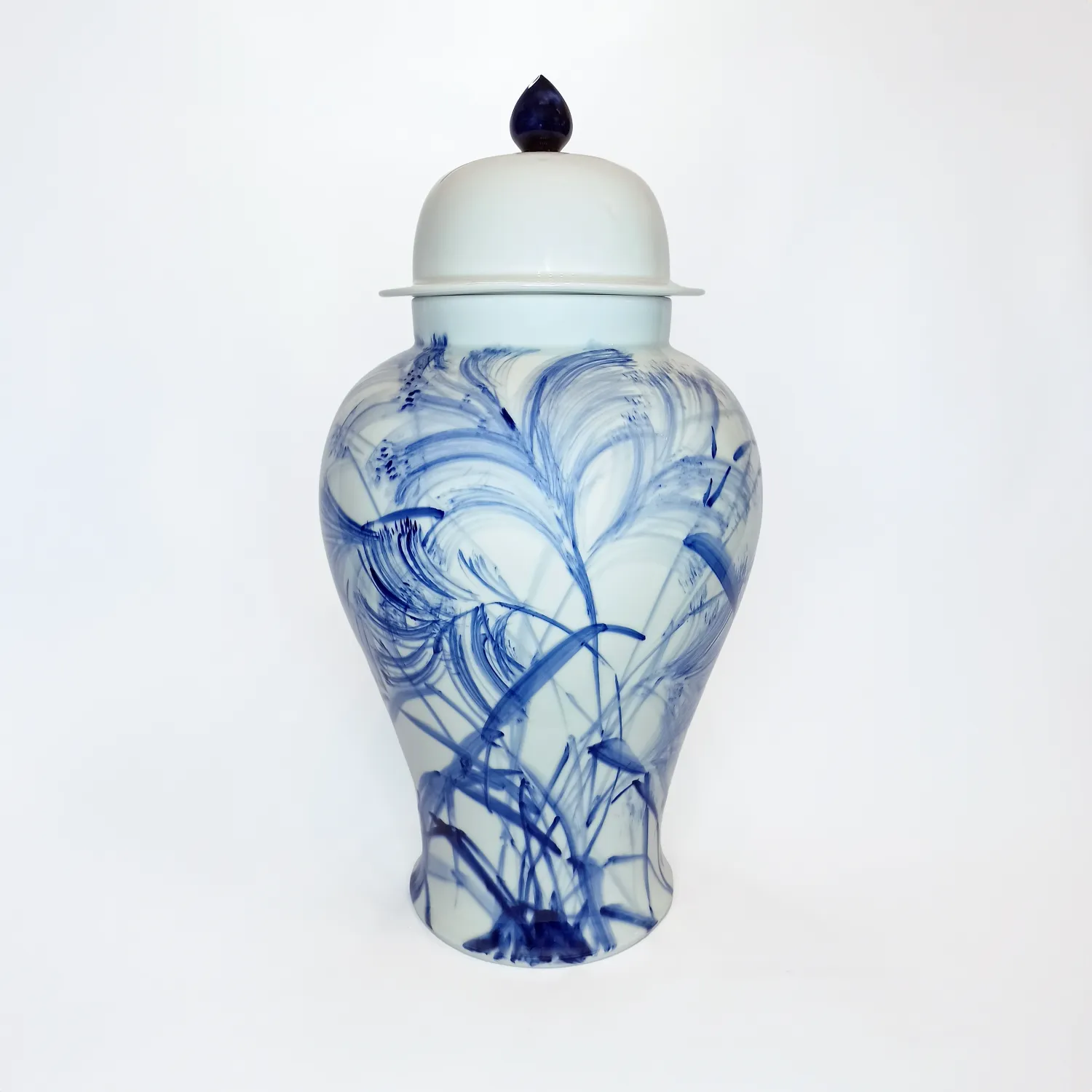
Jiří Straka, Dragonfly, 2024

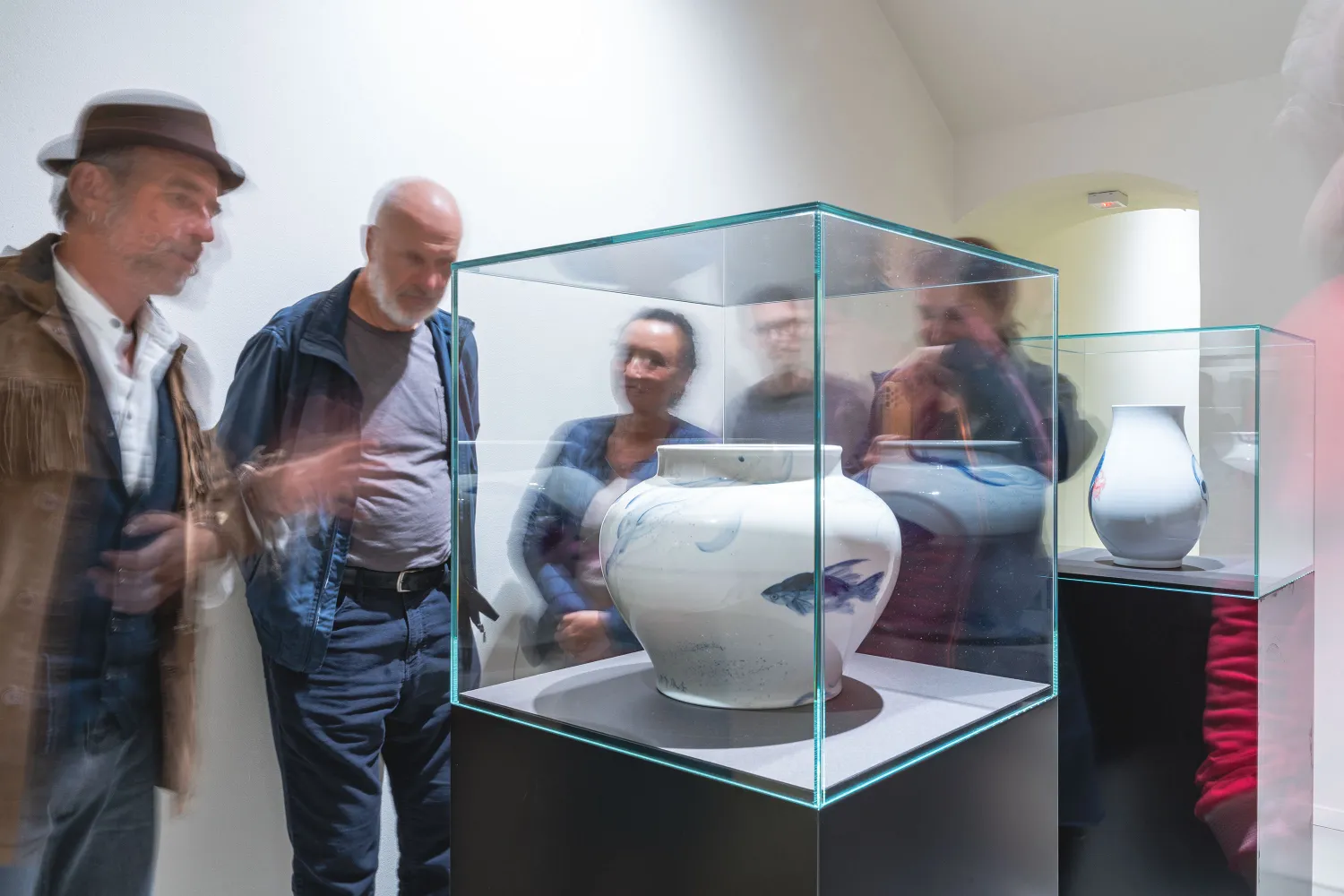
Porcelain is one of the fundamental cultural and historical phenomena that originated in the Middle Kingdom. However, it is also one of the means of expression of contemporary Western art. Jiří Straka (b. 1967), who splits his time between Prague and Beijing, uses traditional Chinese art techniques – in addition to porcelain, also ink wash painting in order to incorporate current "Western" themes onto East Asian artistic foundations. The result is a thrilling transcultural spectacle that spans centuries.

Jiří Straka's position in the context of Czech, European, and certainly Chinese art is far from straightforward. From a Western perspective, it is uncommon for a European artist to express themselves through such traditional artistic techniques as ink painting and painting on porcelain. Mastery of these techniques also requires a deep understanding of the history of ink painting and quite a long "practice" period. After all, both are essential to this Chinese visual expression.

Jiří Straka, Grasses, 2024
Jiří Straka | In the Shadow of the Fire, in the Bluish Silences

From the perspective of Chinese visual art, Straka's position is also somewhat awkward. The Chinese art avant-garde of the past 40 years, as the world has come to know it, distanced itself from ink painting, as a medium deeply tied to Chinese cultural and social mentality, while seeking a way to engage with the global "Western" context. However, they did not abandon Chinese thematic or social ties, instead utilizing “Western” painting, object, or installation methods. Straka, in simple terms, does the opposite. Moreover, he is penetrating the vast Chinese art scene as a Westerner. Thankfully, he has a Chinese wife.

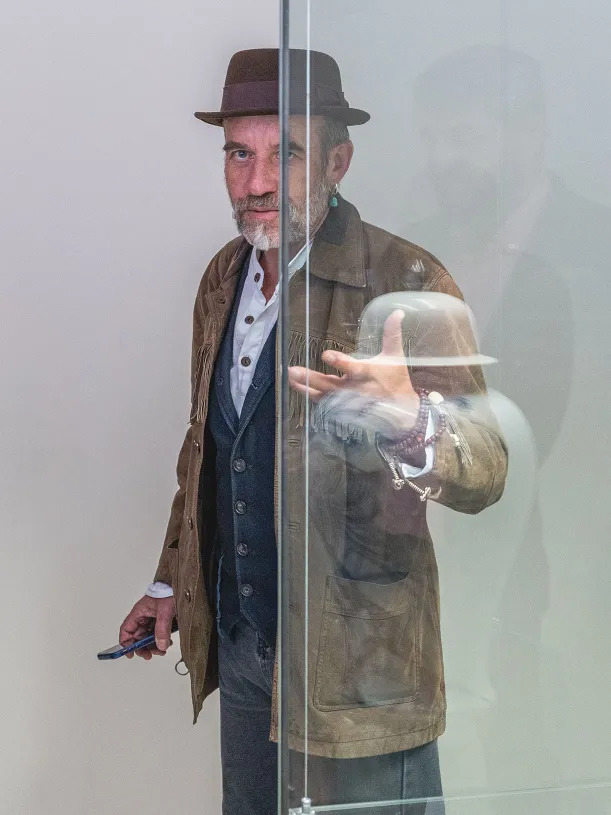
Jiří Straka

Jiří Straka was born in 1967 in Prague, but he spent his childhood and youth in the town of Roztoky near Jilemnice in the Krkonošsko region. From time to time, he returns there, but he mostly divides his time between Prague and Beijing. In China, he also occasionally visits the city of Guiping in Guangxi province, where the Straka family has a summer studio. In Prague, from 1989 to 1995, Jiří Straka studied Sinology at Charles University, and later, he spent the 1995–1996 academic year at the Central Academy of Fine Arts in Beijing, studying traditional ink painting in the studio. This fulfilled his desire to master this distinctive painting technique professionally and to live up to his high school nickname, Qi Baishi, named after the most famous and prominent Chinese painter of the first half of the 20th century.

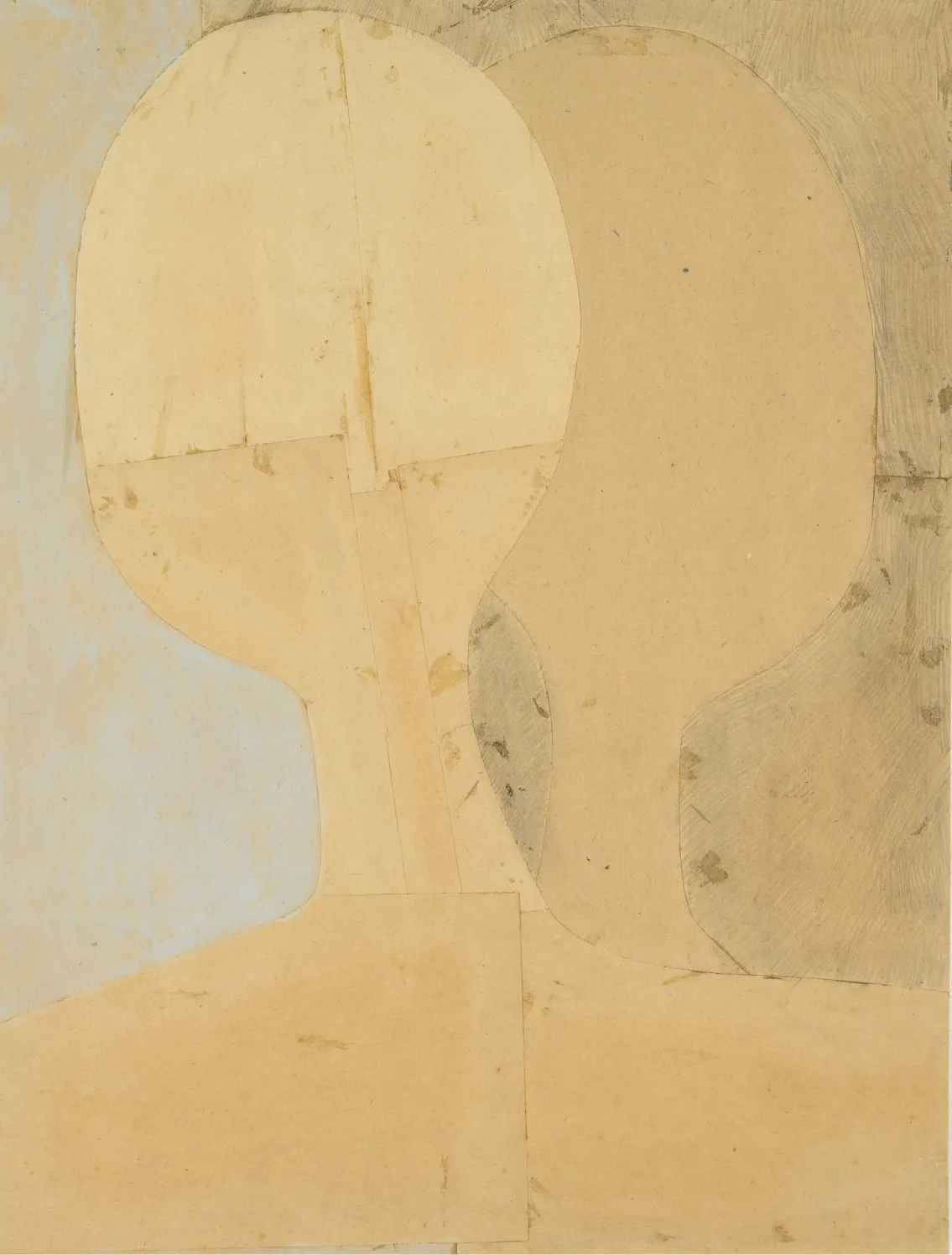
Jiří Straka
Jiří Straka

In the spirit of Baishi's late works, which focus on details and a relaxed, emotionally charged brushstroke, Straka continues with themes that push the boundaries of ink painting beyond Far Eastern concepts. As for the no less traditional porcelain: Jiří Straka creates his porcelain objects, which reflect traditional forms, in the city of Jingdezhen. This city has been producing ceramics for over 1,000 years, and the production of blue-and-white porcelain dates back to the Yuan Dynasty in the 14th century. These pieces are hand-thrown with original cobalt painting under the glaze. Straka brings his "Western" view of reality into the porcelain, generating a unique shift in meaning and time by very originally connecting with the export of Chinese blue-and-white porcelain, which captivated European aristocracy, especially in the 17th and 18th centuries.

Visit us

Masarykova 723/14
Liberec 460 01
CZ

Opening hours

monday
tuesday
wednesday
thursday
friday
saturday
sunday
closed
10.00–18.00
10.00–18.00
10.00–19.00
10.00–19.00
10.00–18.00
10.00–18.00

Entrance fees

Standard admission
180 Kč
Reduced admission
100 Kč

Exhibition galleries are closed. The Design Shop and café remain open during regular opening hours.


Visit Also

Čestmír Suška on Paper

Čestmír Suška on Paper

11/21/2026 – 5/9/2027

The exhibition Čestmír Suška on Paper offers the most comprehensive survey to date of a lesser-known yet remarkably significant aspect of the artist’s oeuvre. Through drawings, prints, sketches, journals and other works on paper created alongside his sculptural practice since the late 1970s, it reveals Suška’s creative process, his experimentation and his search for forms that would later develop into monumental sculptural works.


Małgorzata Mirga-Tas, Sráč Sam | Companion

Małgorzata Mirga-Tas, Sráč Sam | Companion

10/17/2026 – 3/28/2027

The exhibition presents a dialogue between two distinctive female artistic voices — Polish visual artist of Roma origin Małgorzata Mirga-Tas and Czech artist Sráč Sam. Both work with textiles as a medium of memory, identity, and female experience. While Małgorzata Mirga-Tas focuses on the Roma community and its visual and narrative representation, in the context of this exhibition Sráč Sam works with an architectural installation in which textiles appear only minimally, through the everyday carrier of meaning represented by sewn clothing. At the same time, the large-scale architectural structure demonstrates the interconnectedness of the individual elements of the overall composition, as well as the idea that having a place to rest and find support is a prerequisite for creating content and relationships.

Erwin Wurm | One Minute Forever

Erwin Wurm | One Minute Forever

10/17/2026 – 3/28/2027

In line with its long-term development strategy, the Museum of Fine Arts Liberec will present one of the most significant contemporary artists from Central Europe, the Austrian sculptor and conceptual artist Erwin Wurm. His works have been exhibited at institutions such as the Albertina, Lenbachhaus, Galerie Thaddaeus Ropac and KÖNIG GALERIE. His artworks are included in the collections of the Solomon R. Guggenheim Museum, Walker Art Center, Museum Ludwig, Kunstmuseum St.Gallen, Musée d'art contemporain de Lyon, Museum Brandhorst, Centre Pompidou and many others. This exhibition will mark his very first solo presentation in the Czech Republic. With this project, the Liberec museum continues its programme of introducing major contemporary artists to Czech audiences, following exhibitions by Neo Rauch, Rosa Loy, Zsófia Keresztes and Koji Kakinuma.

Visit us

Masarykova 723/14
Liberec 460 01
CZ

Opening hours

monday
tuesday
wednesday
thursday
friday
saturday
sunday
closed
10.00–18.00
10.00–18.00
10.00–19.00
10.00–19.00
10.00–18.00
10.00–18.00

Entrance fees

Standard admission
180 Kč
Reduced admission
100 Kč

Exhibition galleries are closed. The Design Shop and café remain open during regular opening hours.