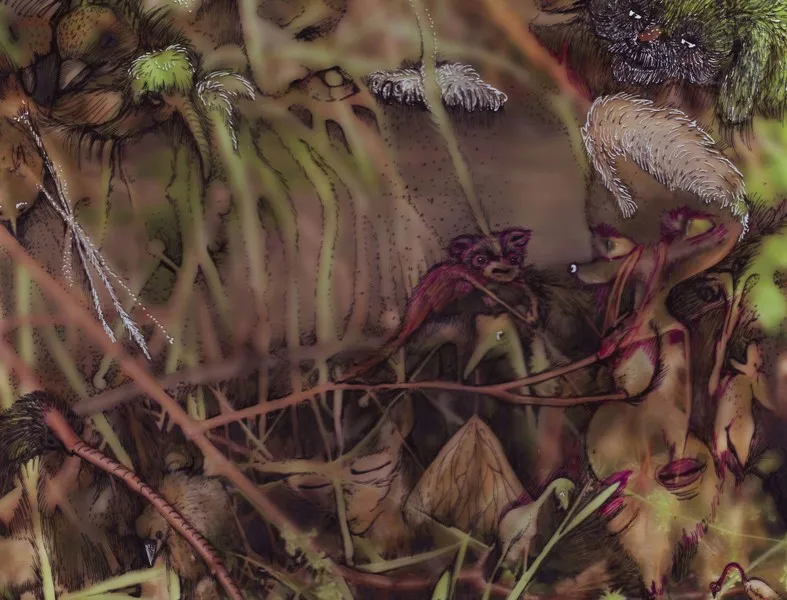
This is therefore an attempt to capture the image of a real landscape that remains within our inner world after being seen—an illustration of the internalisation process of what has been visually experienced, rather than a mimetic imitation of the landscape itself.
The titles of Robin Kaloč’s works—Architecture of the Forest, Forest Temple, Story of the Landscape, Emotion in the Landscape, or Meditation in the Landscape—reveal what fascinates him most about landscape.
Irena Kárníková (b. 1982)
Irena Kárníková is the only sculptor among the exhibiting artists. Nevertheless, she is presenting works on paper—or with paper. For her diploma work at the sculpture studio of Jindřich Zeithamml at the Academy of Fine Arts in Prague, she created papier-mâché sculptures. Her main discipline, however, is stone sculpture. Today, she is reportedly the only professional female stone sculptor in the Czech Republic. Her work focuses on plants and the vegetal realm: buds, sprouts, leaves, and exotic blossoms flourish in an abstracted visual language.
Alžběta Skálová (b. 1982)
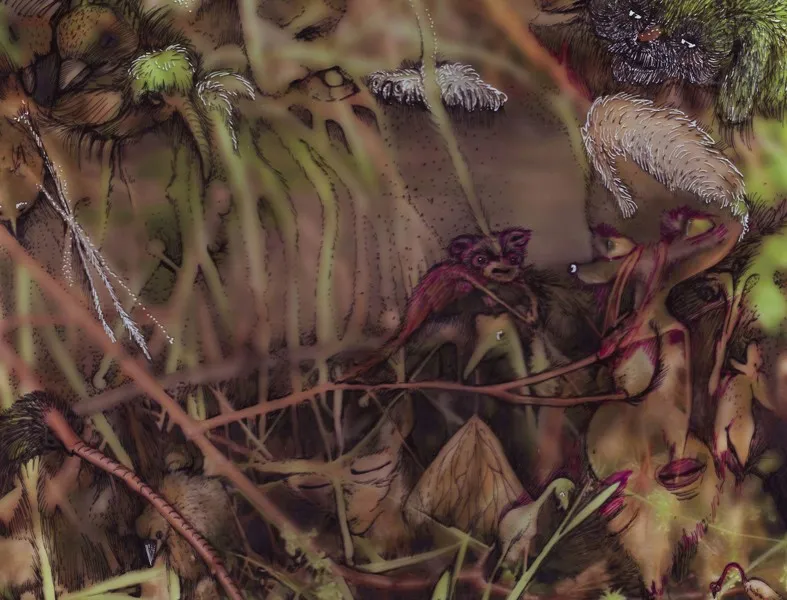
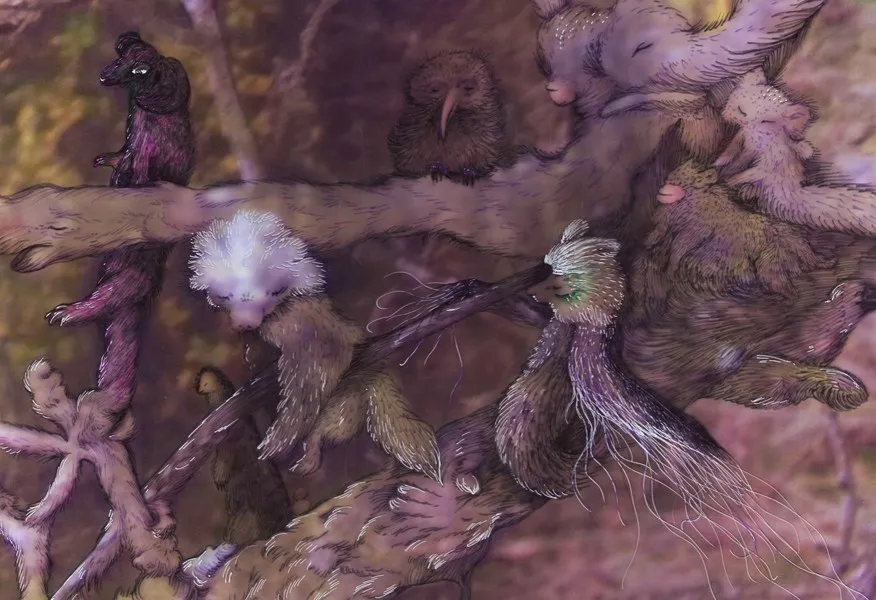
Although primarily known as an illustrator of children's books, Alžběta Skálová presents her personal, free-form work in this exhibition. Deeply rooted in the natural world she grew up in, she draws inspiration from both familiar real landscapes and still lifes, as well as from her own imagined, magical sceneries. Her works offer an escape into a world of fantastical shapes and mysterious gardens. Some of her watercolours evoke desert landscapes, others resemble underwater worlds. She finds inspiration for her delicate "inner landscapes" in her dreams and inner life.
She studied first in the Studio of Film and TV Graphics under Jiří Barta, and later in the Studio of Illustration and Graphics under Juraj Horváth at the Academy of Arts, Architecture & Design in Prague (UMPRUM).
Hana Šuranská (b. 1982)
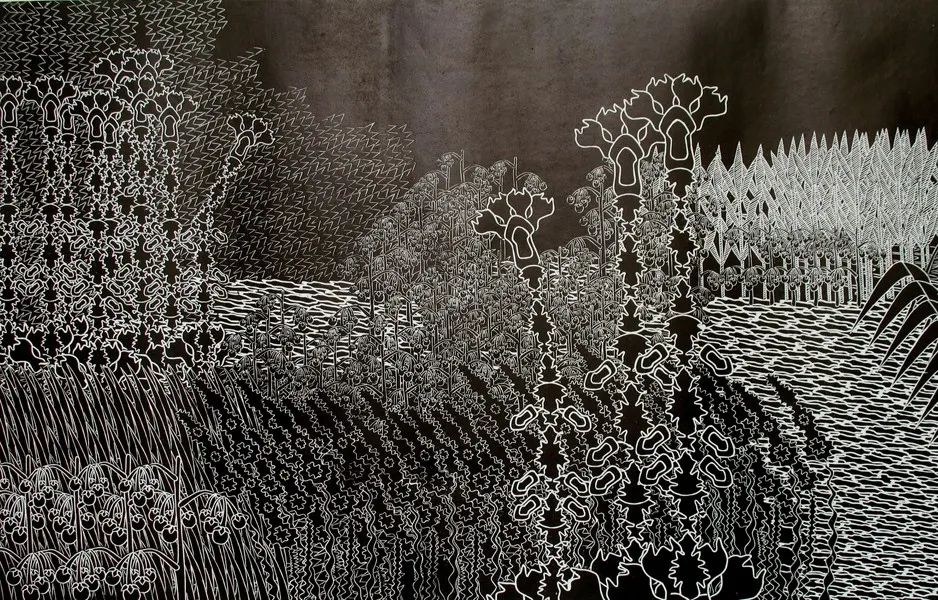
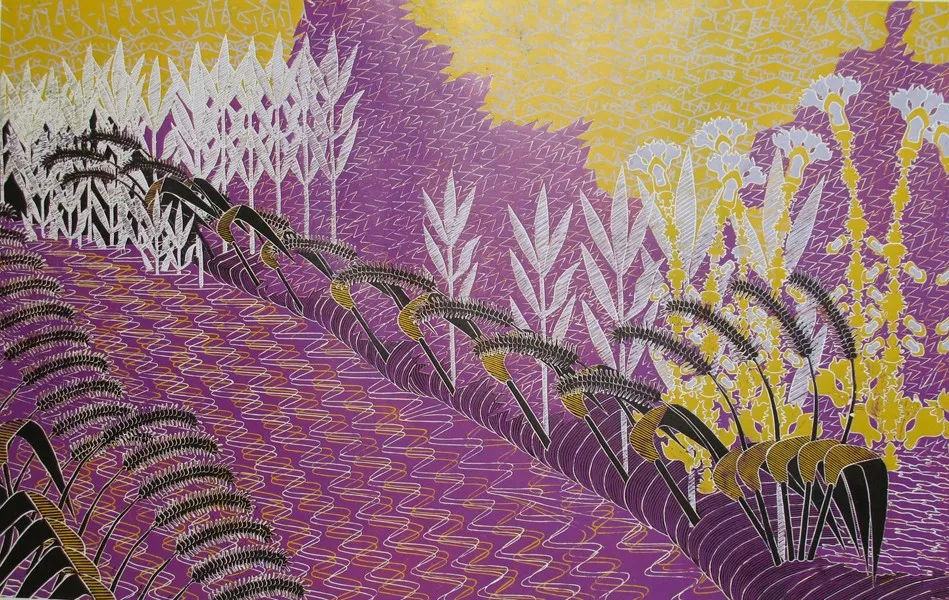
A 2011 graduate of Jiří Lindovský’s studio, Hana Šuranská presents a part of her diploma project in this exhibition. Her impressions and emotional responses to the landscape—specifically flora—are transformed into large-format prints using a unique etching technique on photocuprextite. The plant motifs are reduced to simplified signs which, through repetition, form nearly geometric surfaces. She previously applied this unorthodox technique in her Digital Vegetation series, which already signalled the main theme of her work: the interconnection between the natural and technological worlds.
http://hanasuranska-grafik.wz.cz