The decision of the Museum of Fine Arts Liberec to organize an exhibition of Japanese art in its premises was motivated by the desire to connect with Liberec’s tradition at the turn of the 19th and 20th centuries as a cosmopolitan city and the current public interest in Oriental art.
In the North Bohemian Industrial Museum in Liberec, founded in 1873, art-historical objects from the Orient, lent by the Oriental Museum in Vienna, were exhibited for the first time as early as 1883. Between 1885 and 1936, the Liberec museum presented works of Persian, Indian, Chinese, and Japanese origin from its own collections, first within temporary exhibitions and from 1886 also as part of a permanent display.
The most significant patron and honorary curator of the North Bohemian Industrial Museum, Baron Heinrich von Liebieg (1839–1904), collected not only European but also non-European art and owned, among other things, a substantial collection of Japanese applied art. From 1946, when the Museum of Fine Arts Liberec separated from the North Bohemian Museum, until 1968, five exhibitions of Oriental art were held in its premises. Exactly forty years later, the sixth exhibition opens here: Landscapes, Birds, and Flowers in 19th-century Japanese Art from the collections of the National Gallery in Prague.
The exhibition is a tribute to nature as expressed by Japanese masters of colored woodcuts. With outstanding technical and artistic qualities, Japanese woodcuts enchanted collectors worldwide already in the 19th century and remain among the most popular collectible disciplines. Due to the quality, scope, and age of its collection of Japanese prints, the National Gallery in Prague is among the leading European collections. The remarkable flourishing of woodcut as a reproductive technique is linked to the development of urban culture in Japan during the Tokugawa period (1615–1868), when peace prevailed on the islands for 250 years. During this time, the influence of the merchant and craftsman class in the three cities—the shogunate capital Edo, the emperor’s residence Kyoto, and the commercial and port center Osaka—increased significantly. This urban class created its own distinct culture, called ukiyo (“floating world”), which flourished alongside the high culture of the Japanese court aristocracy, lords, and numerous armies of samurai who, deprived of the ability to fight, were re-educated as literati, intellectuals, and officials.
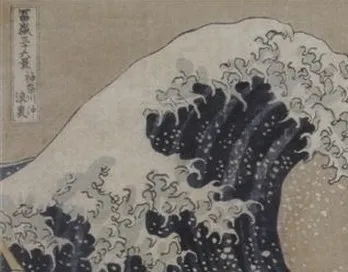
The artworks included in the exhibition focus thematically on famous Japanese scenic views and natural still lifes. Dominating the famous locations of Japan is Mount Fuji as depicted by Hokusai and the beautiful scenes along the Tōkaidō Road, which connected the imperial city Kyoto with the shogunate metropolis Edo, as depicted by Hiroshige. Popular motifs of flowers and birds—including all zoological and botanical species such as trees, bushes, grasses, mosses, animals, fish, reptiles, insects, and even stones—were continuously painted by almost all great painters. Visitors will find display cases with painting manuals (tekagami), where large paintings of Chinese and Japanese tradition were reproduced as woodcuts for the pleasure of enthusiasts and the education of beginner painters, as well as albums called gafu—printed graphics of classical painting schools active simultaneously with ukiyo-e schools.
The exhibition is complemented by several hanging scrolls with themes of landscapes, flowers, and birds, as well as examples of three-dimensional artifacts with natural motifs. A prominent piece of the exhibition is a demonstration of the demanding metalworking technique in the form of a bronze falcon.
Although the exhibited works were created only at the end of Japan’s long art history, they offer suggestions for comparison and reflection on the characteristic Japanese respect and sensitivity towards the landscape, all living and non-living representatives of nature, and the cycles of the four seasons that eternally repeat themselves.