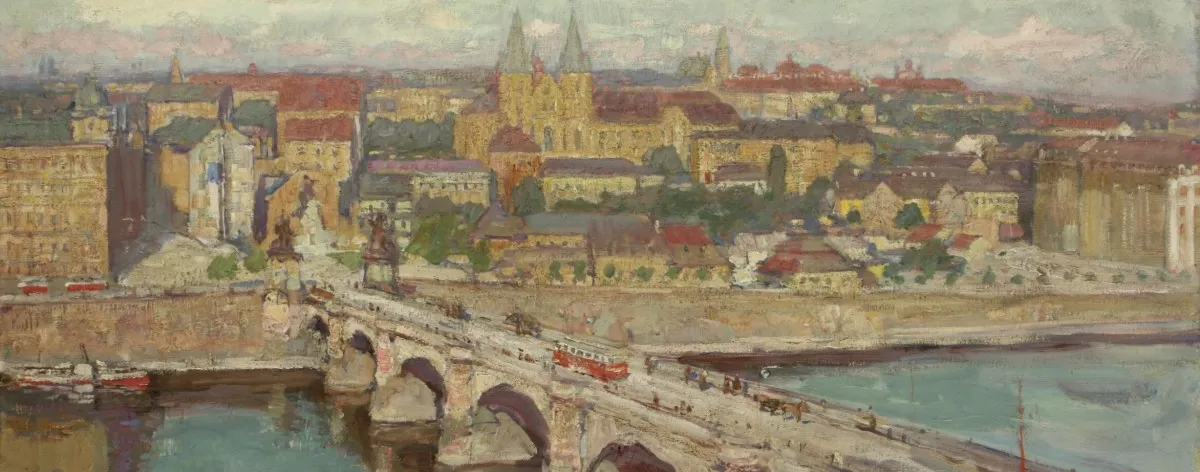
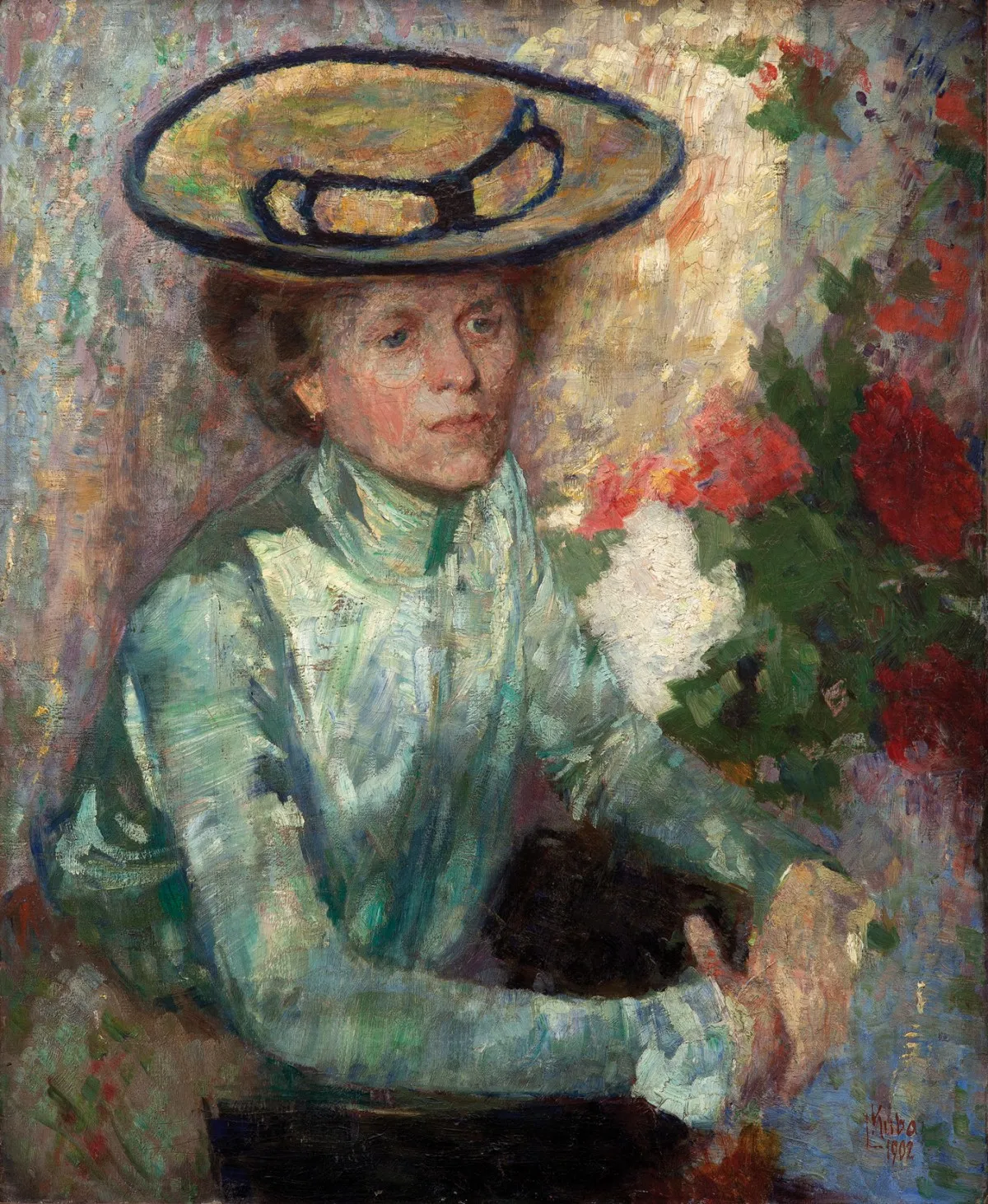
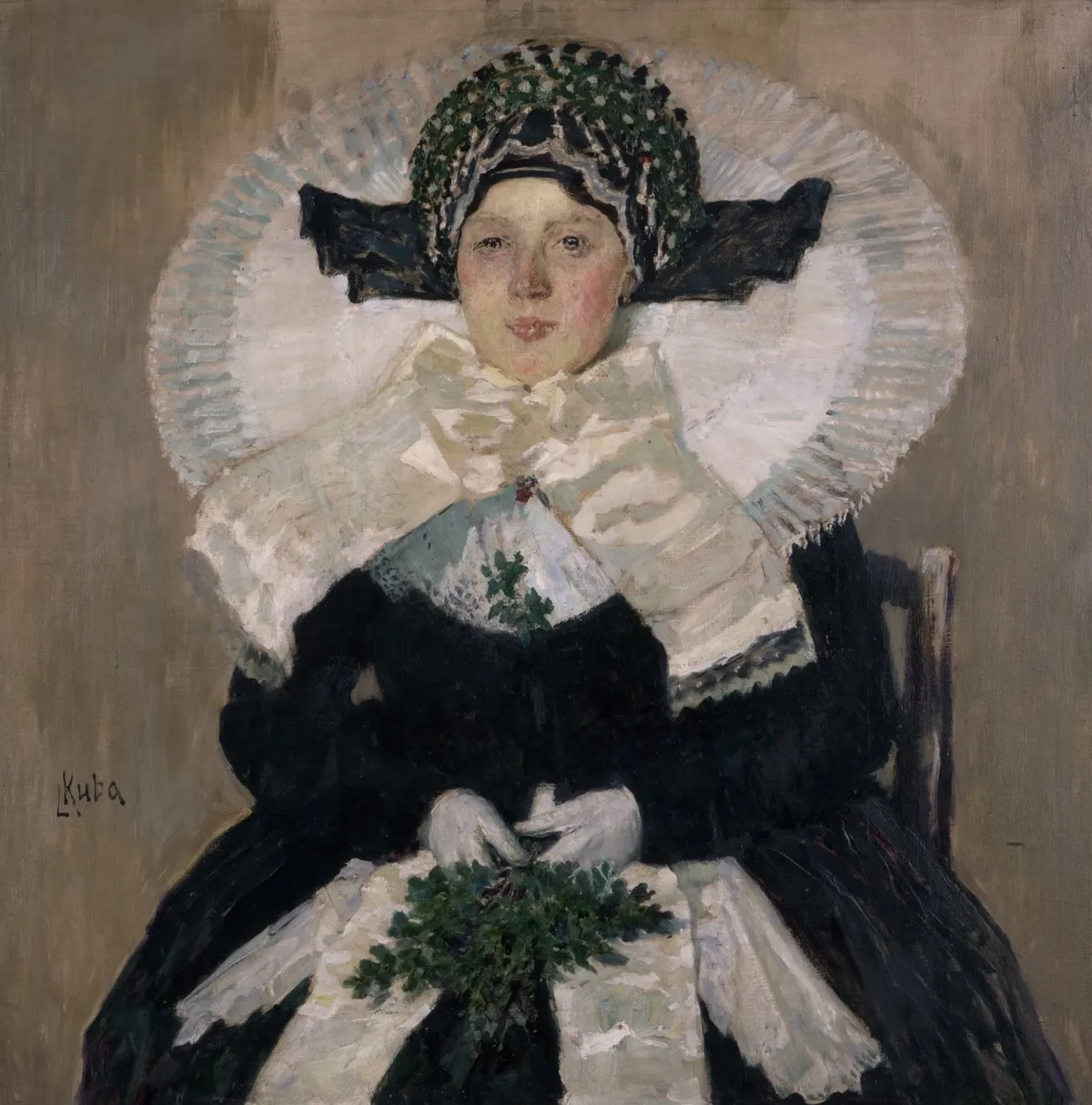
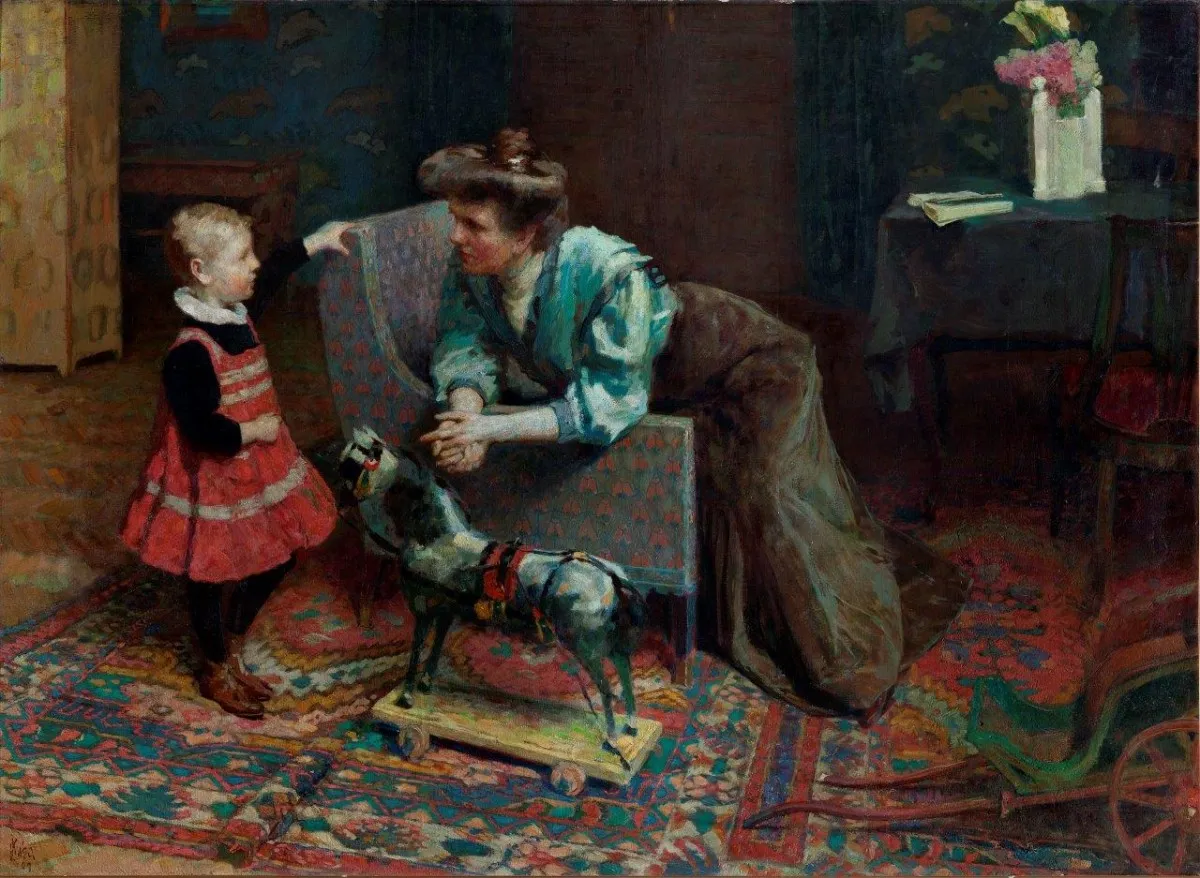
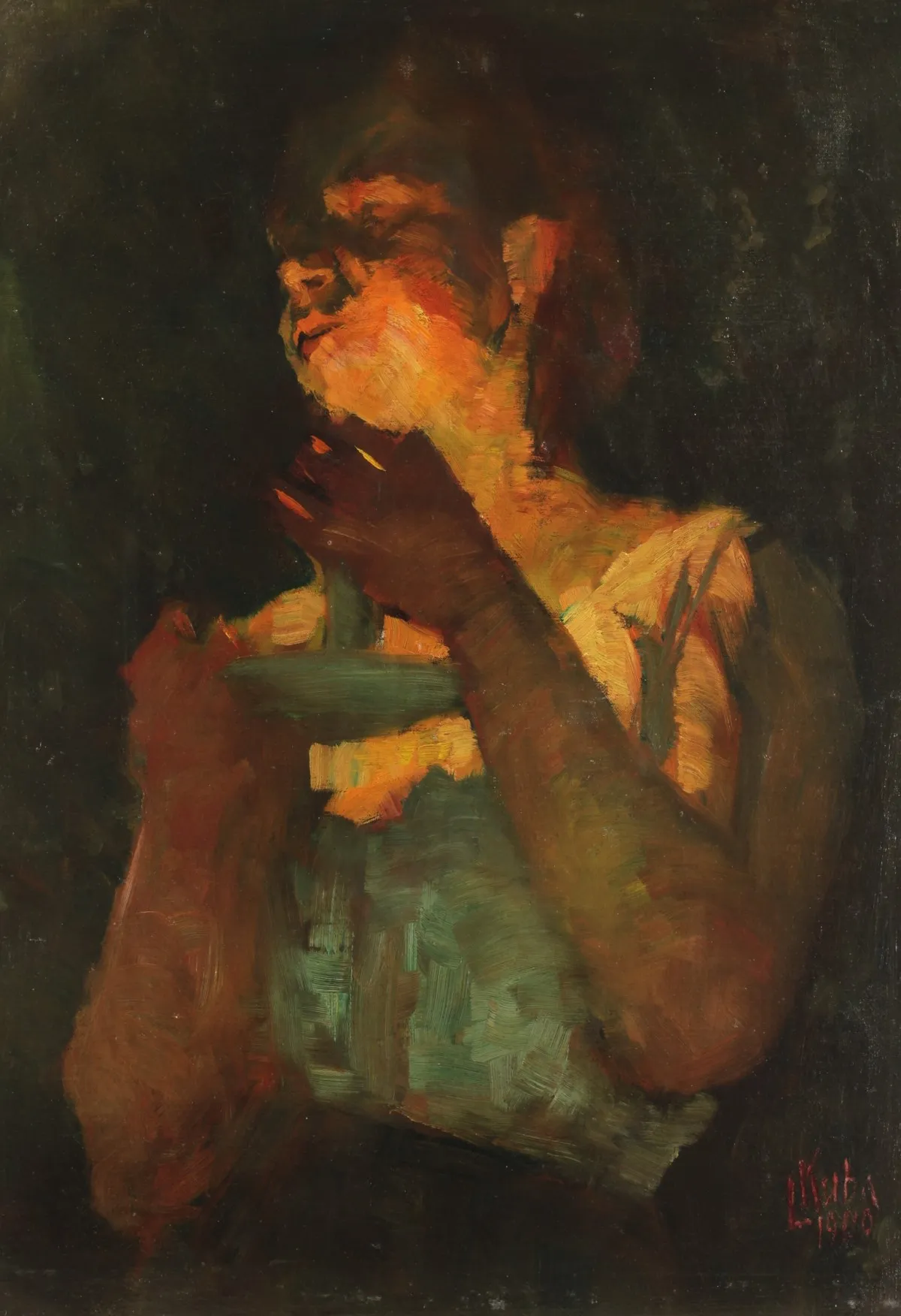
Ludvík Kuba (1863–1956) is a solitary figure in Czech art, and his work appears rarely in exhibition projects. After briefly studying at the Prague Academy, he went to Paris in 1893 and then spent a long time in other artistic centers at the turn of the 19th and 20th centuries: Munich and Vienna. Like most of his contemporaries, he was influenced by Impressionism and Art Nouveau, but a crucial period for him was his time at Anton Ažbe’s private school in Munich from 1896 to 1904, where he met Russian artists V. Kandinsky and A. Javlensky. From 1904, he lived in Vienna, where he also worked as the manager of the Hagenbund artistic society. He returned to Bohemia permanently in 1911, and for more than forty years after that, he dedicated himself to painting. His travels, which he undertook to collect Slavic songs, and his admiration for Chinese art, of which he owned a collection, were also reflected in his paintings. An interesting theme in Kuba's work is his self-portraits, which he continuously worked on from the end of the 19th century until his death.