Maja Nagelowa | At the Edge

CuratorJan Randáček a Cristina Boguszowa
Standard admission
180 Kč
Reduced admission
100 Kč
from 10/9/2020
to 5/30/2021
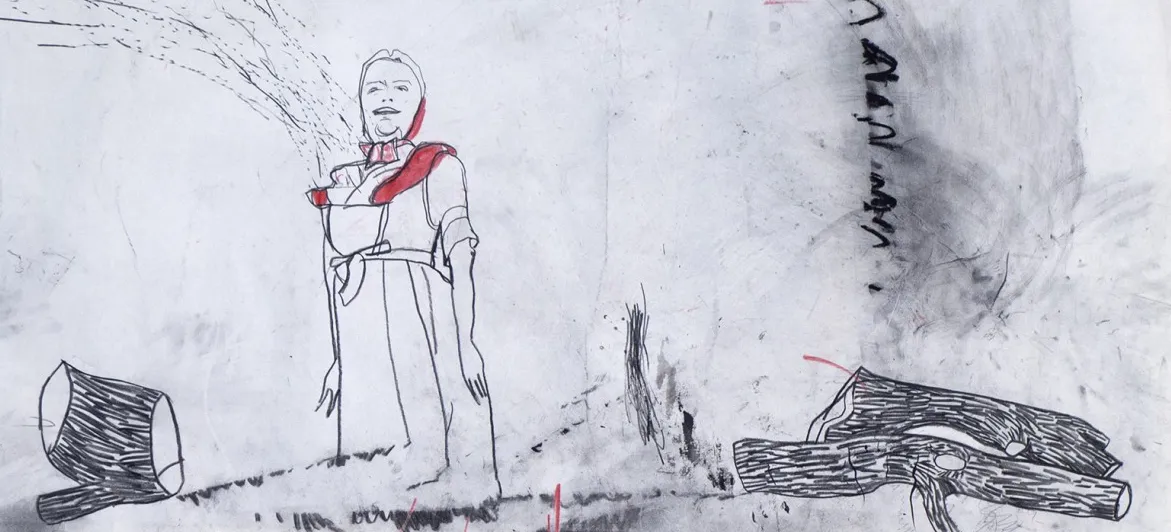
Maja Nagelowa: Edge There Between, 2018
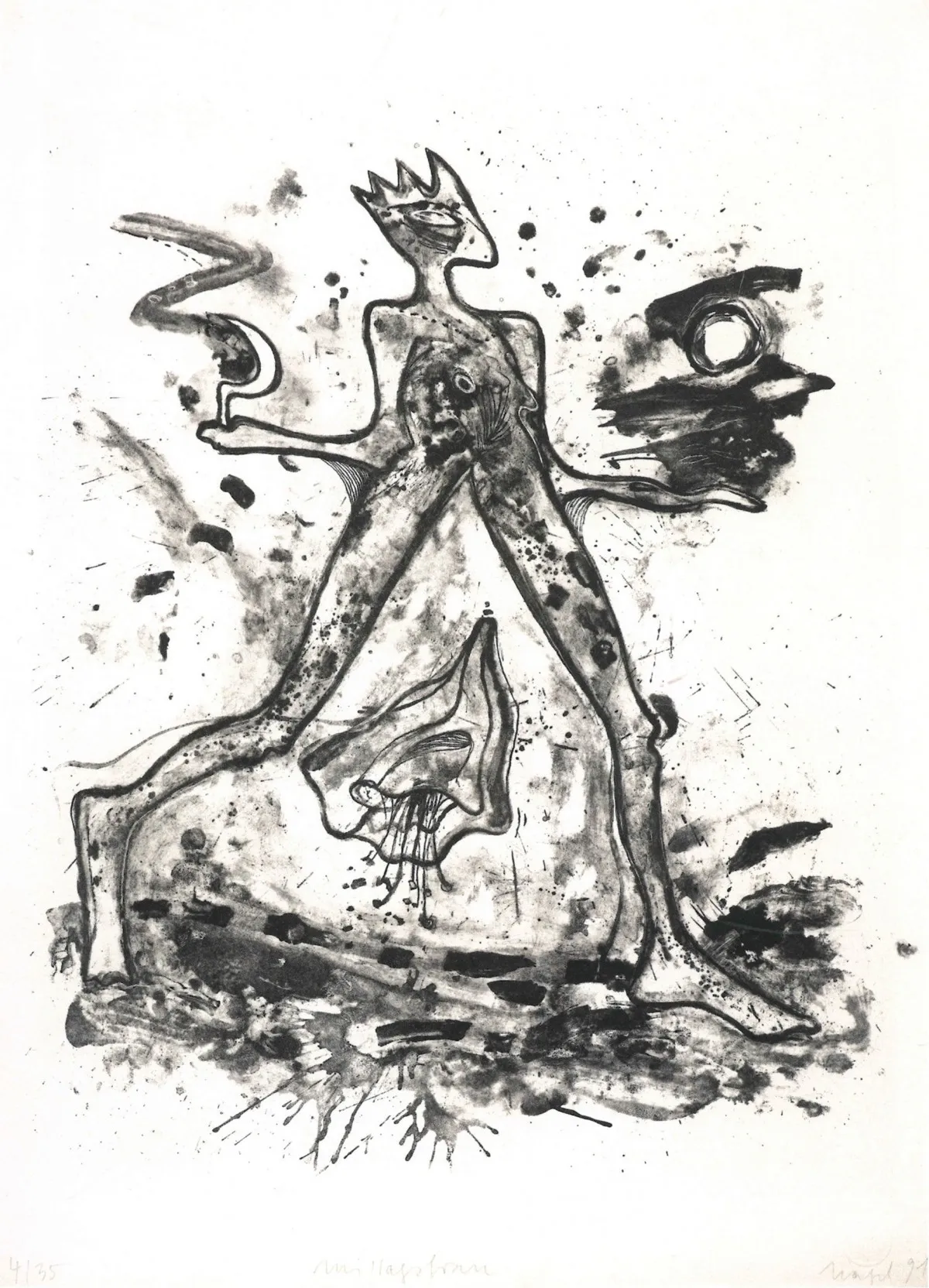
Maja Nagelowa, Noonday Witch, 1991

Maja Nagelowa is a painter, graphic artist, photographer, and filmmaker, considered one of the most significant contemporary artists of the Lusatian Sorbs. She studied at the Hochschule für bildende Künste Dresden and works in Bautzen, Berlin, and Dresden. The exhibition, which the Museum of Fine Arts Liberec is preparing as part of the Lusatian Sorbs Year in the Liberec Region (2019-2020), will present her paintings and author films. Most of her works contain references to her Lusatian Sorb heritage and the magical situation and history of the Lusatian Sorbs, a Slavic enclave in Germany, severely tested by the destruction of the landscape and its ecological and social consequences.

Maja Nagelowa (née Nagel) comes from a Lusatian Sorb family and was born in 1959 in Bautzen. Sorbism, culture, and language are an integral part of her identity. "I am a Lusatian Sorb," she says, "I see it as a treasure."

She studied at the Dresden Academy of Fine Arts and lived in Dresden and Berlin for a long time. In the meantime, she moved to Strjela near Elbe, followed by Eula near Nossen at the end of the village. The alternating pattern of city, country, river is clearly visible in her life.

Since the early 1980s, Maja Nagelowa has been traveling with art in a variety of forms – drawing, painting, and collage, performance and installation, and her moving figures in animated films; successful, if quality is the measure.

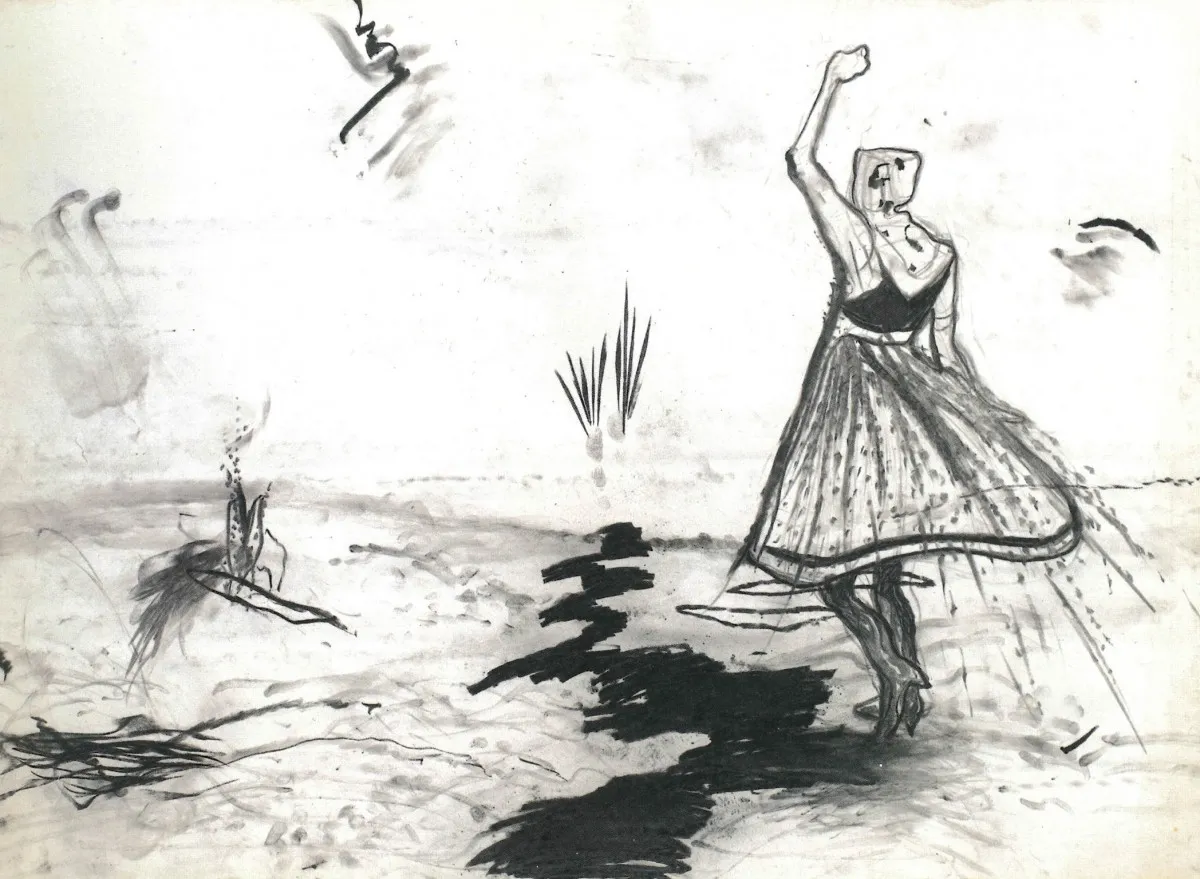
The core of her work is drawing. This is evident in the traces left behind when the hand creates lines, oscillations, and stains, moments of movement towards the situation. Both abstract gestures and delicate, very concrete approaches are about seeking, meeting, determination, interpretation, and construction of the world.

She listens, she says, to the material, to the form. It’s a dialogue with objects, a circumvention. She couldn’t work purely abstractly; a figure and its tension, the material, the tangible, are necessary. She could easily do it, but touching is essential: “It must touch me.” What touches her, she reaches for, grabs everything, primarily vision, capturing, creating convergence. Intentions transform into lines, grids, serial patterns. Among them, independent pieces, solitaires emerge.

Maja Nagelowa, "Gone," 2018

"Whatever begins, it comes from the image," says Nagelowa, "and leads back to the image." The image embraces what cannot be grasped by words, in the uncertain breeze, the graspable. In the fast, highly condensed drawing, something merges and becomes a valid expression in which the unknown is conveyed. First the artist, then the observers.

Intensity is needed, she says, for the world to become matter. Intensity is a soulful experience, it arises from the lived, reflected life, the knowledge of the world; it requires an internalized form of consciousness, feeling, good craftsmanship. Artists should have something to say and also know how to say it.

Maja Nagelowa has it and knows how to do it. Every stroke can be traced, every gesture is in its place, every thing. Birds are birds, and beyond that, machines are machines, hands are reaching connectors. Sickle blades are what they are—armed question marks, hooks of reality. The suggested landscape is certainly a landscape, plants are living matter that doesn’t say what it thinks. The way she uses color makes it clear, with light, who and what her figures are, and likewise, what they are doing: they act in transformations. The fact that her mostly bright paintings cannot be interpreted or even emptied is one of Nagelowa’s qualities.

"Na kromje" – on the edge, initially means the edge of a surface mine, the boundary between still and no longer. However, words and their layers refer further. The edge signifies the meeting of two planes in a straight line, it is not natural. The edge associates hardness, sharpness, suffering, and pain – one side of a person. Who submits to the edge gets too much of the same and sooner or later loses themselves. Who stands at the edge is close to it, who stands on the edge stands wrongly. Who goes beyond the edge falls into something else or into nothing. The edge is an unpleasant, dangerous place, but not a place that lasts.

Brown coal mining has been destroying the landscape, history, and culture for decades, especially in Lusatia, where the small Slavic minority of the Lusatian Sorbs lives. But that's not all. Driven by real necessities and pushed by partial interests, humanity today as a whole stands at the same edge.

This circumstance remains active in Maja Nagelowa's works, just as the invocation of opposing worlds, an emphasis on meaning, and beauty. In a beautiful formulation by Ernst Bloch, she embarks on "visible-invisible expeditions to being." The past always appears active, and tomorrow always seems possible. That is a lot.

Gregor Kunz, 2020

COMMENTED TOUR OF THE EXHIBITION ONLINE HERE

Visit also

Women’s World

Women’s World

4/23/2027 – 10/10/2027

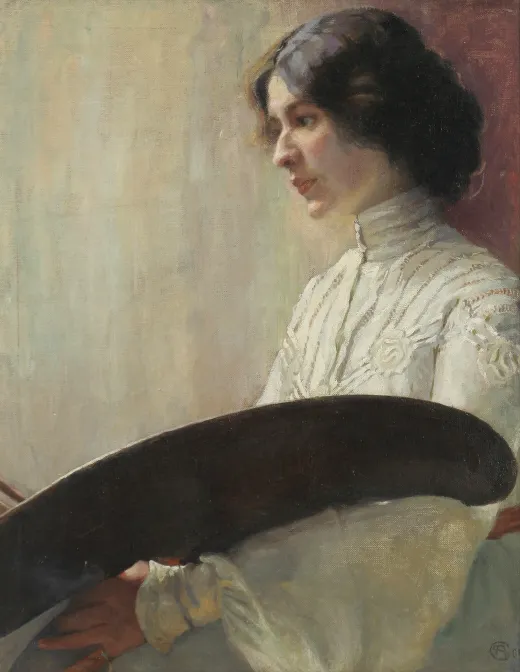
The exhibition Women’s World explores the changing status and perception of women artists from the early 19th century to 1911. Rather than attempting to provide a comprehensive overview of art created by women, it focuses on how women’s work was interpreted by contemporary critics and the wider public, and how their opportunities were shaped by prevailing social ideas about women’s roles. Through selected artists and their works, the exhibition traces the journey from viewing artistic practice as a pastime and a cultivated way of spending leisure time to the gradual recognition of women as professional artists. Particular attention is paid to the contemporary press, which not only reflected these attitudes but also helped shape them. The exhibition captures the tension between persistent stereotypes and attempts to transcend them, showing how women’s place in the art world evolved over time.

Basic + discounted entry fee
Art Within Reach

Discover a world of inspiration and creativity with a one-time entry to our museum. Explore exhibitions that will captivate your senses and awaken your imagination. Let yourself be carried away by the wave of art with us.

Standard admission
Standard admission

One-time admission for all over 26 years old.

Reduced admission
Reduced admission

Admission for youth aged 15–26 and seniors over 65.

Visit us

Masarykova 723/14
Liberec 460 01
CZ

Opening hours

monday
tuesday
wednesday
thursday
friday
saturday
sunday
closed
10.00–18.00
10.00–18.00
10.00–19.00
10.00–19.00
10.00–18.00
10.00–18.00

Entrance fees

Standard admission
180 Kč
Reduced admission
100 Kč

Exhibition galleries are closed. The Design Shop and café remain open during regular opening hours.