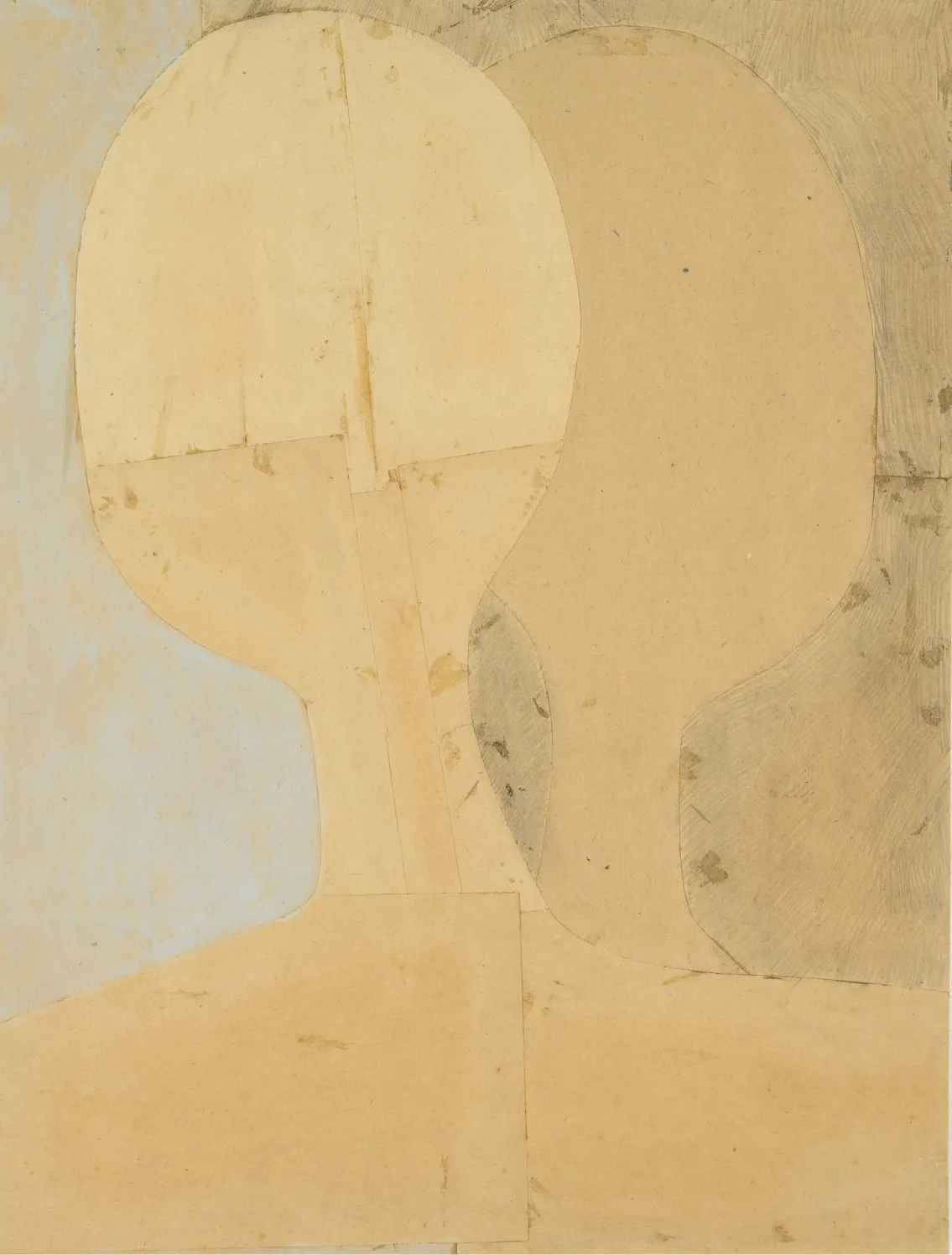
To the Other Shore

CuratorMichaela Kubišová
from 4/28/2023
to 9/3/2023
Jakub Schikaneder, The Drowned Woman, 1890–1900, 470 mm × 880 mm, Inv. No. K 02065
Josef Váchal, The Cult of Ahriman, 1908, oil on canvas, Inv. No. O1200

"Human life is blessed and cursed by images. Only through images can one understand oneself, the images are elusive, they have been in us since the beginning of the herd, they are older and more powerful than our thinking, they exist in timelessness, encompassing both the past and the future, they are a dual dreamlike memory and stronger than us..." (Hermann Broch – The Death of Virgil, Prague 1937, p. 66)

The second half of the 19th century is characterized by a surge of intellectual and artistic currents that, as a counterpoint to the Industrial Revolution, based their philosophy on a return to nature. In a way, they followed Goethe's concept of the world and nature, in which matter and spirit (body and soul, area and thought) are seen as aspects of a unified and eternal nature – God, which realizes itself in man.

One of the currents typical of the turn of the 19th and 20th centuries was symbolism, which captured reality through symbols and fantasy. From this great river called symbolism flowed many smaller streams and brooks that drew from symbolism but became more narrowly defined according to the themes and issues that were relevant or even pressing at the time and within specific artistic groups. Artists attempted to grasp, describe, and capture them in their own way, using words or images.

Josef Váchal, The Cycle of the Other Shore, Legendary Underworld, 1947–1948, woodcut, Inv. No. G 5088
Josef Váchal, The Cycle of the Other Shore, Manifesting Past, 1947–1948, woodcut, Inv. No. G 5088

Just as decadence attempts to grasp decay, death, and misfortune, so spiritism tries to come to terms with these themes through belief in the supernatural, the afterlife, reincarnation, and things that are intangible and far beyond human understanding. In contrast to symbolism, decadence and spiritism far surpass the boundaries of the turn of the 19th and 20th centuries, as they are subjected to the test of the greatest tragedies of the 20th century, the First and Second World Wars. In this context, themes of death arise, often approached through mythology, fairy tales, and ghost stories.

The aim of the exhibition is to provide visitors with an interdisciplinary insight into the themes of spiritism and decadence. Through literary templates, we bring closer the images presented here. Welcome to the world of Váchal’s imagination, Erben's Kytice, Poe's stories, or follow Orpheus’s journey into the underworld.

Visit Also

Čestmír Suška on Paper

Čestmír Suška on Paper

11/21/2026 – 5/9/2027

The exhibition Čestmír Suška on Paper offers the most comprehensive survey to date of a lesser-known yet remarkably significant aspect of the artist’s oeuvre. Through drawings, prints, sketches, journals and other works on paper created alongside his sculptural practice since the late 1970s, it reveals Suška’s creative process, his experimentation and his search for forms that would later develop into monumental sculptural works.

Małgorzata Mirga-Tas, Sráč Sam | Companion

Małgorzata Mirga-Tas, Sráč Sam | Companion

10/17/2026 – 3/28/2027

The exhibition presents a dialogue between two distinctive female artistic voices — Polish visual artist of Roma origin Małgorzata Mirga-Tas and Czech artist Sráč Sam. Both work with textiles as a medium of memory, identity, and female experience. While Małgorzata Mirga-Tas focuses on the Roma community and its visual and narrative representation, in the context of this exhibition Sráč Sam works with an architectural installation in which textiles appear only minimally, through the everyday carrier of meaning represented by sewn clothing. At the same time, the large-scale architectural structure demonstrates the interconnectedness of the individual elements of the overall composition, as well as the idea that having a place to rest and find support is a prerequisite for creating content and relationships.

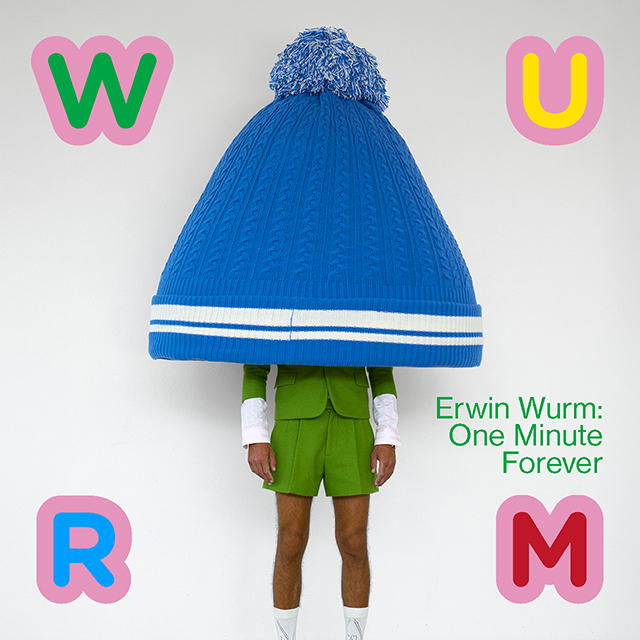
Erwin Wurm | One Minute Forever

Erwin Wurm | One Minute Forever

10/17/2026 – 3/28/2027

In line with its long-term development strategy, the Museum of Fine Arts Liberec will present one of the most significant contemporary artists from Central Europe, the Austrian sculptor and conceptual artist Erwin Wurm. His works have been exhibited at institutions such as the Albertina, Lenbachhaus, Galerie Thaddaeus Ropac and KÖNIG GALERIE. His artworks are included in the collections of the Solomon R. Guggenheim Museum, Walker Art Center, Museum Ludwig, Kunstmuseum St.Gallen, Musée d'art contemporain de Lyon, Museum Brandhorst, Centre Pompidou and many others. This exhibition will mark his very first solo presentation in the Czech Republic. With this project, the Liberec museum continues its programme of introducing major contemporary artists to Czech audiences, following exhibitions by Neo Rauch, Rosa Loy, Zsófia Keresztes and Koji Kakinuma.

Admission for educational programs
Knowledge Through Art

The mission of the education department's programs is to introduce students to the gallery environment, helping them overcome any hesitation about creating art and any initial apprehension about engaging with an unfamiliar space.

Program for Schools (60 / 90 min)

Show your pupils and students the true essence of art!

Art Workshop
Art Workshop

Become an artist for a moment with your children.

Visit us

Masarykova 723/14
Liberec 460 01
CZ

Opening hours

monday
tuesday
wednesday
thursday
friday
saturday
sunday
closed
10.00–18.00
10.00–18.00
10.00–19.00
10.00–19.00
10.00–18.00
10.00–18.00

Entrance fees

Standard admission
180 Kč
Reduced admission
100 Kč

Exhibition galleries are closed. The Design Shop and café remain open during regular opening hours.