Space, light, color

from 10/30/2025
to 2/13/2026

Where did colors come from? At the beginning of our journey lies a mystery. Color is what is not – and yet the whole world shines with thousands of shades. What would the world look like without colors? What would the morning be like without a red sunrise, without green grass and colorful flowers? An old Native American tale about the stolen rainbow leads us to questions of where colors actually come from, why we see them, and how so many shades arise.

Jan Vochoč, Room with a Lady (Paris), oil on canvas, 1909 (63 × 51 cm)

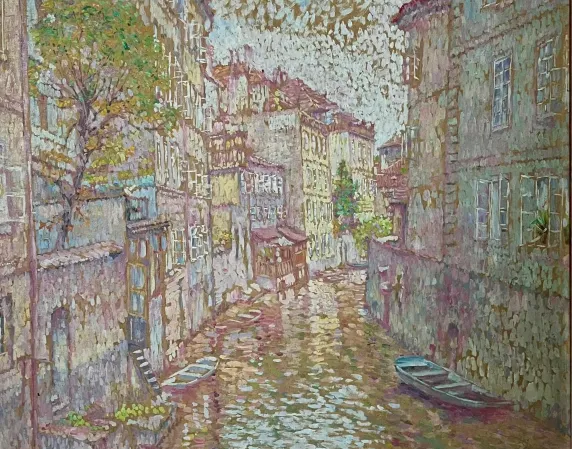
The program will take children into the secrets of colors and light. We will explain which colors are considered primary and show how other colors can be created by mixing them. We will also talk about why we can see colors at all and what role light plays in this. We will show how scientific discoveries about light, the spectrum, and color contrast influenced painters – the Impressionists, who tried to capture the transformations of light and colors in the landscape, and the Pointillists, who used optical color mixing and composed their paintings from tiny colored dots to achieve greater brightness and brilliance.

Jan Vochoč, Čertovka (Devil’s Channel), 1913

The program is conducted only in Czech!

Intended for: Kindergarten, Primary School (lower level), Art School

Duration: 60 or 90 minutes

Spaces: Exhibition and studio

The minimum number is 5 children. The maximum number is 24 children; in the case of a larger group, the class can be divided into two groups.


Book the program

Note: Please allow extra time that you will spend with children in the cloakroom. Thank you!

Keywords:

color, light, color spectrum (rainbow), vision, observation, experiment, landscape, transformations of light, painting, visual art, sensory perception, discovery, mood, landscape painting, Impressionism, Pointillism, Jan Vochoč


RVP PV 2025 – Pre-primary Education (Kindergarten)

The Child and Their Body – observation of light, color, and the functioning of the eye (visual perception).

The Child and Their Psyche – imagination of a world without colors, reflection on feelings from observing paintings, personal experience of painting.

The Child, Others, and Society – discussion about colors, sharing observations, collaborative group work.

The Child and the World – observation of natural phenomena (rainbow, changing light), experiments with a prism/CD, the relationship between color and light in the landscape.

Key Competencies:

Learning Competency – children explore light, observe colors, ask questions, and learn through observation and experimentation.

Communication Competency – children express what they see, share impressions of colors and artworks, discuss colors.

Personal and Social Competency – cooperation in a group, respecting others’ opinions when sharing observations.

Civic and Sustainability Competency – learning about natural phenomena, awareness of the connections between light and the environment, environmental awareness.

Entrepreneurial and Work Competency – active participation in experiments (prism/CD), individual creative work.

Problem-Solving Competency – searching for answers (e.g. “Why do we see a rainbow?”), discovering how light changes colors.

Cultural Competency – learning about visual arts and the aesthetic qualities of artworks, creating one’s own artistic expressions.


RVP ZV 2025 – Primary Education (Grades 1–5)

The program is anchored in the RVP ZV mainly within the area Art and Culture (Visual Arts) and Humans and Their World (exploration of natural phenomena and sensory perception).

The program develops visual literacy, aesthetic perception, scientific understanding of light phenomena, and visual perception in accordance with the expected learning outcomes of primary education.


Educational Subjects / Areas:

Art and Culture – color theory, working with light and colors and their mixing, visual literacy, interpretation of artworks, artistic techniques and movements (Impressionism / Pointillism).

Humans and Their World – understanding light phenomena (rainbow, light spectrum), sensory perception and the functioning of the human eye, the relationship between light, color, and the environment.

Key Competencies:

Learning Competency – children discover and explore light and colors, learn to name colors, understand relationships between them, and observe changes in light.

Communication Competency – sharing personal observations (e.g. “what happens when…”), discussing feelings related to colors and light.

Problem-Solving Competency – the program develops the ability to ask questions, experiment, and draw conclusions.

Personal and Social Competency – children learn to listen to others, express their own opinions, and cooperate during activities.

Cultural Competency – understanding artworks, their context, and painting techniques (Vochoč, Impressionism, Pointillism).


Cross-curricular Themes:

Self-care and Care for Others – reflection on feelings evoked by colors, sharing opinions, calm imaginative activities.

Society for All – discussion about artworks, joint exploration of colors, communication within the group.

Sustainable Environment – description of natural phenomena (rainbow, light), observation of landscapes.


Explore Other Programs for Schools

Through the Labyrinth of the Spa

Through the Labyrinth of the Spa

10/20/2026 – 6/25/2027

Educational Programme for the Exhibition Through the Labyrinth of the Spa

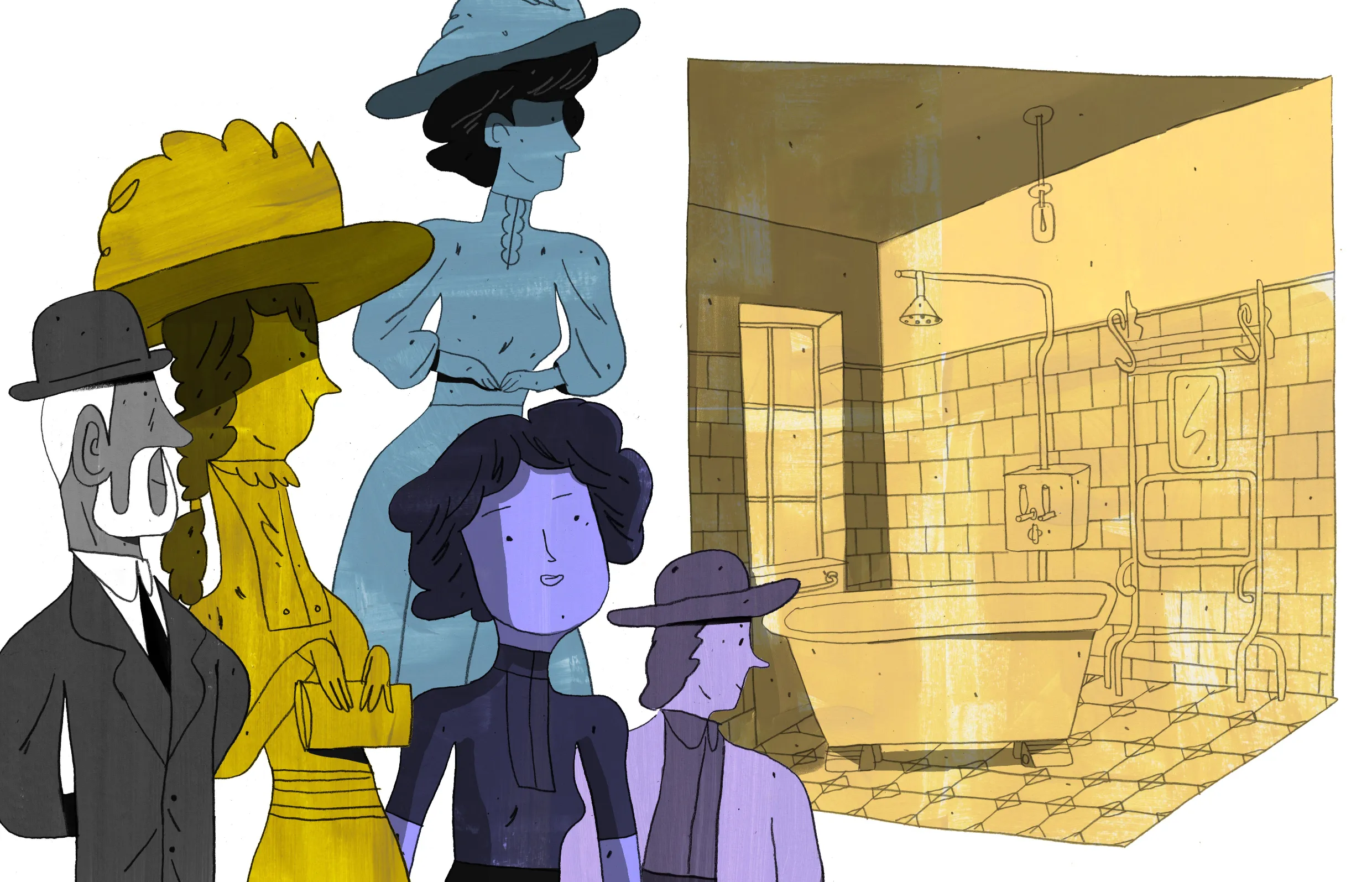
Through the Labyrinth of the Spa programme is an experiential and educational journey through the museum building, which once served as the municipal baths. Right at the entrance, we will meet the sculptures from the façade, Poseidon and Amphitrite, the mythical deities of water and the sea who also appear in the book Through the Labyrinth of the Spa. Our guide will be the book’s main character, Joe the pigeon, a curious hero who knows just where to fly to discover the building’s most fascinating hidden corners. Along the way, we will listen to excerpts from the book and try our hand at frottage, allowing the children to take home their own impression of the former baths. We will look at original sketches and drawings and get a glimpse into the illustrator’s creative process. We will finish our journey in the art studio, where the children will use their imagination to complete their own illustrations through a creative art activity.

Between the Shores

Between the Shores

10/20/2026 – 3/12/2027

Educational Programme for the Exhibition Kvet Nguyễn | Till the Water Meets the Shore

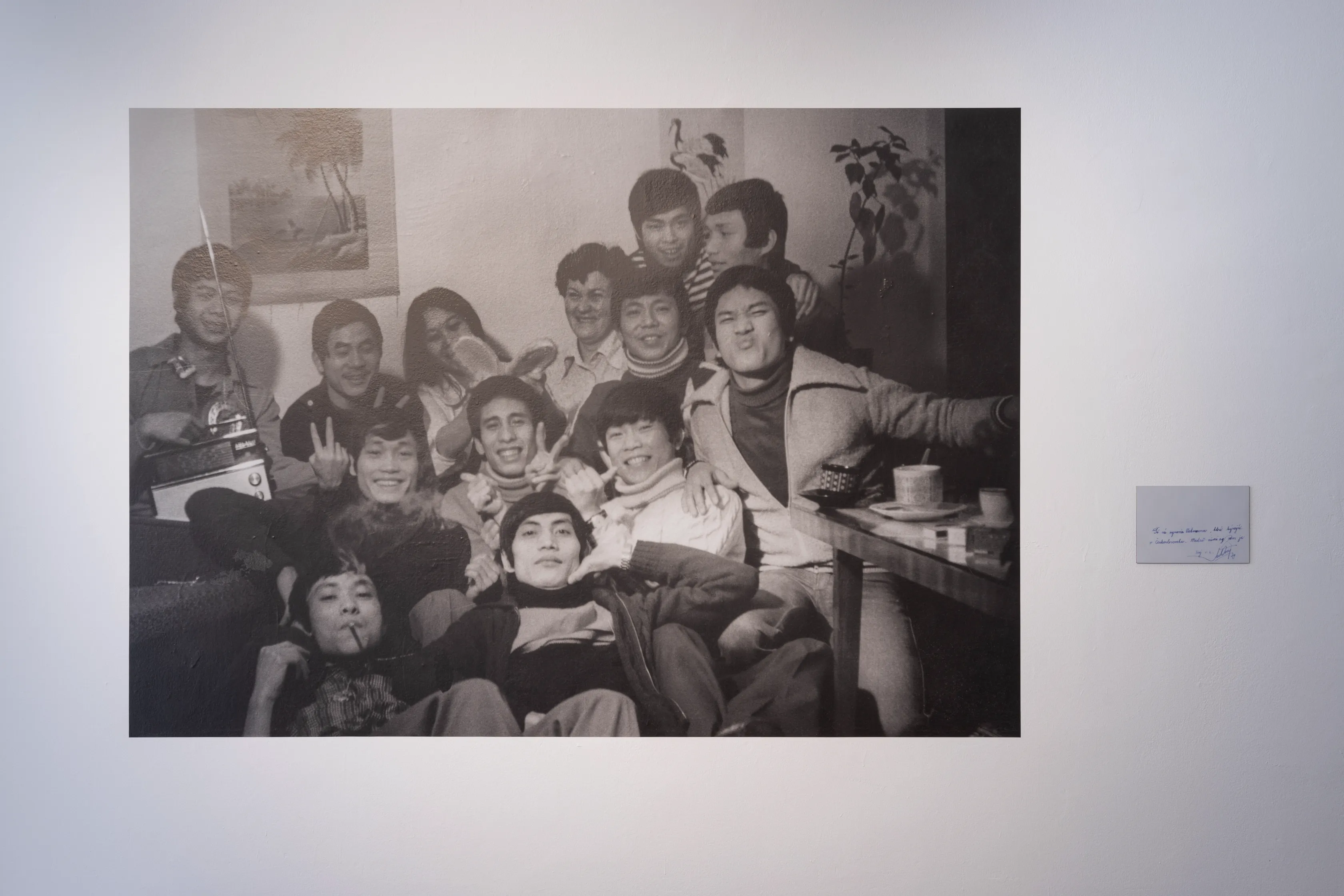
How do stereotypes emerge, and why are prejudices part of everyday life? This educational programme accompanying the exhibition Kvet Nguyễn | Till the Water Meets the Shore explores themes of racism, xenophobia, identity, and the experiences of minority communities in the former Czechoslovakia. Through contemporary art, archival materials, interactive activities, and discussion, participants will examine how stereotypes function and how the media and society shape our perceptions of “otherness”.

The programme provides a safe space for sharing, critical reflection, and the development of empathy and solidarity. Drawing on the stories of the Vietnamese community, it connects historical experience with current social issues.

Extraordinarily Ordinary

Extraordinarily Ordinary

10/20/2026 – 3/26/2027

Educational Programme for the Exhibition Erwin Wurm | One Minute Forever.

Can an ordinary object become a work of art? And what happens when we use our bodies, clothing, or everyday objects in completely different ways than we are used to? This interactive programme accompanying the exhibition of Erwin Wurm offers children and students a playful encounter with contemporary art through movement, dramatization, living sculptures, performative activities, and photography. Directly within the exhibition, participants will discover together how humour, exaggeration, and absurd situations can transform our perception of ordinary things and reveal the rules, stereotypes, and expectations that we often accept automatically. In a dedicated creative space, participants will create their own One Minute Sculpture.

The programme develops imagination, creative thinking, cooperation, and the courage to experiment and view the world from a new perspective.