Rosa Loy
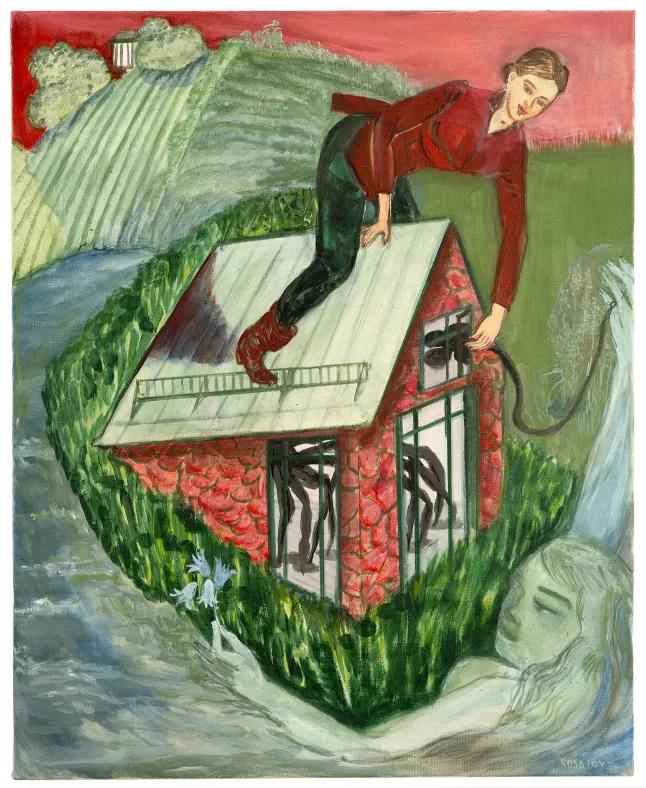
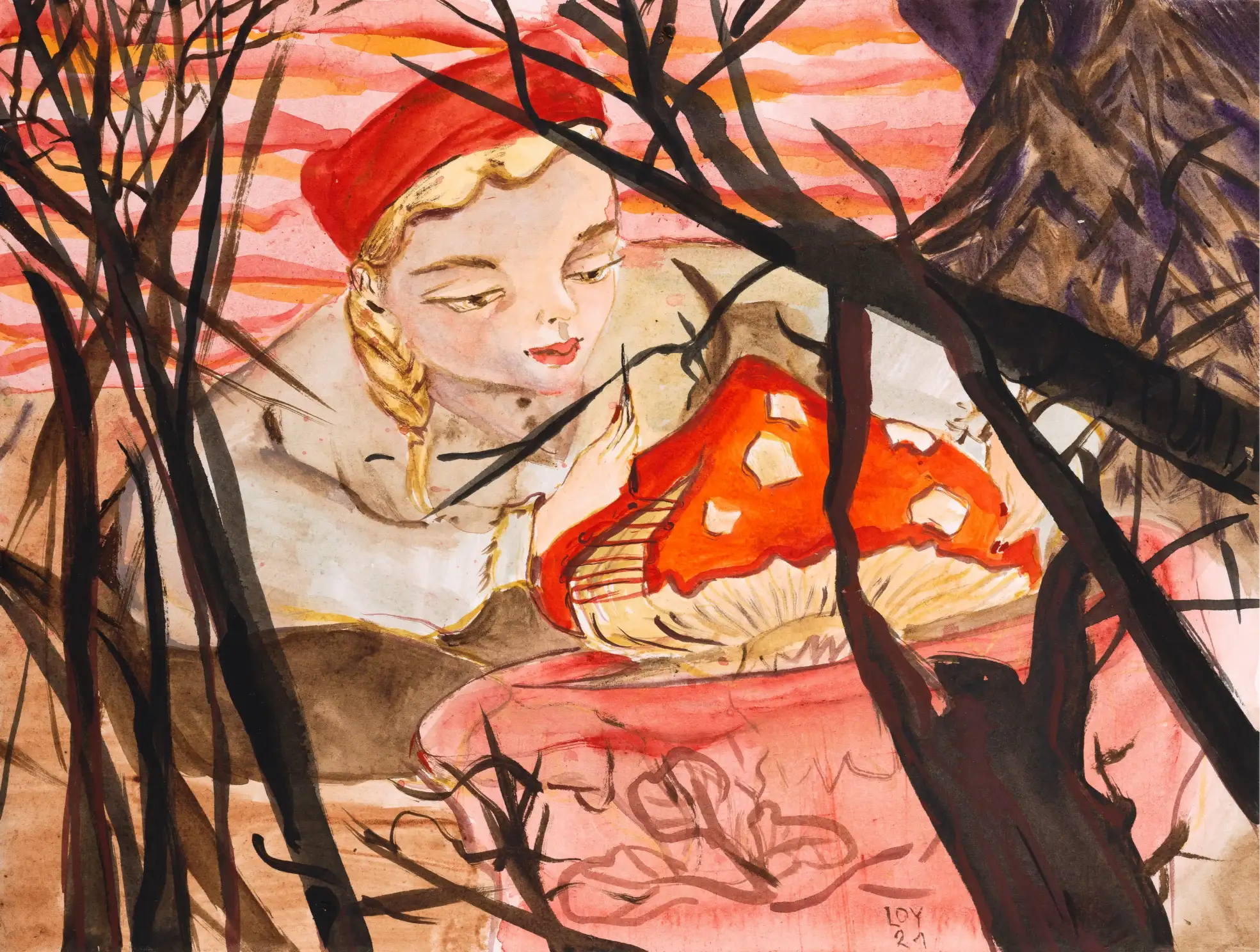
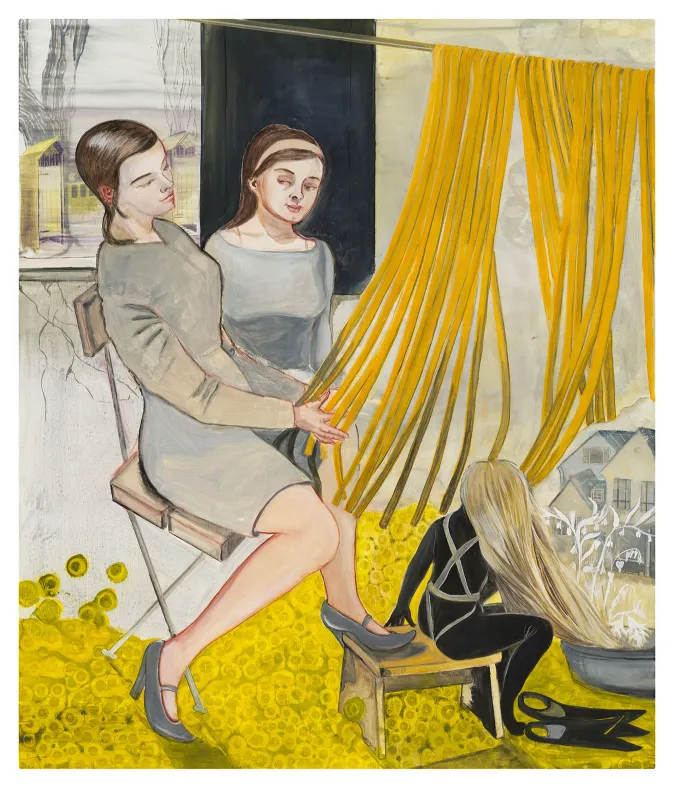
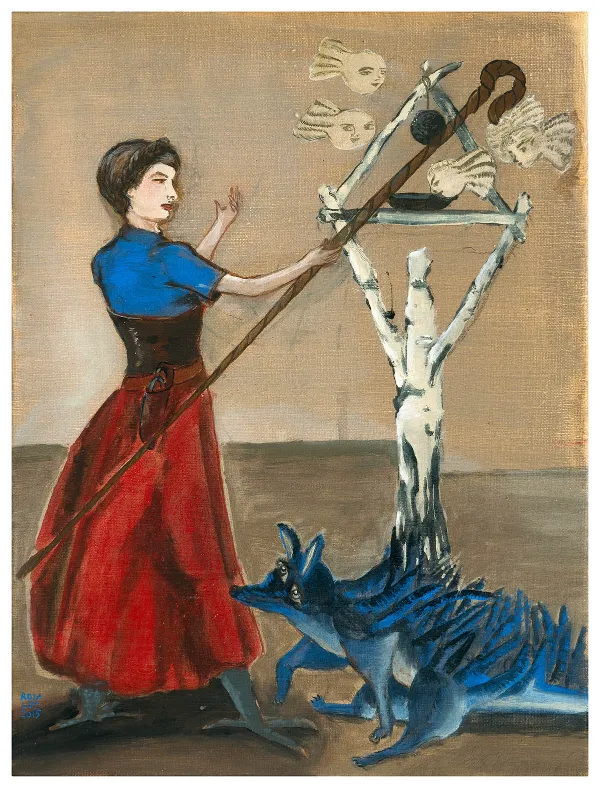
Rosa Loy (1958) majored in horticulture at the Humboldt University of Berlin in addition to the Leipzig academy of fine arts. And the plants in her works are an independent botanical visual, symbolic and consciously also surreal, not an insignificant fragment of the theme and content of her works which evoke associations with a wide imagination of times and spaces. Her whimsical paintings and graphic works combine elements of realism and subconsciously selected historical, local and traditional elements of fairy tales and fables with bold colour palettes, enigmatic, mysterious scenes and stylised, mostly female characters. Her work also reflects her lively partnership with her husband Neo Rauch, whom she has been married to since 1985.
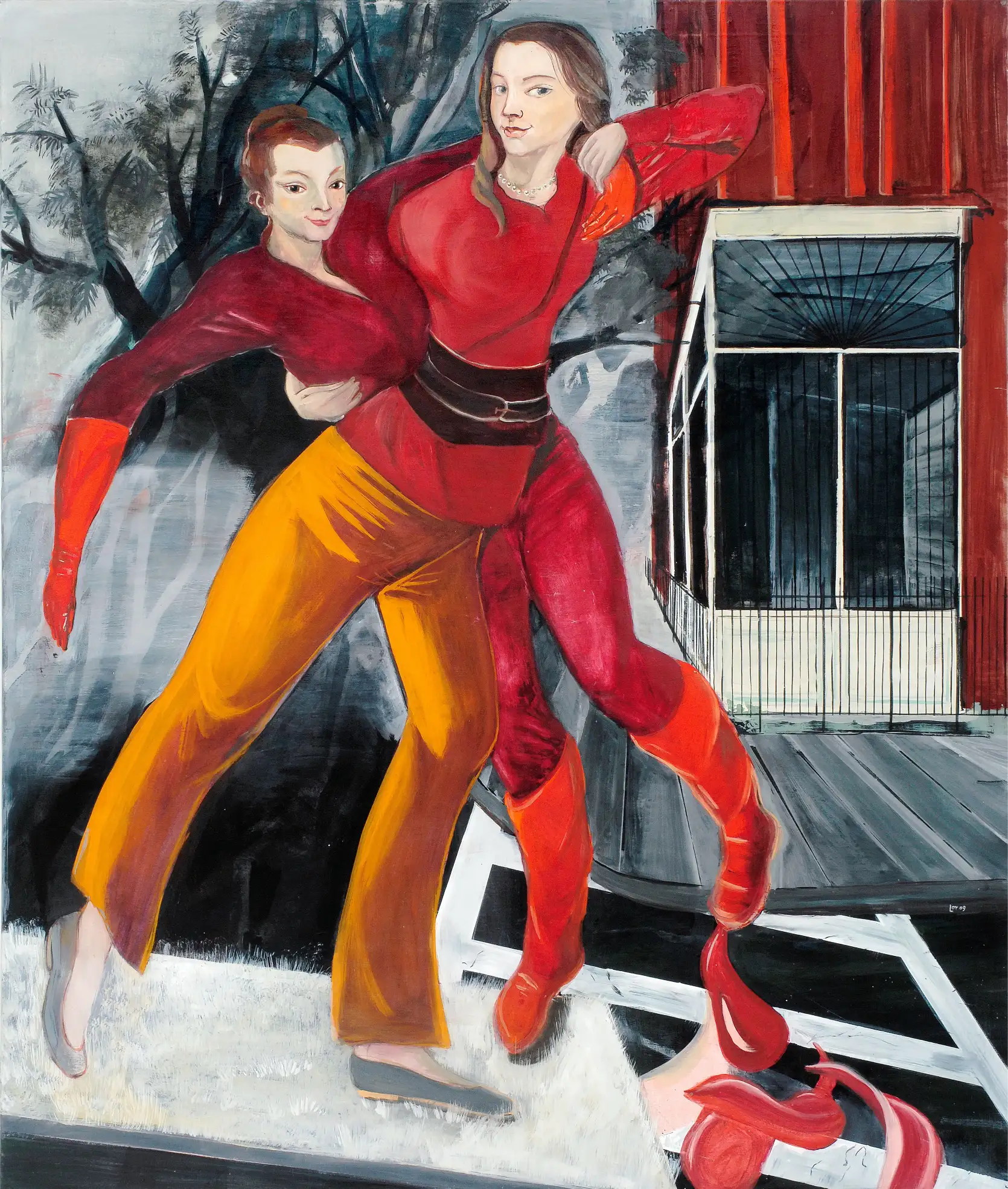
Women – or rather femininity – is the primary visual and moral imperative and narrative of Rosa Loy’s work. The female figures, whether dressed in stylized monochrome, almost work-like uniforms or by contrast adorned with colourful and rich wardrobes of stylized fairytale creatures, generally appear as twins or deliberately accentuate both their own selves and their alter egos. They suggest the artist's desire for female solidarity in the face of prevailing masculinity and for women who support each other, and at the same time the paintings embody the artist’s mission of self-assurance and self-determination. She is one of the German painters who, from the very beginning, have focused on the mystery of women, the new femininity and the new romanticism, which has direct roots especially in the tradition of Saxon painting. Rosa Loy has the courage to integrate femininity and beauty into her figurative paintings and offers a multi-layered interpretation of her works.
However, it is not only for the appeal of the tonal value that she uses paint containing casein, the main protein component of milk, instead of oil or acrylic paint. Rosa Loy has been fascinated by this unique medium since the beginning of her artistic career – she even produces these delicate, pure paints without additives herself. The graphic nature of this painting technique with fast-drying paints thus lends her paintings a unique painterly power.