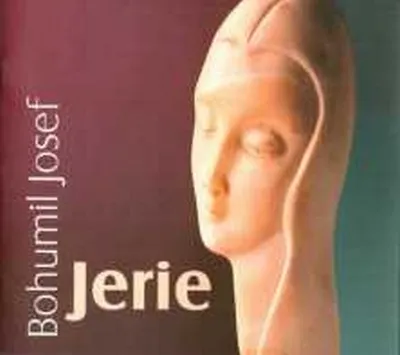
Bohumil J. Jerie | Song of Wood Selection from the Years 1941 – 1986

CuratorZuzana Štěpanovičová
Standard admission
180 Kč
Reduced admission
100 Kč
from 6/26/2008
to 9/14/2008
Exhibition of Sculptor Bohumil J. Jerie

The exhibition of B. J. Jerie (Prague 1904 – Raspenava 1998) was the first exhibition of this sculptor at the Regional Gallery in Liberec and also his first retrospective exhibition. In 1953, Bohumil Jerie was expelled from Prague with his family for political reasons, and he was not allowed to participate in the then Union of Fine Artists. Therefore, the sculptor worked various jobs in Raspenava and devoted himself to sculpting only in his free time. Despite this, he created work that was exhibited four times at the Goetheana Gallery in Dornach, Switzerland, and at several venues in the Czech Republic. In 1990, he was both civically and artistically rehabilitated, but his advanced age no longer allowed him to take advantage of the changed situation. By presenting this exhibition, the Regional Gallery in Liberec wished to pay tribute to a man whose talent the former regime did not allow to develop to the extent he deserved.

Bohumil J. Jerie graduated from the Czech Technical University, studied philosophy privately, spoke several languages, wrote poems and short prose, expressed himself through graphics, but was probably happiest when he could create, experiment, search, and realize form in sculpture.

Throughout all periods of his life, B. J. Jerie created sculptures that are poems of life. Due to family predestination, he began to engage intensively in sculpture only at the age of thirty-two. He was self-taught, attended evening drawing courses, and consulted on sculptural questions partly with Karel Pokorný and partly with Bedřich Stefan. Gradually, he became familiar with classical sculptural techniques, working with stone, bronze, and wood. The latter, along with ivory, became over time his favorite material. In 1946, he went to Dornach, Switzerland, for an internship with sculptor Oswald Dubach, who contributed to the sculptural decoration of the Goetheanum building. There, he came into intense contact with an artistic enclave inspired by the Austrian philosopher Rudolf Steiner.

The Prague period (1940–1952) is characterized by fascination with the human figure, especially the human face. The theme of the pair in the indispensable relationship between man and woman, his love for Anna Stránská-Jerie, and the protective relationship of mother to child inspired him throughout his life, but especially during the Prague period. An artistic example for him was František Bílek, not only in the mystical-poetic content of his themes but primarily in the rhythmic graphic handwriting in his work with wood.

Then the harsh hand of fate struck, as B. J. Jerie was expelled from Prague with his family in 1953 for politically motivated reasons and was not allowed to continue participating in the Union of Fine Artists. Therefore, in Raspenava, a small village in the northernmost tip of Bohemia, and in Liberec, he worked various jobs and devoted himself to sculpture only in his free time.

His principled and uncompromising views meant that he was not granted work on monumental commissions that would have shaped the universalism of his artistic talent and the ability to harmonize a specific space and artwork. Even under these conditions, however, he created work that was exhibited four times at the Goetheana Gallery in Dornach and at several other locations in Switzerland and the Czech Republic. In 1990, he was both civically and artistically rehabilitated, but his advanced age no longer allowed him to take advantage of the changed situation.

During the Raspenava period (1953–1986), his artistic work ceased to be a description of the visible world and became a record of inner experiences transformed into the formal possibilities of wood. B. J. Jerie sought inspiration more from nature than from the world of literary imagination and tried to give them certain laws. In this period, works were created that attempt to synthesize visual and musical forms. They bear the stamp of a distinctive but rarely intrusive originality, characterized by fluidity in transforming abstract volumetric forms.

Visit also

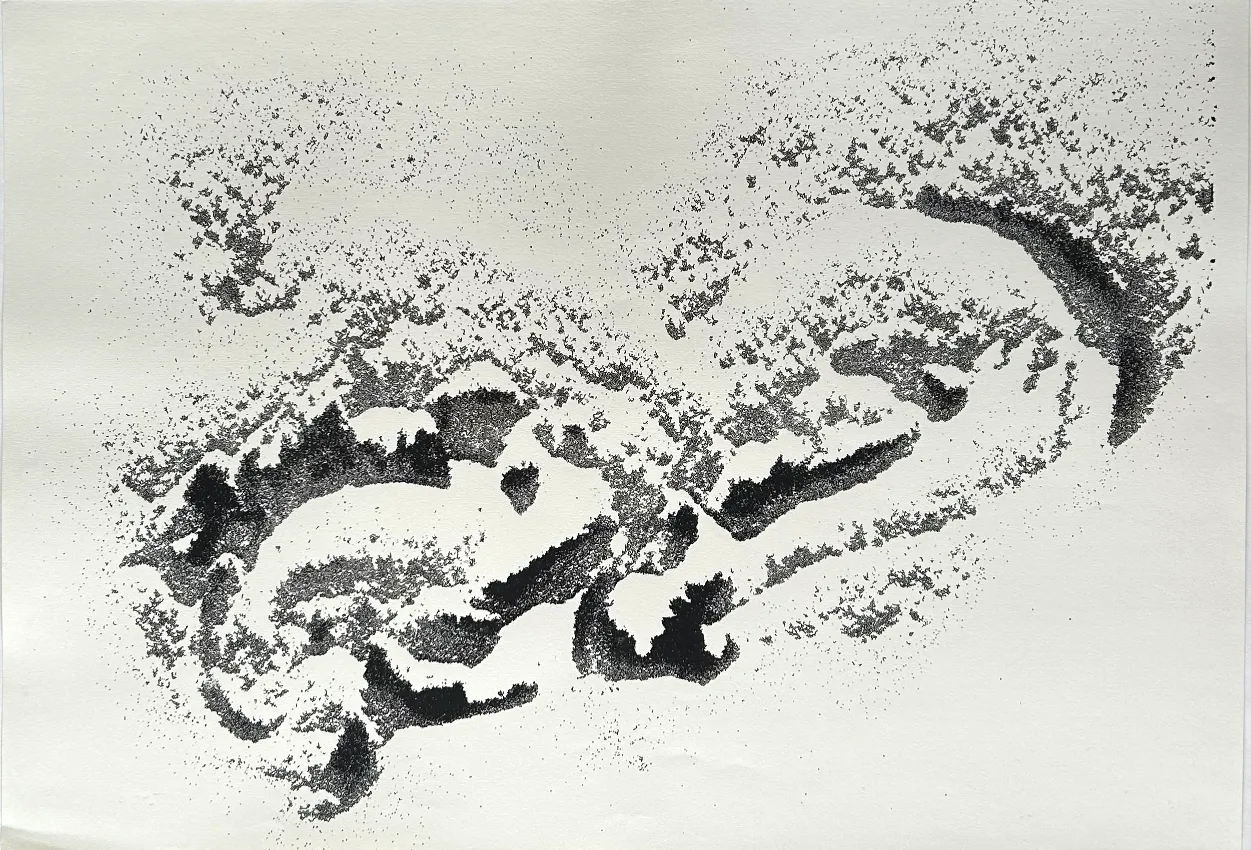
Rasterized | Screen Prints of the FAMU Department of Photography

Rasterized | Screen Prints of the FAMU Department of Photography

11/21/2026 – 3/7/2027

Since 2010, the FAMU Department of Photography has had a printmaking workshop, the aim of which is to develop the screen printing technique as a creative method of transforming photography. The workshop, led by Jan Měřička, is conceived as a creative environment on the border between photography and free graphic creation.

It is based on the assumption that screen printing as a method of reproducing photography is losing its relevance today and therefore it is necessary to find ways to work creatively with the crossover between these media. As part of the technical process of creating a work, the halftones of the photograph must be converted into a system of dots or lines – rasterization – which is visible and becomes part of the perception of the resulting artifact.

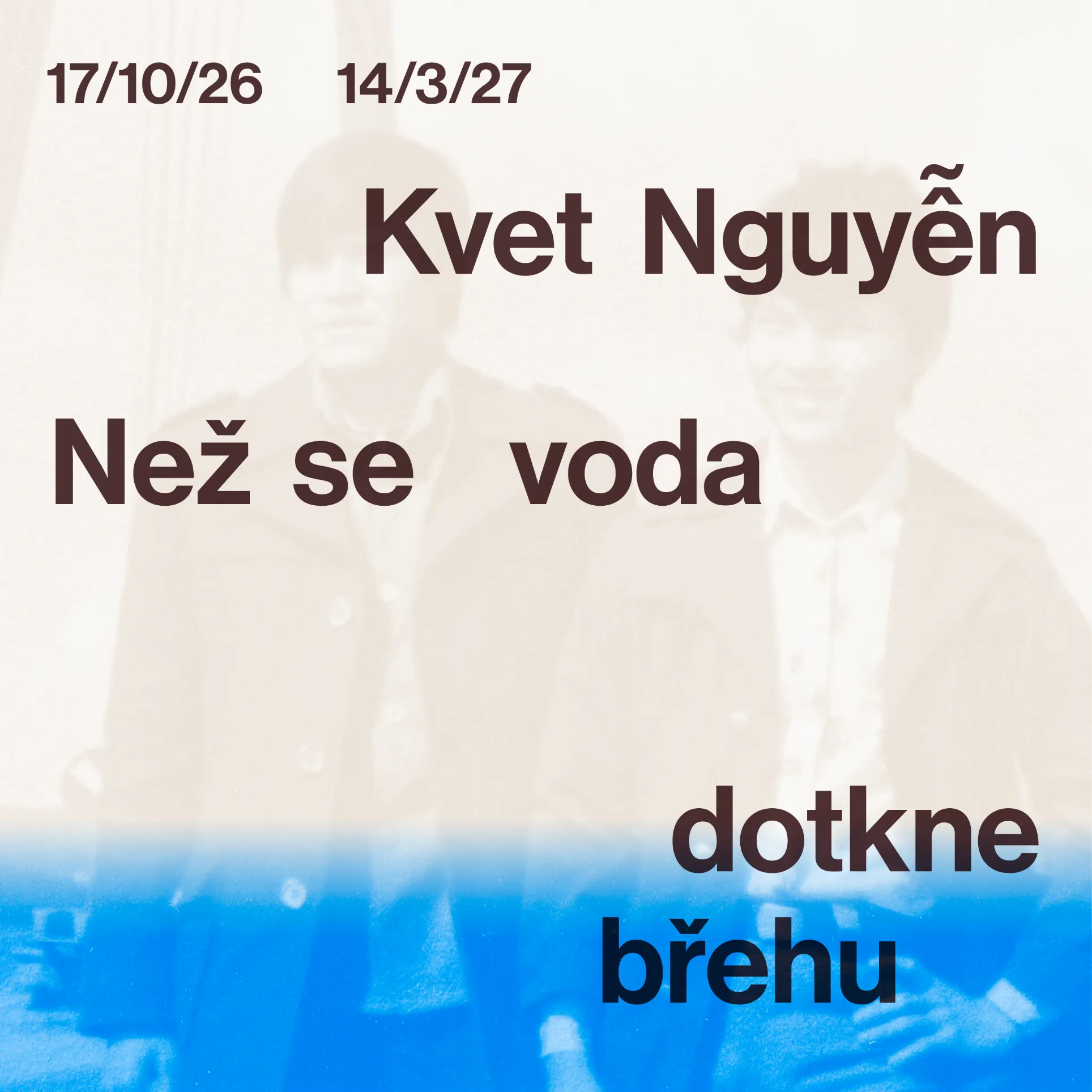
Kvet Nguyễn | Till the Water Meets the Shore

Kvet Nguyễn | Till the Water Meets the Shore

10/17/2026 – 3/14/2027

The extensive monographic exhibition presents the latest work by Slovak-Vietnamese artist Kvet Nguyễn. Conceived as a visual reading of chapters from the story of the Vietnamese diaspora in former Czechoslovakia, it traces its history from post-war migration during the era of socialist internationalism to the pivotal moment of the Velvet Revolution.

Małgorzata Mirga-Tas, Sráč Sam | Companion

Małgorzata Mirga-Tas, Sráč Sam | Companion

10/17/2026 – 3/28/2027

The exhibition presents a dialogue between two distinctive female artistic voices — Polish visual artist of Roma origin Małgorzata Mirga-Tas and Czech artist Sráč Sam. Both work with textiles as a medium of memory, identity, and female experience. While Małgorzata Mirga-Tas focuses on the Roma community and its visual and narrative representation, in the context of this exhibition Sráč Sam works with an architectural installation in which textiles appear only minimally, through the everyday carrier of meaning represented by sewn clothing. At the same time, the large-scale architectural structure demonstrates the interconnectedness of the individual elements of the overall composition, as well as the idea that having a place to rest and find support is a prerequisite for creating content and relationships.

Patron annual entry fee
Art is my life!

Become our patron. Support the gallery and enjoy access to VIP events, discounts in the design shop, and much more.

Visit us

Masarykova 723/14
Liberec 460 01
CZ

Opening hours

monday
tuesday
wednesday
thursday
friday
saturday
sunday
closed
10.00–18.00
10.00–18.00
10.00–19.00
10.00–19.00
10.00–18.00
10.00–18.00

Entrance fees

Standard admission
180 Kč
Reduced admission
100 Kč

Exhibition galleries are closed. The Design Shop and café remain open during regular opening hours.