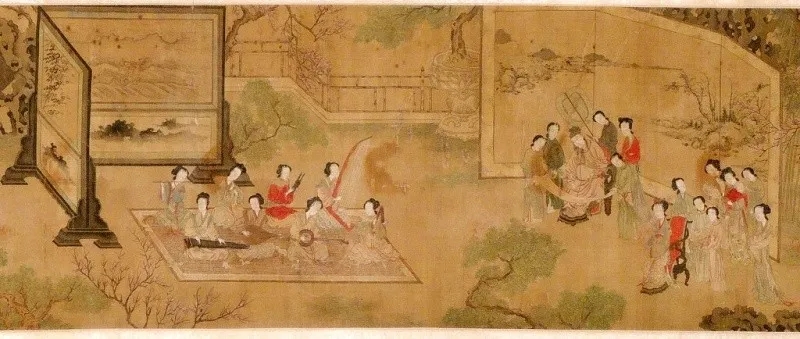
In the last three chapters of the exhibition, we encounter traditional Japanese figural art, starting from its earliest expressions in the native Japanese yamato-e style, which began to flourish from the 10th century after the fall of the powerful Chinese Tang dynasty, marking the rise of the domestic court culture of the Heian period (794–1185). In the yamato-e style, delicate stylized figures of courtiers set in palace and garden environments illustrated secular narrative literature—diaries and novels of court ladies, as well as poetry linked in lyrical monogatari stories.
The refined court tradition was followed by illustrations of war tales, gunki monogatari, depicting battle scenes, and various moral stories and legends of the medieval Kamakura period (1185–1392), stylistically connected to the vivid descriptive realism of the Chinese Song dynasty. After the restrained and austere Muromachi period (1392–1568), focused mainly on monochrome landscape painting, Japanese art in the Momoyama period (1568–1615) returned to brilliant colors, gilding, and decorative painting.
The main flourishing of figural painting occurred during the Edo period (1615–1868) with the mass production of "pictures of the floating world," ukiyo-e, which focused exclusively on figural themes in images of beautiful women and actors, but also warriors, heroes, and genre figures of craftsmen and merchants.
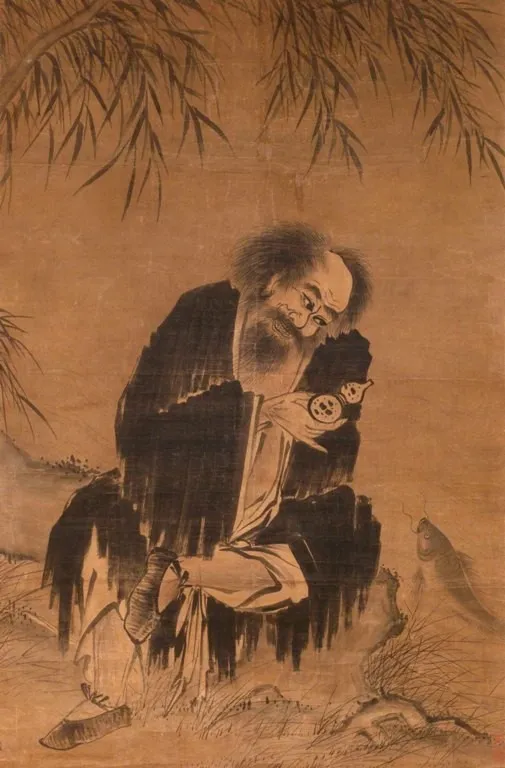
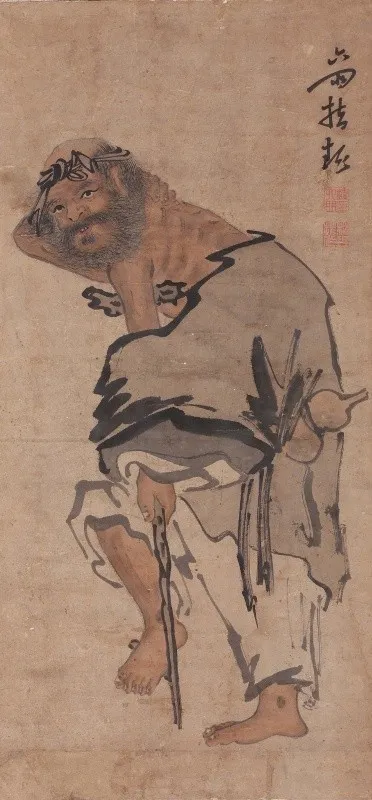
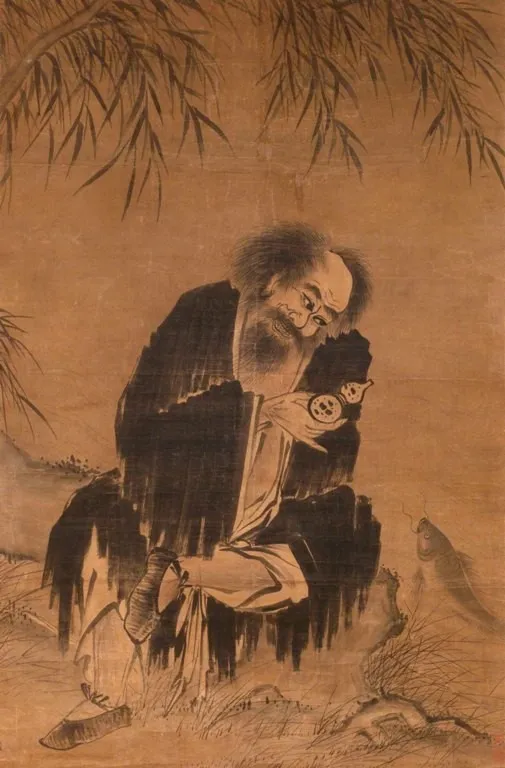
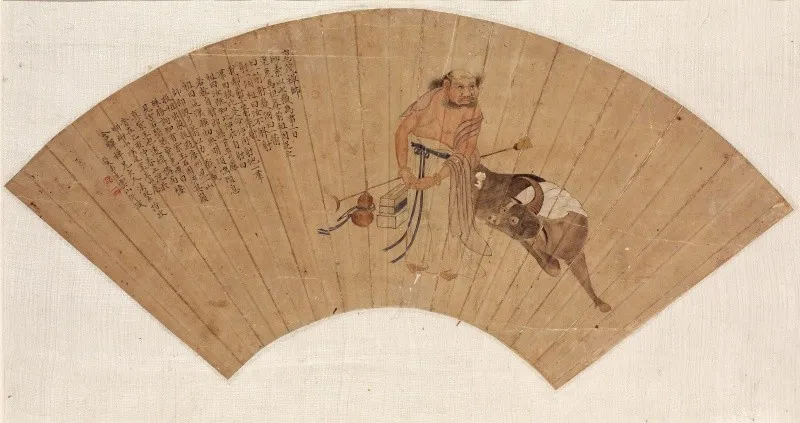
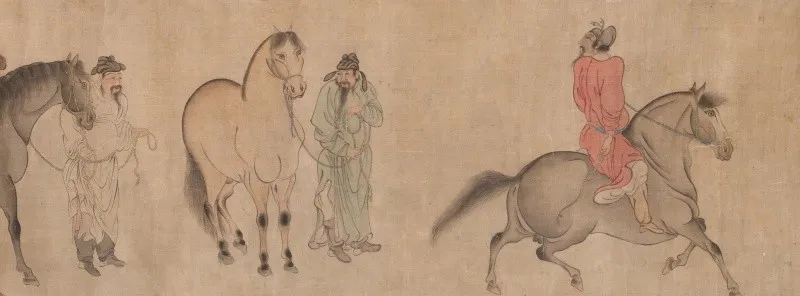
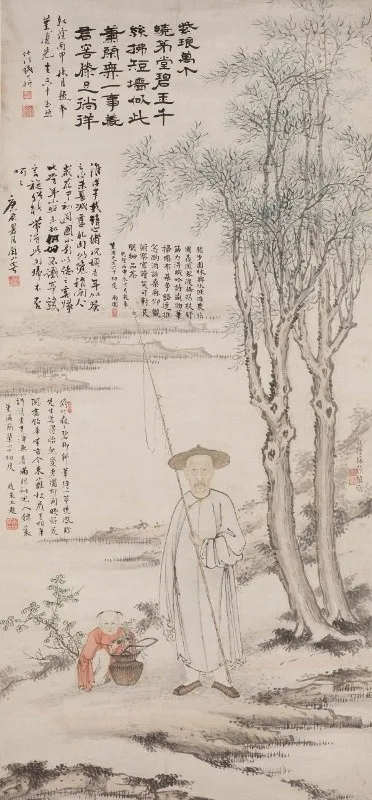
The final, ninth chapter of the exhibition circles back to the ink-based origins of Far Eastern painting and captures classical, often monochrome or lightly colored figural painting, endowed with lively movement, expressive character, and compositional brevity. In extremely simplified brushwork, the eccentric Zen painting especially stands out.
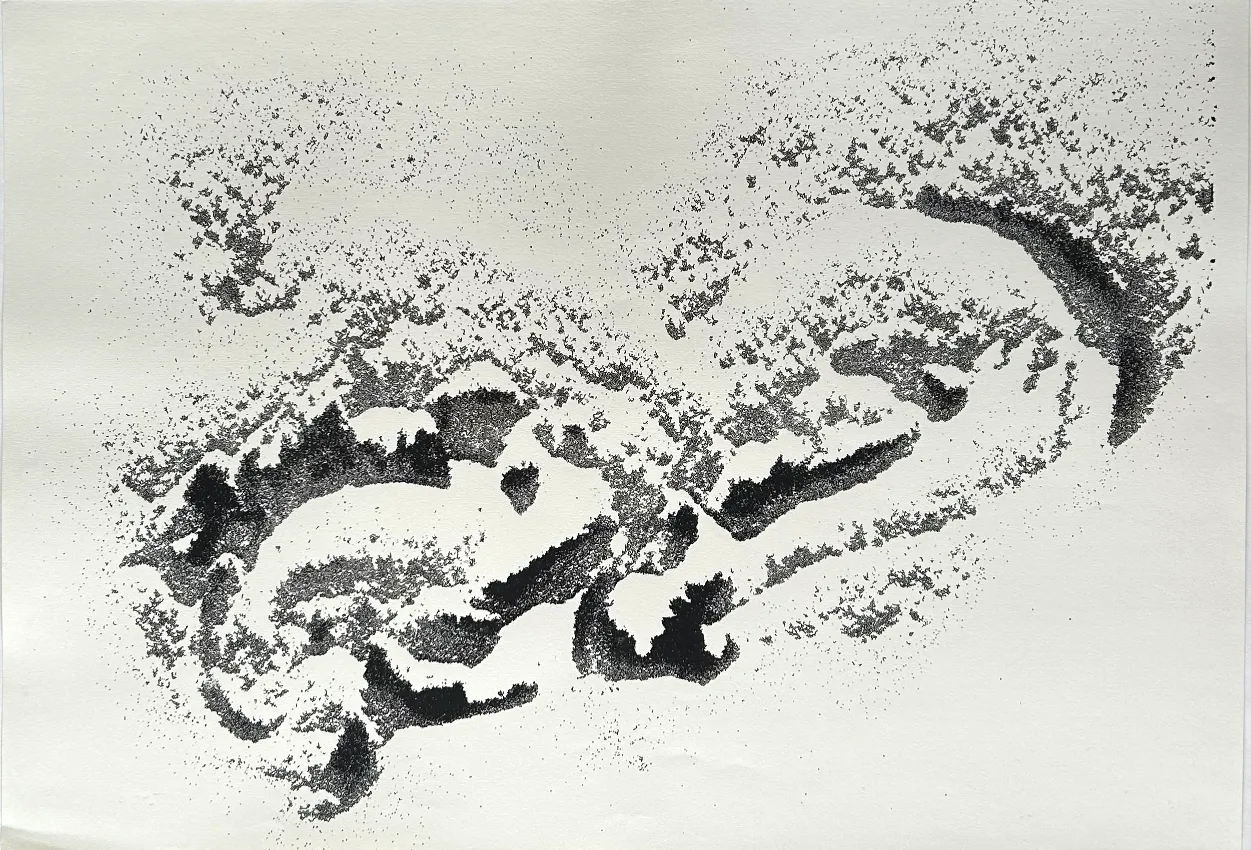
Far Eastern art fascinated artists already in the 19th century and became an important source of inspiration for modern visual art. It is obvious that in today’s postmodern world, which seeks to return to the roots of diversity through pluralistic vision, Asian art can be regarded as a significant source of artistic creativity.
Form-wise, one can appreciate the priority of soulful painting expression infused with positive chi energy, the emphasis on metaphorical and expressive approaches to subjects rather than mere representation, the importance of dynamic line and gesture in painting, compositions using asymmetry, diagonal, and empty space within the picture plane.
Content-wise, there is admiration for respect for traditional values, thematic cyclicity using principles similar to music, monumentality stemming from simplicity of expression, the search for order and measure in nature and naturalness, the ability to perceive even the smallest details, and last but not least, a sense of humor and poetic exaggeration.