The artist’s life story can be easily decoded through his work: periods of passionate love, fateful turning points, a lifelong fascination with nature, and admiration for the enchanting power of women. All of these elements are reflected in the results of his diligent artistic practice. Figurative art plays a central role in Max Švabinský’s oeuvre. The human figure became a crucial source of inspiration. He sought his models both in the familiar surroundings of his own family—and later that of the Vejrych family, into which he married—as well as in public life. Whether he portrayed his grandmother, his wives Ela and Anna, close friends, or important figures of Czech history, science, and politics, he always aimed to penetrate their inner world and capture it.
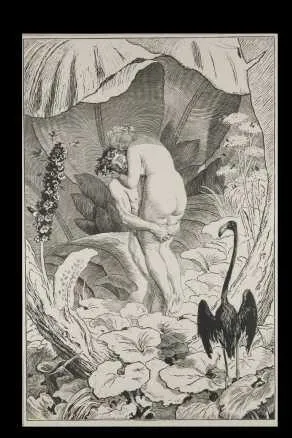
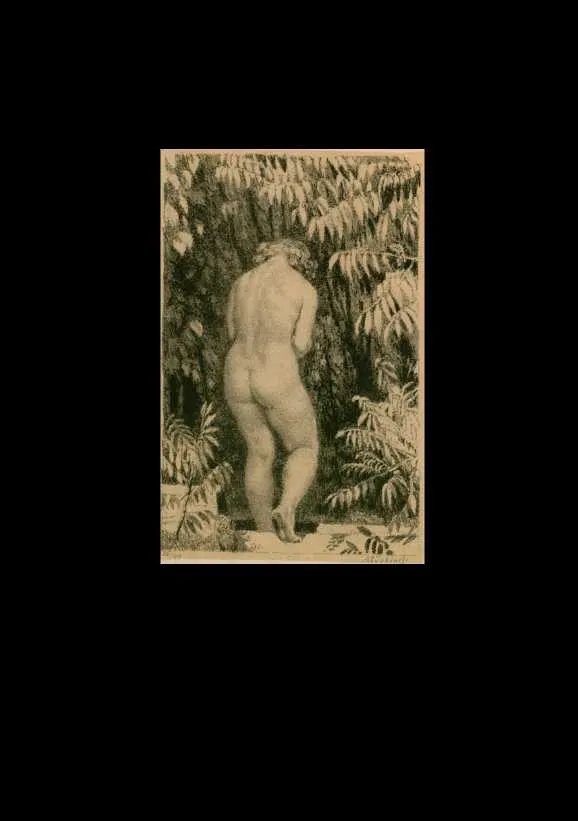
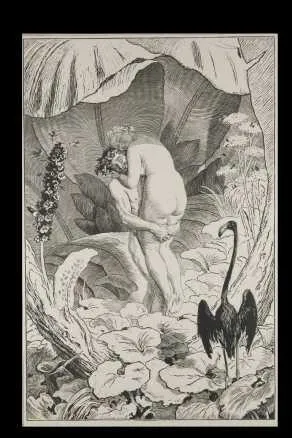
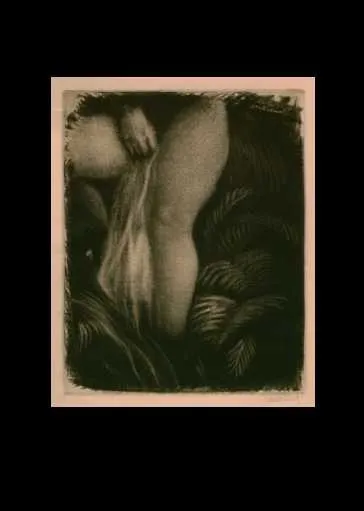
His realistically rendered figures come to life thanks to Švabinský’s ability to faithfully depict their character and emotional state. A distinct chapter in his work is devoted to the female figure as a lasting source of inspiration. A lifelong admirer of female beauty, he depicted the voluptuous forms of sensual women not only as straightforward nudes or in carefully composed interior scenes, but also as integral parts of symbolic and allegorical imagery.
He saw women as part of the natural universe, and they naturally became a vital element in his depictions of nature. In many of these works, it is difficult to say whether the main role is played by the landscape or by the joyfully frolicking figures. In Švabinský’s art, figurative and landscape motifs are often inseparable. Sometimes, nature forms the stage for a love scene or a sculptural female nude; at other times, female figures add an emotional layer to monumental landscape compositions. In both cases, we sense Švabinský’s dedication, his avoidance of improvisation, and his admirable ease. His works reveal a longing to celebrate life and the overflowing joy he experienced while creating them.
Since 1972, the Regional Gallery in Liberec has housed an almost complete collection of Max Švabinský’s graphic prints, comprising nearly 600 pieces. A year after their acquisition and professional processing, the collection was presented to the public in an exhibition marking the 100th anniversary of the artist’s birth. In the years that followed, selected prints were displayed within various thematic exhibitions. This and the upcoming autumn exhibition—focusing on landscape motifs—will once again present Švabinský’s graphic work to visitors of the Liberec gallery as a larger whole. This exhibition project may be seen as a pilot for a major retrospective of Švabinský’s work planned for one of the upcoming exhibition seasons.