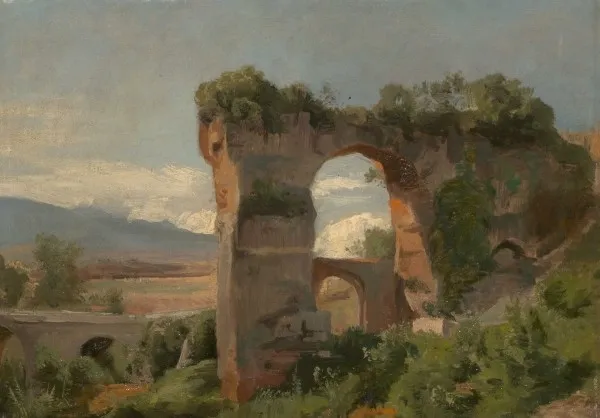
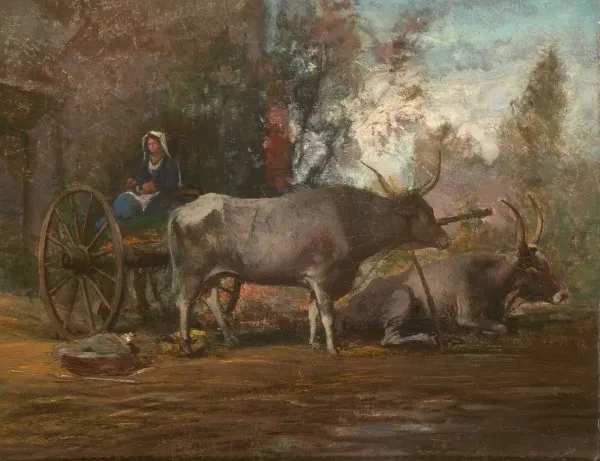
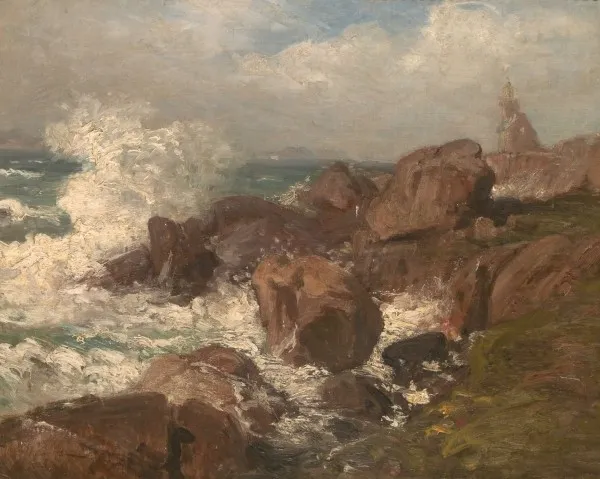
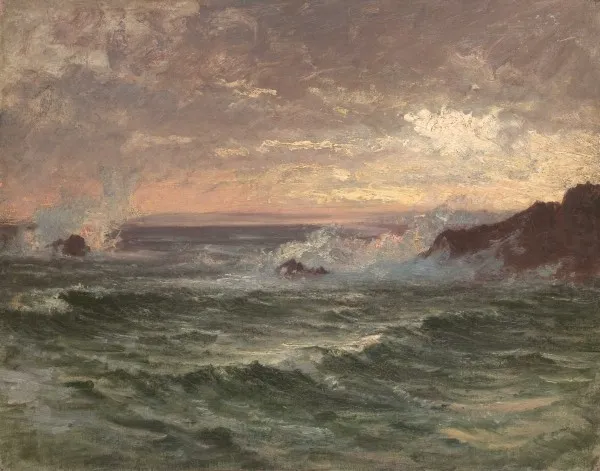
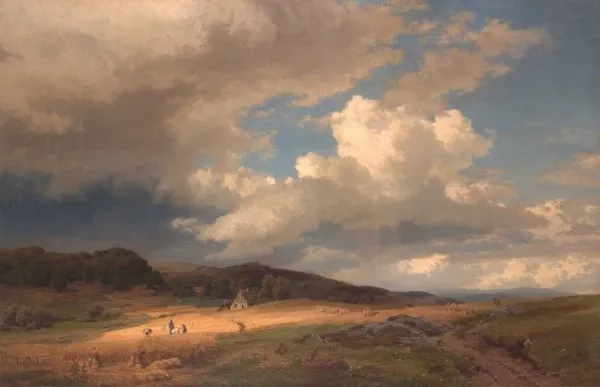
Wilhelm Riedel (1832–1876) | A Monographic Exhibition of the Czech-German Landscape Painter

CuratorZuzana Štěpanovičová
Standard admission
180 Kč
Reduced admission
100 Kč
from 12/11/2008
to 3/29/2009

The Museum of Fine Arts Liberec, in cooperation with the National Gallery in Prague, has prepared a major monographic exhibition of the 19th-century landscape painter Wilhelm Riedel (1832 Antonínov in the Jizera Mountains – 1876 Kundratice Spa near Litoměřice), who had long been overlooked by Czech historiography.

Wilhelm Riedel (1832–1876) belonged to the generation of Czech Realists. From the mid-1860s onward, he painted landscapes in the vicinity of Barbizon, along the coast of Brittany, and on the Channel Islands. Due to his German origin, he was long overlooked by Czech historiography, and as an ethnic German from Bohemia, he was also ignored by German art history. Full recognition of his artistic talent and cosmopolitan outlook has only come in recent times; Riedel’s works are now included in the permanent collections of the largest Czech galleries, and his retrospective exhibition, organised by the National Gallery in Prague and the Museum of Fine Arts Liberec in 2008 and accompanied by the first monograph on Riedel, was a way of settling a long-standing debt of Czech art history to this outstanding artist. The Museum of Fine Arts Liberec holds in its collection a set of thirty-two works by the painter, including twenty-one paintings and eleven drawings.

Wilhelm Riedel was born into a well-known glassmaking family in Antonínov in the Jizera Mountains. His father, Franz Anton Riedel, managed the glassworks in Antonínov and Nová Louka and built a new coloured-glassworks in Jizerka. He died in 1844, when his son was only twelve years old; however, the will provided an annuity for him and three other underage children from the second marriage, which allowed Wilhelm to pursue his studies and travel abroad. After spending a year at the Prague Polytechnic, Wilhelm Riedel decided to transfer to the Academy. From 1852 to 1854 he attended the elementary painting school, and for the next two years he studied landscape painting under Maxmilián Haushofer. In 1856 he left for Düsseldorf, where he continued at Andreas Achenbach’s private painting school. (Andreas and his brother Oswald were known for their versatility as “the alpha and omega of German landscape painting.”) During his studies, Riedel painted German landscapes from the Eifel Mountains, the Rhön Highlands with their medieval castles, the Bavarian Alps, and the North Sea islands. He completed his studies in Düsseldorf in 1860.

In 1861, Riedel’s next steps took him to Italy, where he stayed for nearly two years. The bright southern sun lightened his palette, but more significant changes in his artistic expression came during his subsequent journey to France in 1864. French plein-air landscape painting proved highly inspiring for him, and with his new works Riedel naturally integrated himself into the French realist-plein-air avant-garde, represented by artists such as Théodore Rousseau, Jean-Baptiste-Camille Corot, and Charles-François Daubigny. Between 1864 and 1868, he exhibited at the Paris Salon, which until then had been entered by only a few Czech artists — Jaroslav Čermák, Soběslav H. Pinkas, and Viktor Barvitius. During his extended stays in Italy and France, Riedel maintained written correspondence with his family and friends, and in 1864 and 1869 he sent works to exhibitions of the Society for the Promotion of the Arts in Prague. In 1870, probably due to the onset of illness, he returned to Prague. He died in 1876 at the spa in Kundratice near Litoměřice.

Wilhelm Riedel was the prototype of a modern European, able to live “between several worlds” and to absorb impulses from a wide range of geographical locations and cultural topoi. Among his most impressive works are paintings created in France, for example in the area around Fontainebleau, in Brittany, or on the Normandy coast. Shrouded in a certain melancholy, some of them evoke the genius loci of the Jizera Mountains. Riedel’s oeuvre ranks among the pinnacles of 19th-century Czech realist landscape painting and, had it not been interrupted by his premature death, it might well have achieved European renown.

Visit also

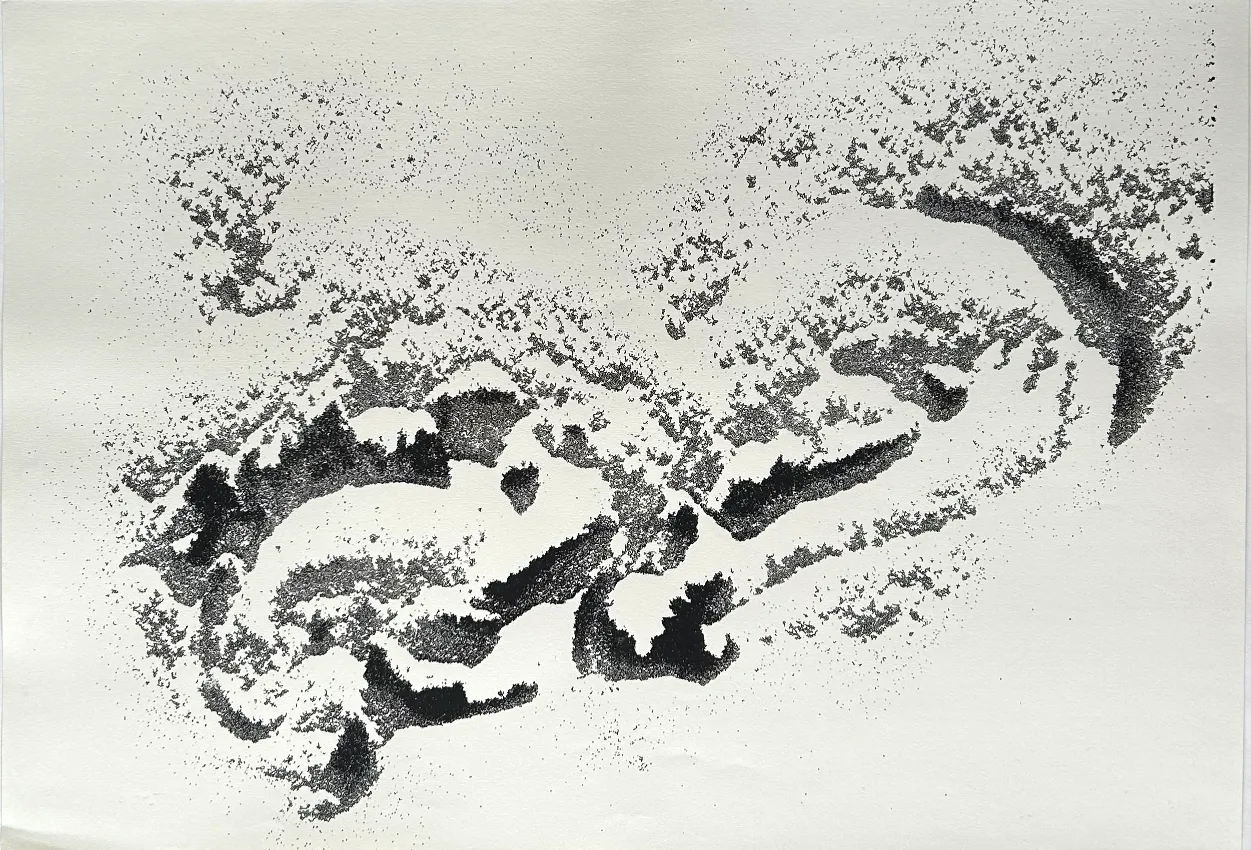
Rasterized | Screen Prints of the FAMU Department of Photography

Rasterized | Screen Prints of the FAMU Department of Photography

11/21/2026 – 3/7/2027

Since 2010, the FAMU Department of Photography has had a printmaking workshop, the aim of which is to develop the screen printing technique as a creative method of transforming photography. The workshop, led by Jan Měřička, is conceived as a creative environment on the border between photography and free graphic creation.

It is based on the assumption that screen printing as a method of reproducing photography is losing its relevance today and therefore it is necessary to find ways to work creatively with the crossover between these media. As part of the technical process of creating a work, the halftones of the photograph must be converted into a system of dots or lines – rasterization – which is visible and becomes part of the perception of the resulting artifact.
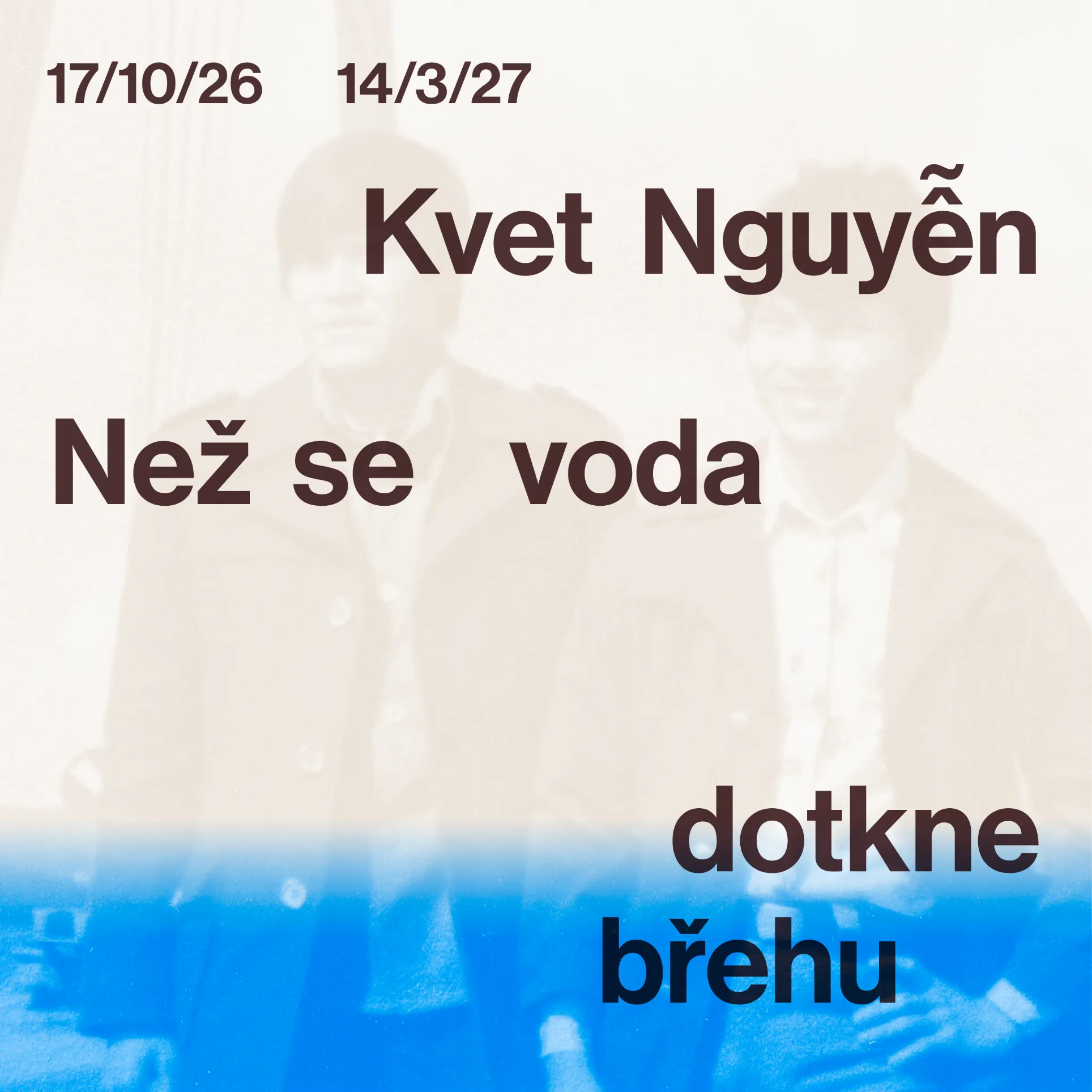
Kvet Nguyễn | Till the Water Meets the Shore

Kvet Nguyễn | Till the Water Meets the Shore

10/17/2026 – 3/14/2027

The extensive monographic exhibition presents the latest work by Slovak-Vietnamese artist Kvet Nguyễn. Conceived as a visual reading of chapters from the story of the Vietnamese diaspora in former Czechoslovakia, it traces its history from post-war migration during the era of socialist internationalism to the pivotal moment of the Velvet Revolution.

Małgorzata Mirga-Tas, Sráč Sam | Companion

Małgorzata Mirga-Tas, Sráč Sam | Companion

10/17/2026 – 3/28/2027

The exhibition presents a dialogue between two distinctive female artistic voices — Polish visual artist of Roma origin Małgorzata Mirga-Tas and Czech artist Sráč Sam. Both work with textiles as a medium of memory, identity, and female experience. While Małgorzata Mirga-Tas focuses on the Roma community and its visual and narrative representation, in the context of this exhibition Sráč Sam works with an architectural installation in which textiles appear only minimally, through the everyday carrier of meaning represented by sewn clothing. At the same time, the large-scale architectural structure demonstrates the interconnectedness of the individual elements of the overall composition, as well as the idea that having a place to rest and find support is a prerequisite for creating content and relationships.

Patron annual entry fee
Art is my life!

Become our patron. Support the gallery and enjoy access to VIP events, discounts in the design shop, and much more.

Visit us

Masarykova 723/14
Liberec 460 01
CZ

Opening hours

monday
tuesday
wednesday
thursday
friday
saturday
sunday
closed
10.00–18.00
10.00–18.00
10.00–19.00
10.00–19.00
10.00–18.00
10.00–18.00

Entrance fees

Standard admission
180 Kč
Reduced admission
100 Kč

Exhibition galleries are closed. The Design Shop and café remain open during regular opening hours.