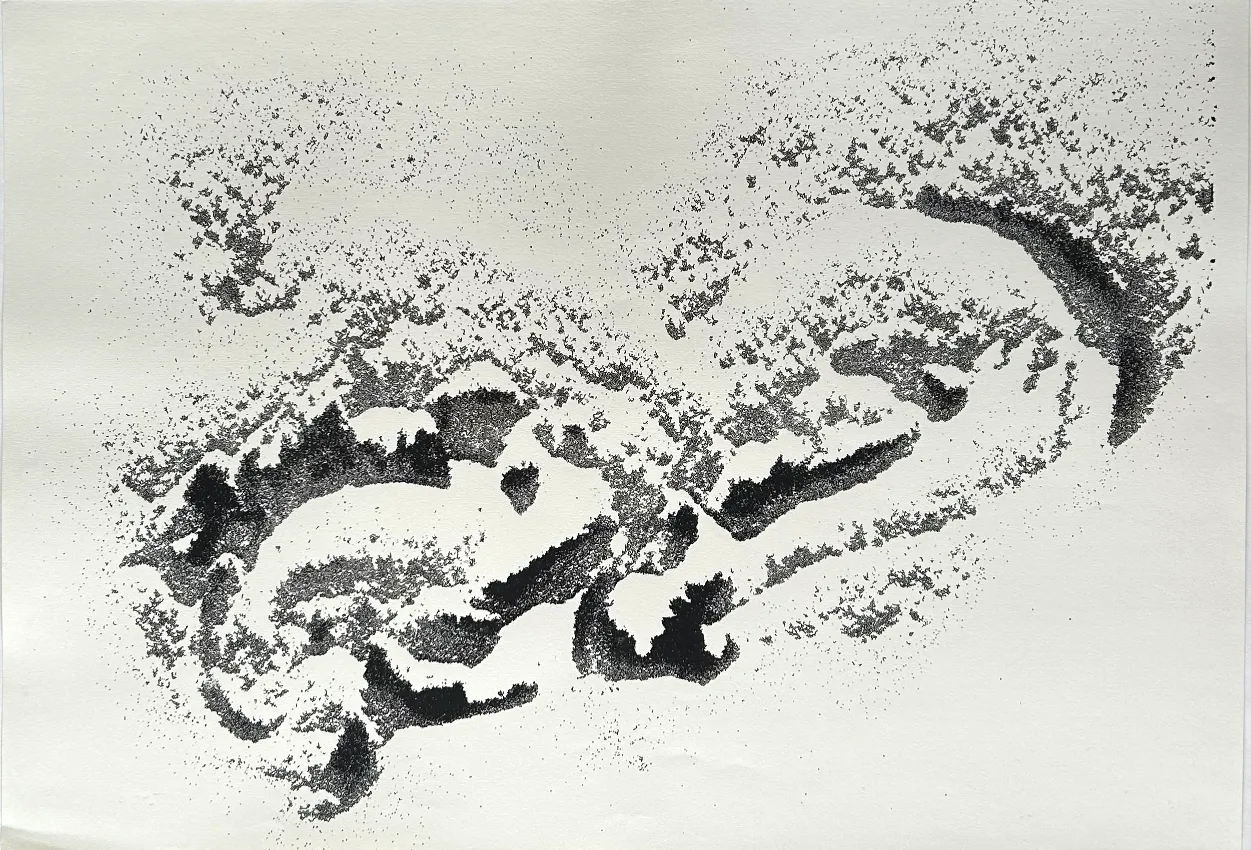
A characteristic feature of Zdenka Hušková’s work is the moment of inner transformation. Her unceasing amazement at things and their unexpected connections is reflected in the need to perceive them anew and differently, to arrange them into previously untried configurations, and to introduce surprising — though at first glance not always obvious — meanings. The author’s formal “metamorphoses” together create something like a slightly surreal landscape, often suggesting a sensual — sometimes even erotic — context, where a refined sense of irony is not foreign either.
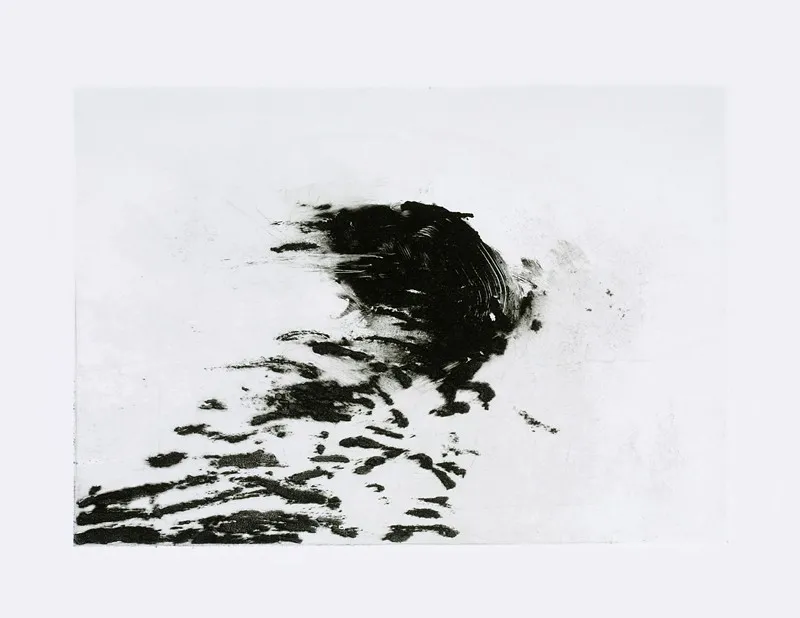
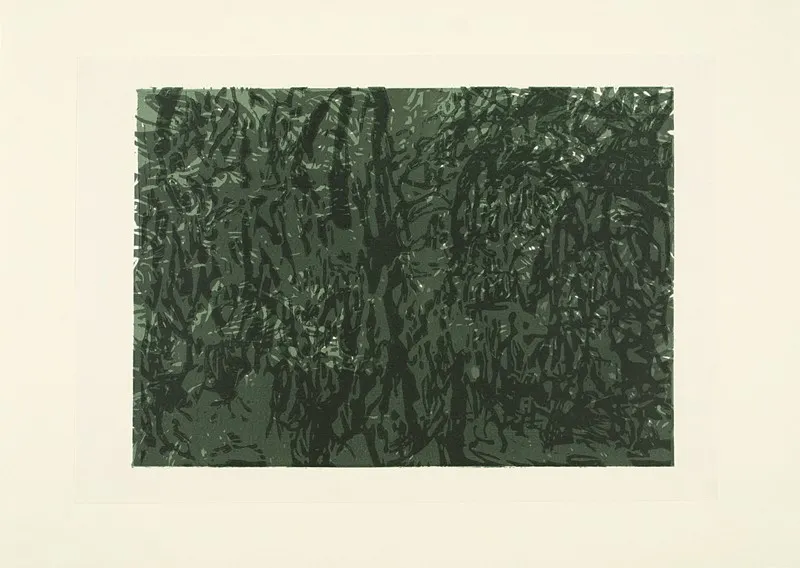
Zdenka Hušková has been consistently engaged with the theme of plant forms as ambiguous symbols since her studies at the Academy of Fine Arts in Prague. Early on, she abandoned literal architectural models (especially vaults) to focus on more complex phenomena of overlapping plans, creating glimpses into hinted horizons somewhere “beyond.” As a counterpoint to working with “density of space” as she experienced it in the New Zealand rainforest — where she experimented with layering (especially linocut) — she also explored the opposite approach of a relaxed, sometimes even stripped-down pictorial field where shapes “disappear” into the space of emptiness. Using the carborundum technique, a more fluid, spontaneous counterpart to the often painstaking linocuts was created, where light — as opposed to the “white transparencies” of linocuts — appears as part of an organic understanding of space in the sense of radiant coloration. With curiosity and thoroughness characteristic of her, Hušková opened paths to a range of technical and content-related considerations. It can be said that the author continues to draw from this spectrum of possible outcomes to this day.
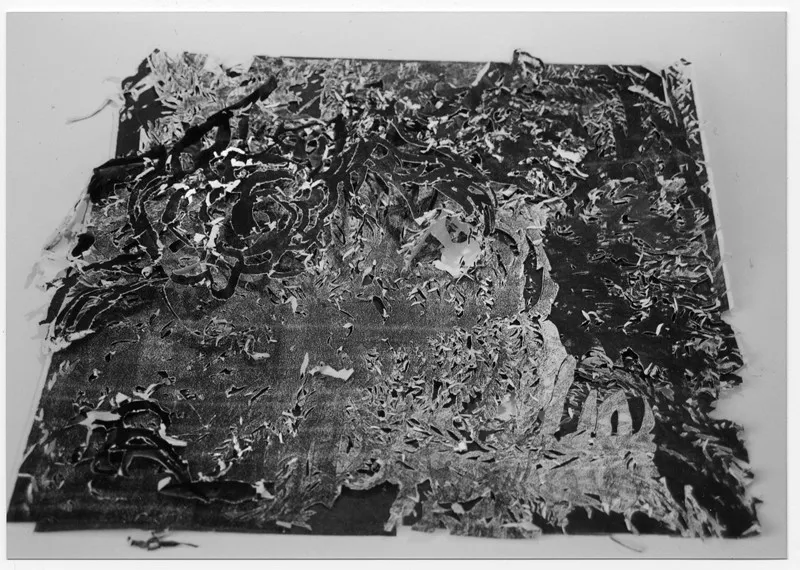
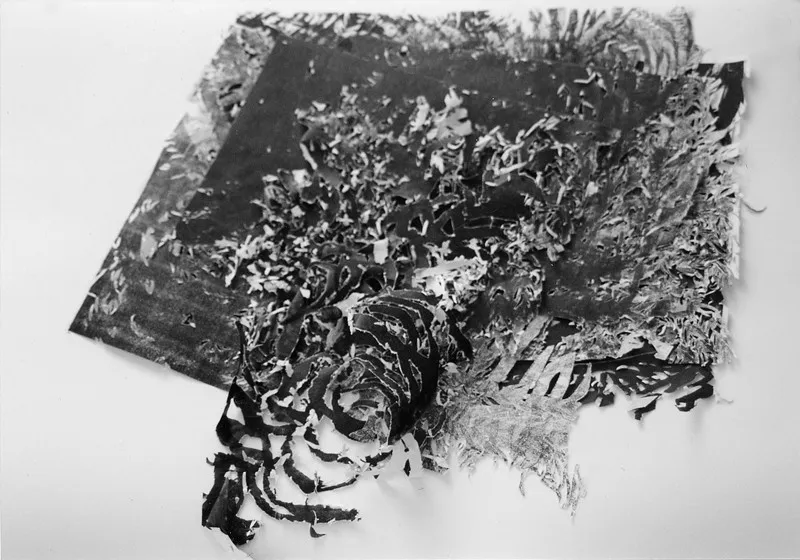
Zdenka Hušková’s new work, represented in the Regional Gallery in Liberec, presents a continual development of the aforementioned creative qualities and methods. The essence remains an evocative and ambiguous vocabulary of plant forms. In addition to “drawing contemplations,” the author also devotes herself to photographing not only details of plants themselves but also subsequent graphic works. These black-and-white photographs are not merely a form of visual documentation; on the contrary, they create another dimension of examining and understanding perceived impressions, even helping to link natural organisms and their graphic reflections into a single conceptual whole. They also serve as a “repository” of motif impulses for further processing. A similar integrating element is the original use of plants as an artistic tool to apply color to paper. A significant advancement in the author’s treatment of spatiality is the intervention with a knife into the two-dimensional surface of the graphic work. Careful cutting of the paper creates winding “shoots” growing from the illusory space of the pictorial composition outward into the viewer’s real space. This symbolic dialogue between imaginary and physical planes is currently the focus of the author’s interest.
Zdenka Hušková rightly calls her work an “adventure.” She perceives the world, especially the realm of nature, as a journey through a labyrinth lined with phenomena capable of surprising meanings. Herein lies the uniqueness of her creative expression.
Richard Drury