
Věra Nováková & Pavel Brázda | Paintings, Words, Irises

The exhibition Věra Nováková & Pavel Brázda: Paintings, Words, Irises presents the work of an exceptional artist couple. The Brázdas lived and worked under the former regime at the margins of both society and the artistic community, in very modest conditions. More here.

Přemysl Arátor comments on the painting The Monster Waits, the Monster Has Time (Self-Portrait P.B. 49):
"This was the first painting the then twenty-three-year-old author considered 'worthy of being exhibited in a gallery.' As early as 1949, he did not believe in a foreseeable change to the Communist dictatorship or the liberation of Czechoslovakia from the Soviet system. More here.

Přemysl Arátor interprets the painting Did You Forget to Shave? (1950) as follows:
“Mirrors like the one depicted in this painting used to be found in barbershops and in their window displays. Above them were inscriptions such as the title of this painting, or ‘Clean-shaven, in good spirits’ and ‘Our smile, your success.’ More here.

Přemysl Arátor writes about the painting Věra with Painted-Over Wings (1951):
“Brázda’s strict opposition to modern art—and its sloppy, hasty, and careless improvisations was linked to a lasting respect for the solid art of the Old Masters, including traditional disciplines such as portraiture and the nude. More here.

Přemysl Arátor explains: Dobromil and Dobromila (The Bed is Your Church)
“The painting draws on a Cranach-like delicacy in its flesh tones. The decorative treatment of the drapery on the bed—where the couple is arranged like an altar—refers back to medieval illuminations. And so the composition rises from an ornamental black-and-gold frame through a starry night toward an open window, where the divine morning sun appears and looks down on them. More here.

Přemysl Arátor on The Great Astronaut (1954)
“The Great Astronaut is half man, half robot—or at least a partially armored man in the midst of space, defined by black stars on a gold background. In this painting, one can find a connection to the monumental realism of contemporary Mexican painting. More here.
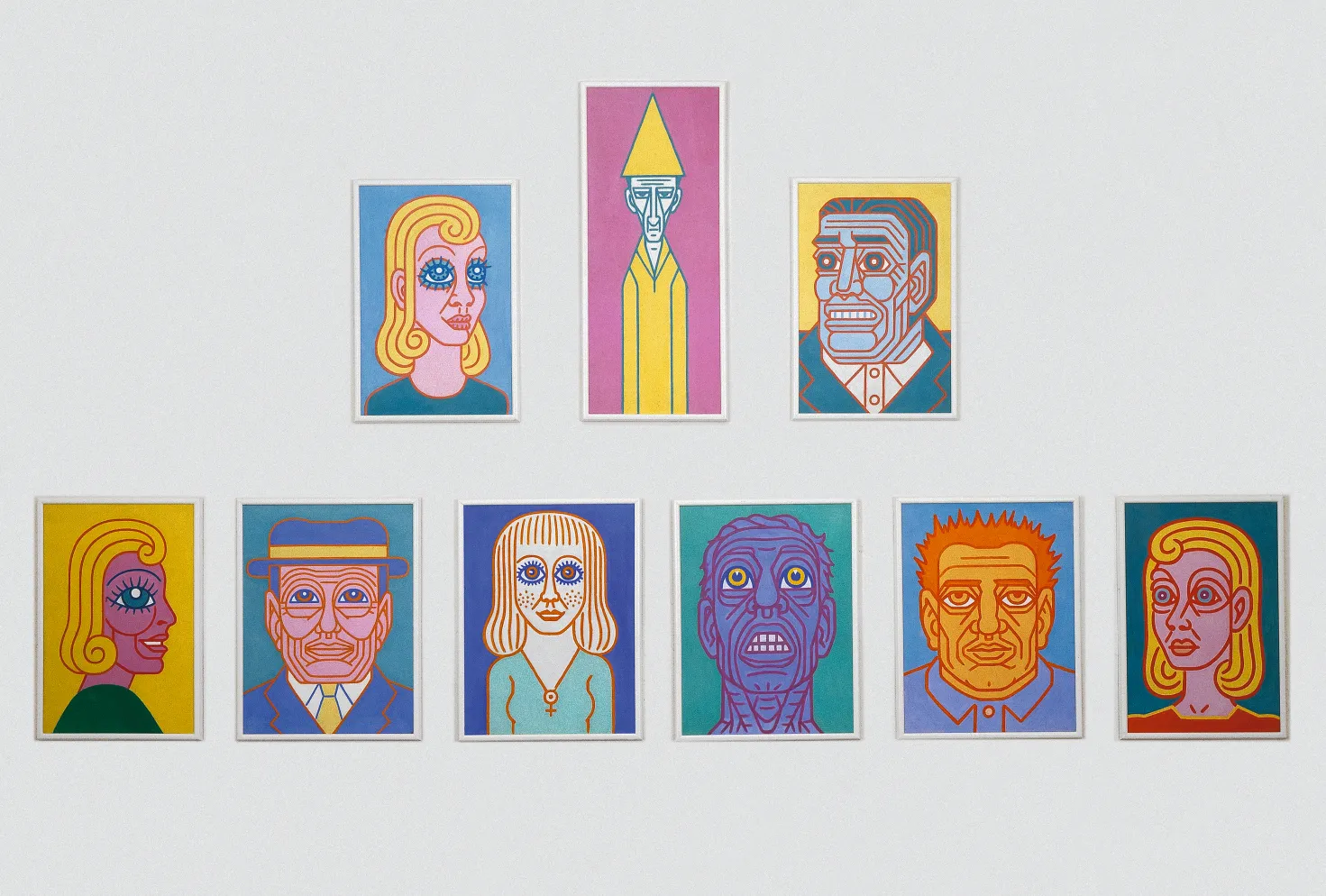
Přemysl Arátor describes the genesis of the cycle: Colorful Heads (1994–1995)
“Countless drawings of heads were created in the first half of the 1990s. The first three acrylic paintings on canvas, titled The Jester and The Businessmen, were painted in the studio in Nové Butovice shortly before the half-day exhibition To See It Like That, Hermína. More here.
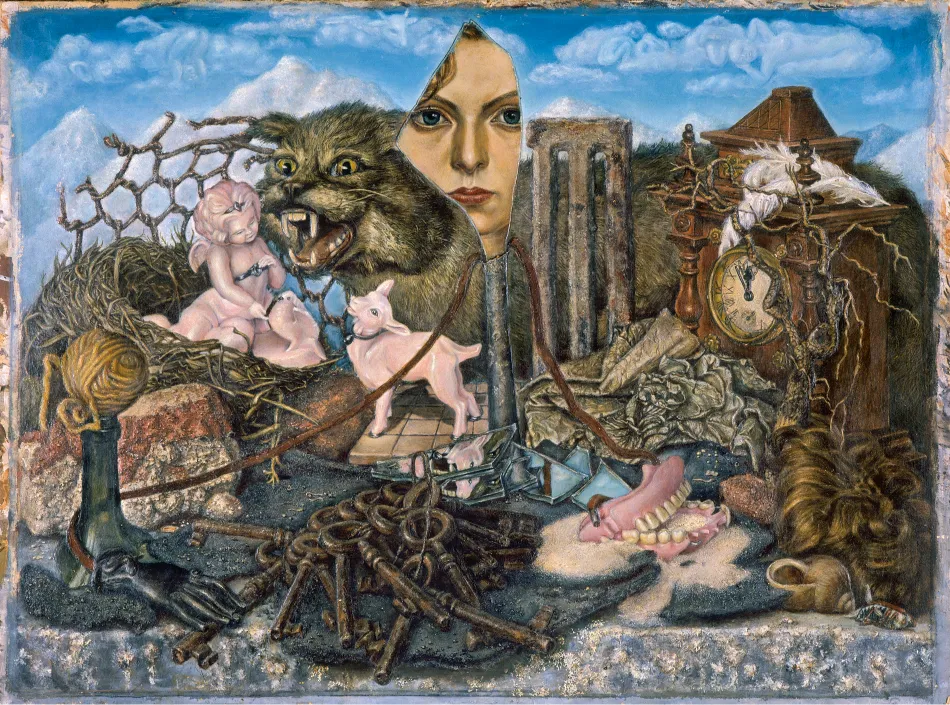
Pavel Brázda wrote regarding Věra Nováková's painting: Still Life – Self-Portrait (1949–50)
“The theme of this still life offers several possible interpretations, from the psychoanalytic to the existential. According to the artist, it is primarily a painting of her mental state at the time—inner confusion, anxiety, and uncertainty stemming from the collapse of values she had trusted until then. More here.
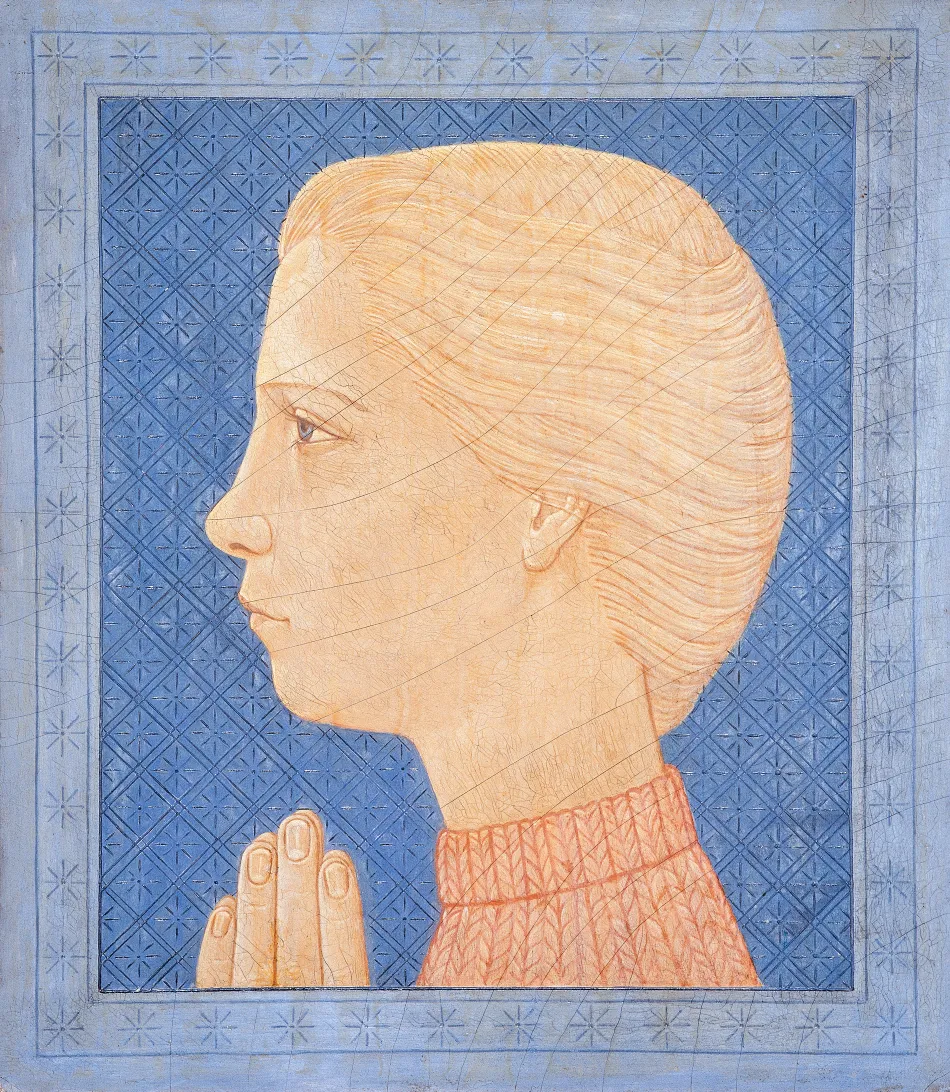
Pavel Brázda writes: Portrait of Věra’s Sister Hanka (1953)
“The painting Hanka, still painted in tempera, follows the profile portraits of the Early Renaissance. The background behind the silhouette of the head and hands—simplified into a flat surface with minimal modeling—is treated in relief using a high gesso with incised ornaments, similar to the technique used by Master Theodoric."
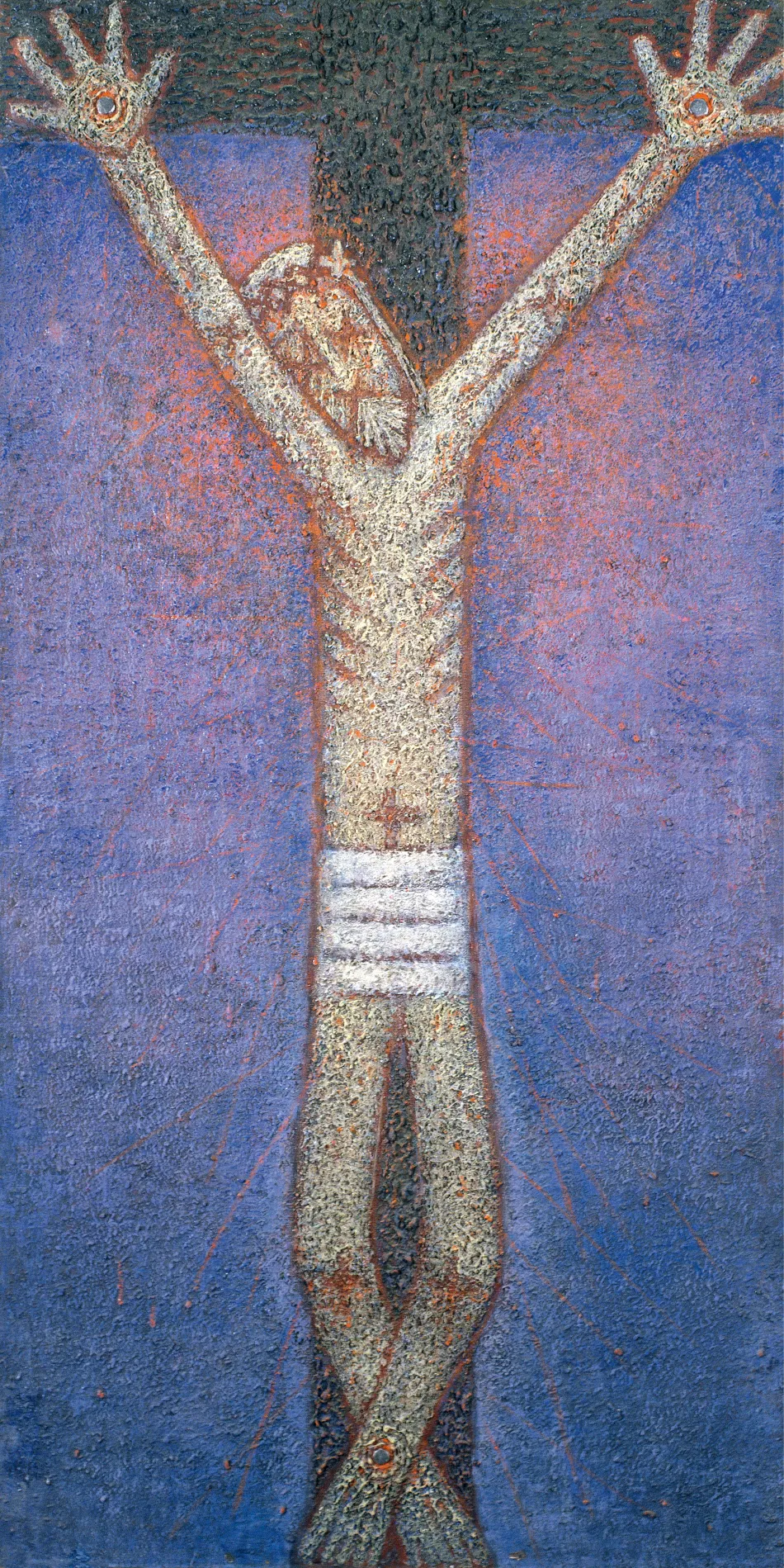
Brázda comments: The Crucified (1964)
“The Crucified is painted using a then-new technique with a dispersion binder called Akronex. The impasto brushwork continues to enliven the flat conception of the painting, which is also based on austere, straight lines. These basic verticals are complemented and disrupted by the dramatic diagonals of the nailed arms and the bowed head.”
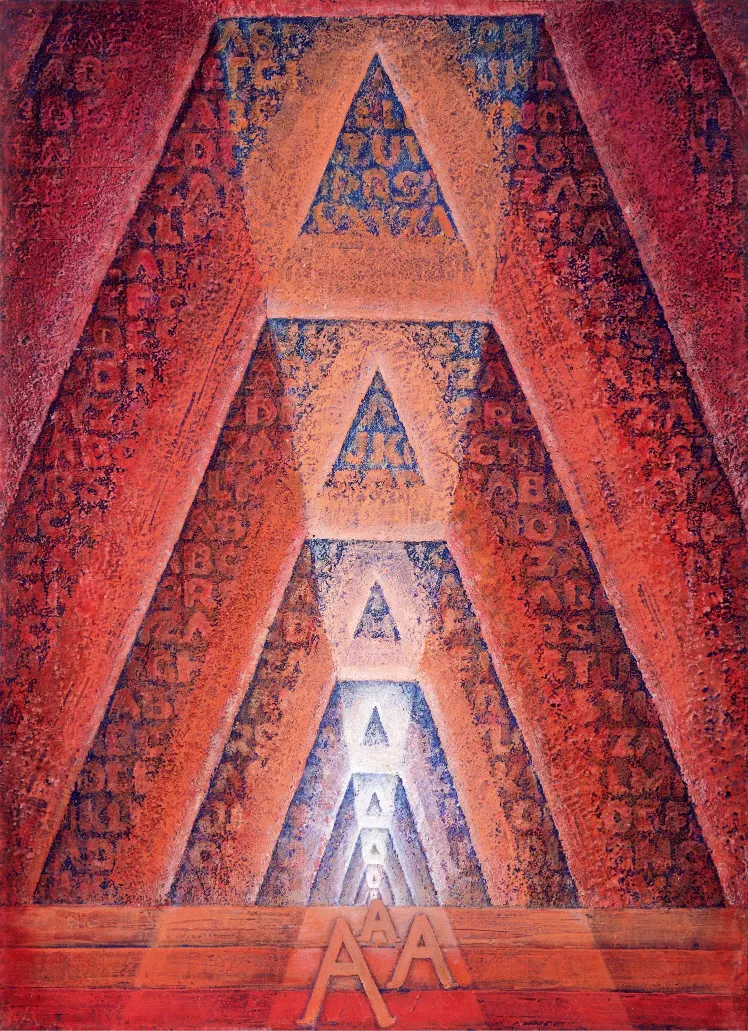
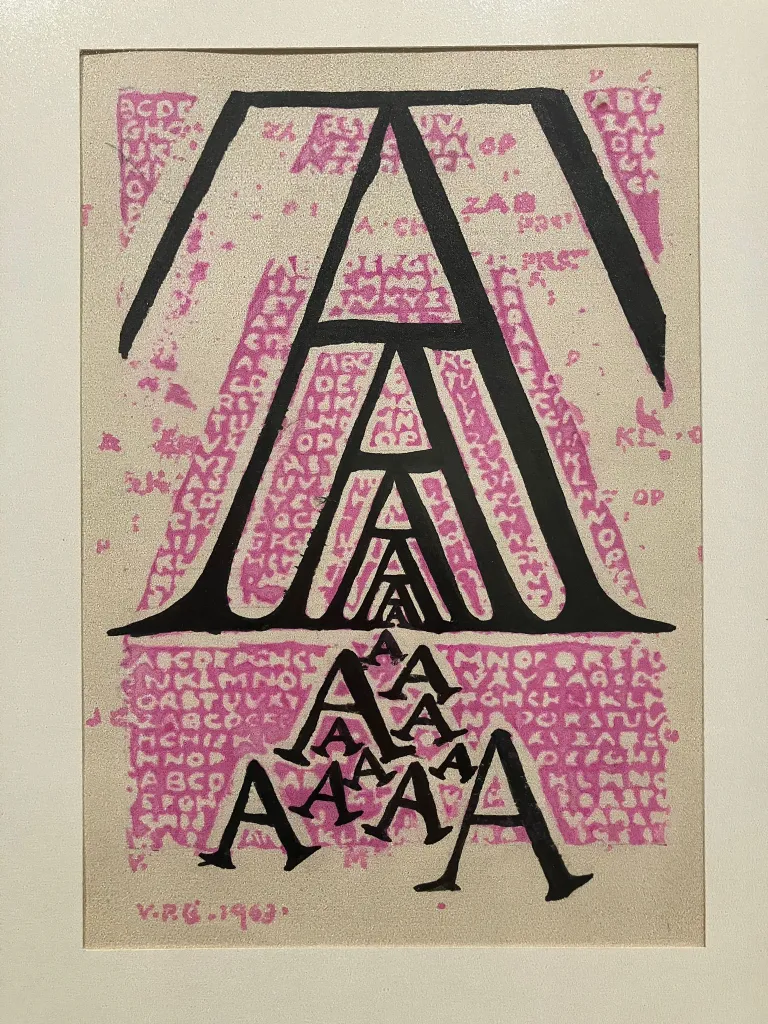
Pavel Brázda interpreted Věra Nováková’s first letter paintings: Architecture (Arché, 1965) and V-Vegetation (1966)
“The primary impulse for these works was the children’s book by Josef Hiršal and Bohumila Grögerová, All the Things We Can Say with Words , whose whimsical, lettrist word games were illustrated by Věra Nováková and myself. More here.
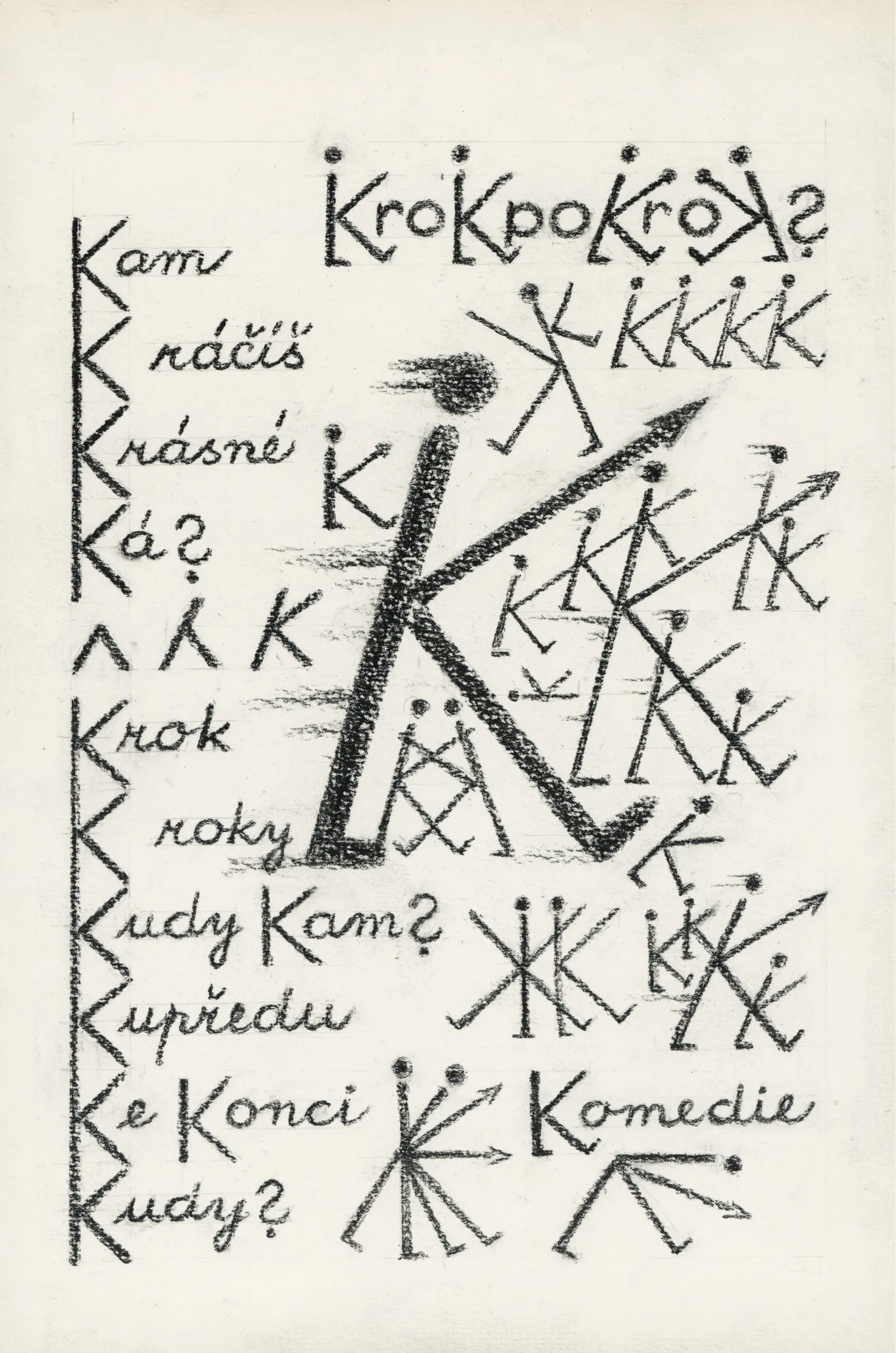
13 Drawings Pavel Brázda set the series into context:
“The use of letters as an independent formal element in modern art began with Cubism, Futurism, and Dada, and evolving through Lettrism to the present day. Until now, individual letters were used without regard for their specific meaning in connection with speech and its sense. More here.
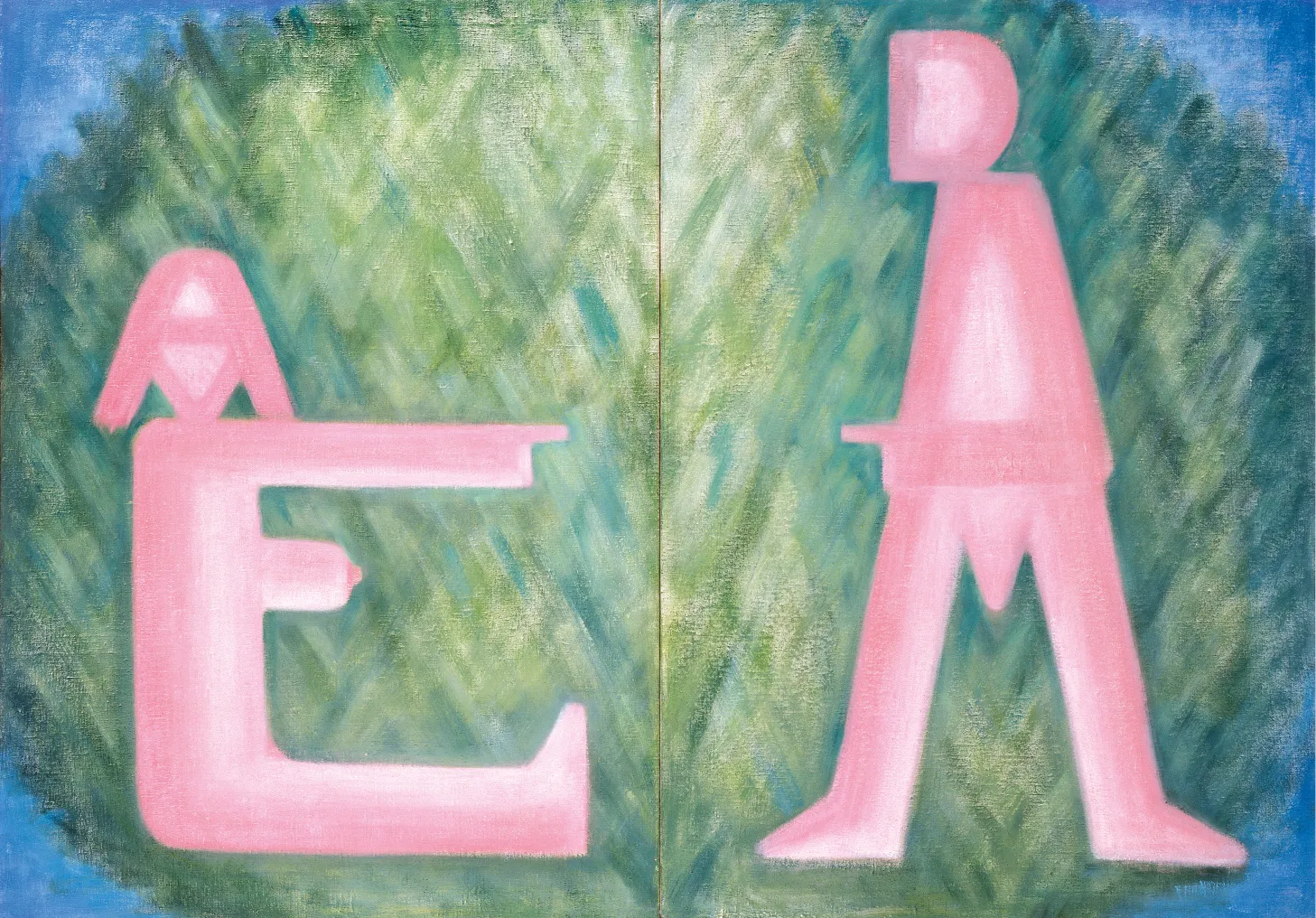
Věra Nováková wrote: Eve and Adam (1995)
“In this diptych, which I call the 'Existentialist Affair,' Adam and Eve blame one another for original sin. Man is created in the image of God, and there is a constant struggle within him between being God’s image and what the Serpent says: 'You shall be as gods if you defy that image.' Every person carries this dilemma within them. More here.
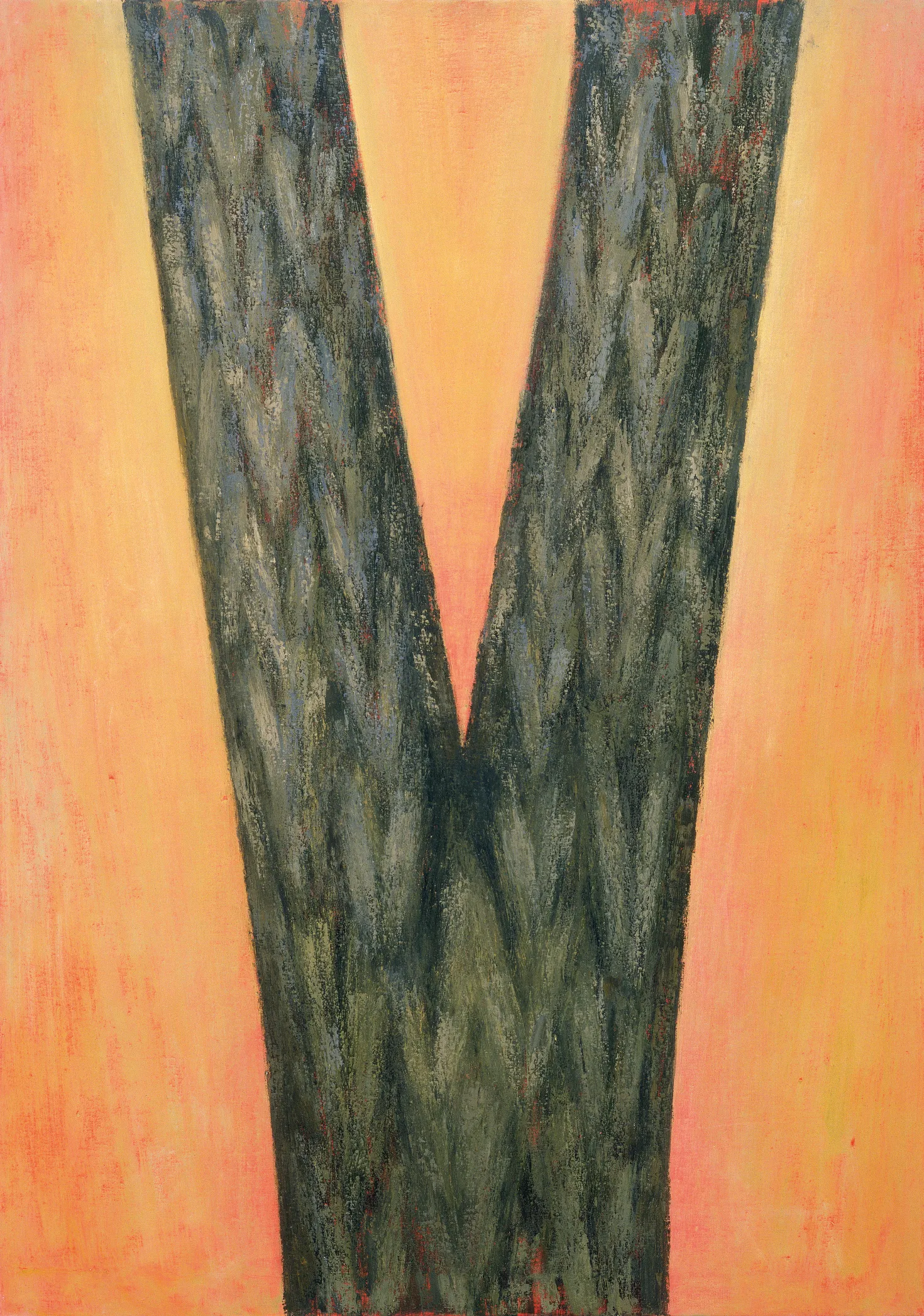
Věra Nováková described her perception of the letter V: Will (1998)
“For me, the letter V was a symbol and sign of Vegetation, Water (Voda), Resurrection (Vzkříšení)... an opening upward (vzhůru) toward the sun. Will (Vůle)—those are two strong branches reaching upward. More here.
From 1958, Věra Nováková occasionally made a living by illustrating books. Her first commission was Olga Scheinpflugová’s Pepík’s Holidays (Pepíkovy prázdniny). More here.
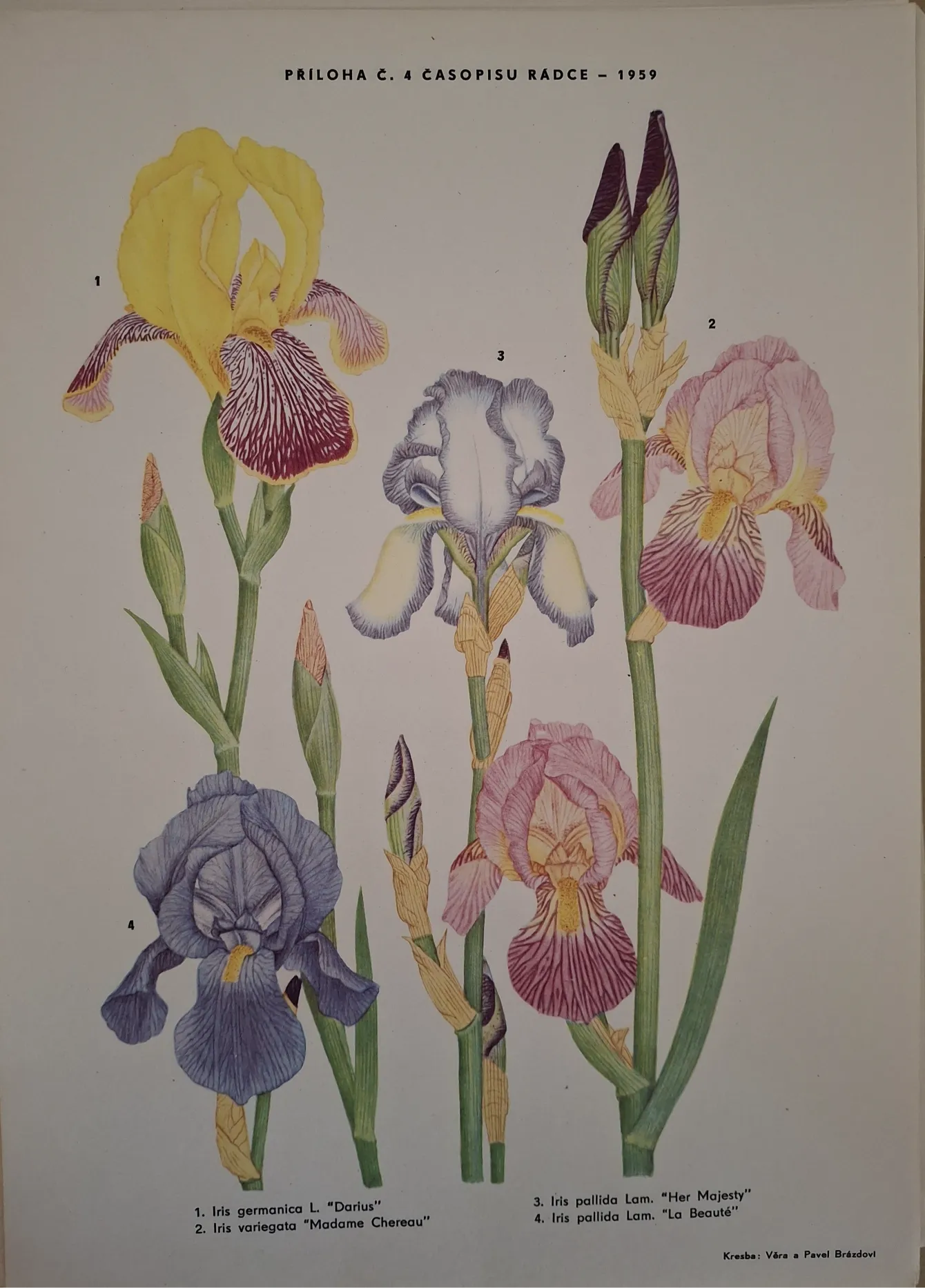
The Brázdas also collaborated on illustrating educational books. In 1960, they worked on the publication Our Perennials (Naše trvalky). More here.